Thin fine hair does not need fixing — it needs the right cut. Fine strands and low density fall flat when the shape works against them, but the same hair can look full and deliberate when the cut builds volume into its structure. The secret is where the layers fall, how the ends are shaped, and how much length the hair can support. Here are the ten best haircuts for thin fine hair, plus styling tricks and the mistakes that make thin hair look thinner.
Thin vs Fine Hair: What’s the Difference?

Fine and thin describe two different things, and knowing which one you have changes the cut. Fine hair means thin strands; thin hair means low density — fewer strands per square inch. Most people looking for haircuts for thin fine hair have both: fine strands at lower density. Thin hair needs shape and lift; fine hair needs weight kept at the ends. The cuts below work for both, because they protect the perimeter instead of carving it away with heavy layering.
The Blunt Bob

The blunt bob is the single most thickening cut you can get. One length with no internal layers creates a heavy, defined line at the ends that reads as density — a chin-length blunt bob can make fine hair look almost twice as thick. Ask for a fractionally point-cut finish to soften the edge. Blow-dry it smooth with a round brush. Our blunt bob haircut guide covers the sleek and glass-bob versions.
The Blunt Lob
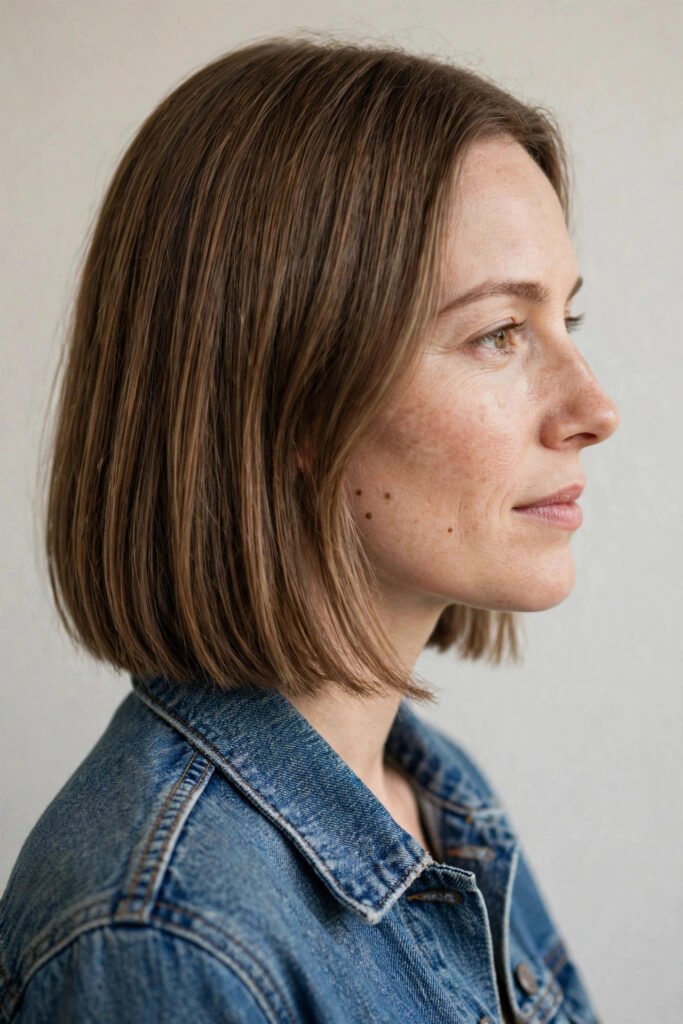
The blunt lob is the gold standard of haircuts for thin fine hair when you are not ready to go to the chin. At the collarbone, it keeps the blunt perimeter that makes thin hair read as dense, with enough length to tie back. Keep layers minimal and only in the bottom third — heavy internal layering steals the density you are trying to keep. A deep side part adds instant crown volume. Our lob haircut guide covers blunt, layered and wavy versions.
Textured Pixie
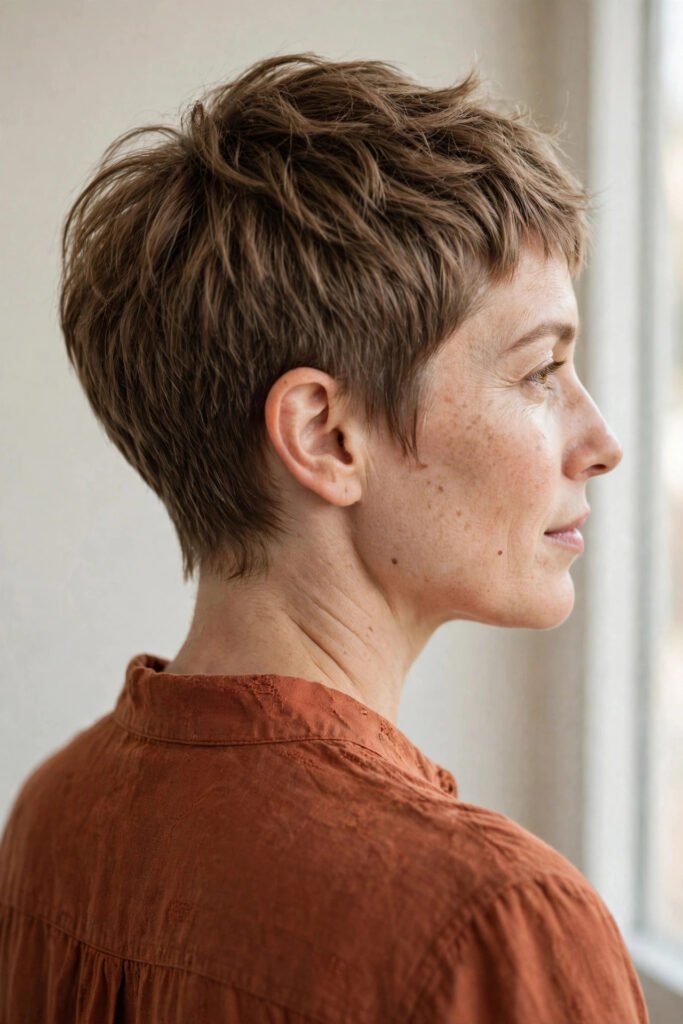
Cutting fine hair short can make it look twice as thick, and the textured pixie proves it. Removing the dead weight that drags fine hair flat creates instant crown lift, while short layers on top add visible texture. Ask for layered length through the top, tapered sides and a soft fringe. Style it with a little light pomade for definition. Our pixie cut guide covers pixie lengths and face shapes.
Invisible Layers

Invisible layers — sometimes called ghost layers — are cut inside the silhouette so they never show at the perimeter. They add lift from within without carving up the ends — movement without losing density. Ask for long, subtle internal layers at the cheekbone or collarbone — never high at the crown, where layers make fine hair look wispy. Best if you love your length and want shape without a visible layered look; it pairs well with a centre or deep side part.
Layered Bob with Bangs

Bangs are a volume trick hiding in plain sight: a fringe pulls hair forward from the crown, which makes the front of the cut look fuller while framing the face. A layered bob with bangs adds light layering through the ends for movement. Keep the bangs soft — a thick, blunt fringe eats too much density from fine hair. Curtain bangs or bottleneck bangs are the safest choices, since they blend into the layers instead of sitting as a separate block. See our curtain bangs and bottleneck bangs guides for both fringe styles.
The Soft Shag

A modern soft shag builds visual volume through clever layering: shorter pieces through the crown, longer wispy ends, and a curtain fringe. Ask for gentle, blended layers and blunt ends — not a razored 70s version, which thins the perimeter. It works best at medium length and is one of the few cuts for thin hair that genuinely air-dries well. A little texture spray scrunched through damp hair is all it needs. Our shag haircut guide covers the modern, medium and curly versions.
Long Hair with Face-Framing Layers

Long hair and thin fine hair can work together — but only with discipline. Keep the length to the shoulder blades at most and the layers long and face-framing, not short and choppy. A U-shaped cut with layers starting at the cheekbone opens up the front, while a blunt perimeter keeps the ends looking full. Style with soft bends through the mid-lengths only — never curl the ends, which look sparse on fine hair. If your ends are see-through, go shorter.
The Deep Side Part

The deep side part is the fastest volume trick in the book, and it costs nothing. Pushing all the weight to one side forces the roots on the other side to stand up, creating instant lift at the crown. It flatters every face shape and works at any length from a lob to mid-back hair. Pair it with a blunt cut for the strongest effect: the asymmetry plus the blunt ends reads as far more hair than a centre part. Blow-dry the roots on the heavy side in the opposite direction first, then sweep them over.
How to Style Thin Fine Hair for Volume

The cut is only half the equation — styling decides whether the volume survives past midday. Blow-dry upside down or with a round brush at the roots, and apply lightweight volumising mousse to damp hair first. Use dry shampoo at the roots even on clean hair for grip, and set the crown in rollers for ten minutes for lasting lift. Skip heavy oils, serums and creams: they weigh thin hair down fast. A few bends with a large-barrel wand through the mid-lengths suggest thicker ends — but keep the ends straight and blunt.
What to Avoid with Thin Fine Hair
The wrong choices undo a good cut quickly:
- Over-layering: more layers make thin hair look stringy.
- Growing it too long: too much length drags fine hair flat.
- Heavy oils or serums: they slick strands down and kill volume.
- Razored or feathered ends: they remove weight from the perimeter.
- Skipping trims: thin hair needs shaping every six to eight weeks.
- Over-washing with heavy conditioner: condition the ends only.
Which Cut Should You Choose?
| Cut | Length | Main Strength | Best For | Routine |
|---|---|---|---|---|
| Blunt Bob | Chin / jaw | Maximum density | Very fine hair | Fast |
| Blunt Lob | Collarbone | Density + length | Keeping length | Fast |
| Textured Pixie | Very short | Crown lift | Thinning crown | Very fast |
| Invisible Layers | Medium / long | Hidden structure | Keeping long hair | Moderate |
| Layered Bob + Bangs | Chin / jaw | Face framing | Flat front hair | Moderate |
| Soft Shag | Medium | Visual volume | Air-dry styling | Fast |
Start with your length limit: short hair, the blunt bob or textured pixie gives the most visible fullness; keeping length, invisible layers or a blunt lob protects your ends while adding shape. Ask how the cut behaves on second-day hair — that is when a good volume cut proves itself.
FAQs
What is the best haircut for thin fine hair?
A blunt bob or blunt lob: a one-length perimeter makes fine hair look denser. Add a deep side part for instant crown lift.
Does layering make thin fine hair look thicker?
Only when minimal and strategic. Long, invisible layers add movement without removing density; heavy or short layers make thin hair look wispy.
Can I have long hair with thin fine hair?
Yes, up to the shoulder blades, with long face-framing layers and a blunt perimeter. Beyond that, the weight drags the hair flat.
What hairstyles for thin fine hair add the most volume?
Blunt bobs, textured pixies and soft shags — they build shape at the crown and keep weight at the ends. A deep side part adds lift to any of them.
How often should I trim thin fine hair?
Every six to eight weeks. Thin hair shows split ends and lost shape faster than thick hair.
Written by the New Light team. Fancy trying one of these shapes? Send us a message and bring your favourite photograph when you visit.