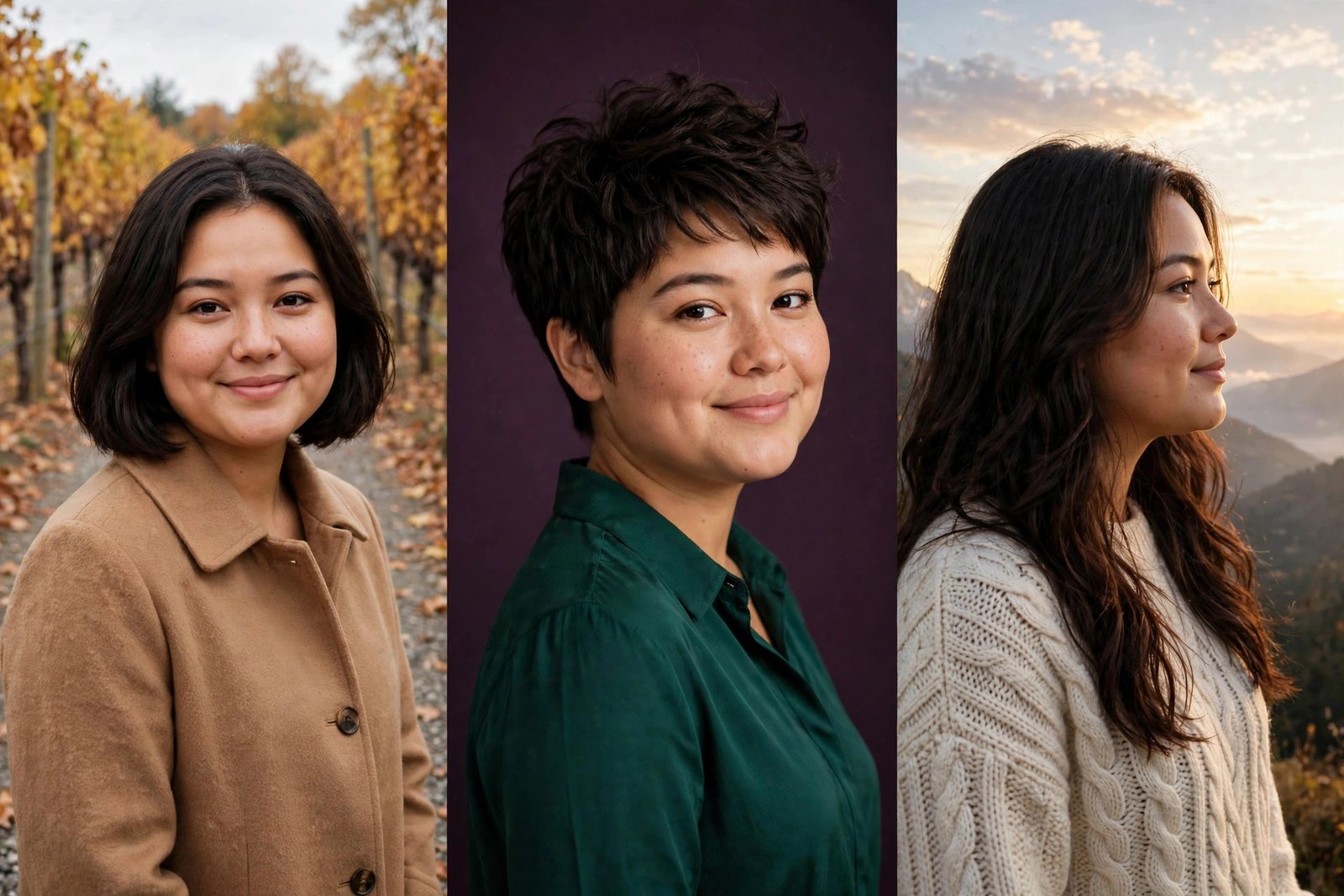
One length. No layers. Zero apology. The blunt bob is the most architectural haircut in the book — a single clean line cut straight across, usually at chin level — and it has survived every trend cycle for a century because nothing frames a face quite like it. From Margot Robbie’s graphic red-carpet version to the everyday sleek chop, here is what defines the cut, how the glass-bob upgrade takes it further, who it suits, and how to keep those edges razor-sharp.
What Is a Blunt Bob Haircut?

A blunt bob is cut at one uniform length all the way around the head, with no layers, no graduation, and no texturising at the perimeter. The defining feature is the edge itself: straight, crisp, and deliberate. Most versions sit at chin level or just below, though longer blunt lobs exist. The cut is executed with the hair combed straight down and zero tension, so the line hangs exactly as cut — which is why a skilled, precise hand matters more here than in any layered style.
What the blunt bob gives you is density. With no layers to remove weight, the ends read thick and full, making it the gold-standard cut for fine hair that needs to look abundant. The trade-off is honesty: because there is no layering to hide behind, the cut shows growth quickly and demands regular trims to keep its signature line.
Blunt Bob vs Layered Bob

Choosing between blunt and layered comes down to the finish you want — sharp or soft:
| Feature | Blunt Bob | Layered Bob |
|---|---|---|
| Structure | One length, no layers | Graduated layers throughout |
| Ends | Thick, solid, graphic line | Feathered, textured, broken-up |
| Volume effect | Creates the illusion of density | Removes weight, adds movement |
| Best for | Fine to medium hair | Thick or heavy hair |
| Maintenance | Trims every 4–6 weeks | More forgiving between cuts |
| Mood | Minimalist, bold, polished | Soft, casual, lived-in |
If your hair is fine and you want it to look thicker, blunt wins outright — a solid perimeter is the oldest density trick in the book. If your hair is thick and heavy, layers keep a bob from turning into a triangle. Many stylists now blend the two: a blunt perimeter with a whisper of invisible internal layering for movement without sacrificing the edge.
The Glass Bob: An Ultra-Sleek Blunt

The glass bob is the blunt bob taken to its logical extreme: the same one-length cut, finished so sleek and reflective it looks like glass. Think liquid shine, ends so sharp they could cut paper, and not a flyaway in sight. It is the red-carpet evolution of the classic blunt — Kim Kardashian’s ultra-straight versions are the reference — and it has become a trend in its own right.
Getting the glass finish is a styling achievement rather than a different cut. The recipe: a smoothing blowout with a flat brush, then a pass with straighteners in small sections, then a shine serum or gloss spray to seal the surface. The cut underneath must be immaculate — any unevenness the layers would have hidden shows up immediately under glass. It is higher-maintenance than a standard blunt, but for evenings and events, nothing photographs better.
Who Does a Blunt Bob Suit?

The blunt line draws a strong horizontal across the face, so placement is everything:
- Oval faces: the perfect match — any blunt length works, chin or shoulder.
- Round faces: go slightly longer (below the chin) and add a middle or deep side part to elongate.
- Square faces: soften the geometry with a length just below the chin or add softening bangs.
- Heart-shaped faces: a chin-length blunt balances a wider forehead against a narrower chin.
- Long faces: the horizontal line adds width, which visually shortens — pair with bangs for extra balance.
Texture-wise, straight to slightly wavy hair shows the edge at its best. Curly hair can absolutely wear a blunt shape, but the graphic line softens into a rounded silhouette — beautiful, just a different statement. Fine hair is the biggest winner: the solid ends create fullness no layered cut can fake.
How to Style a Blunt Bob at Home
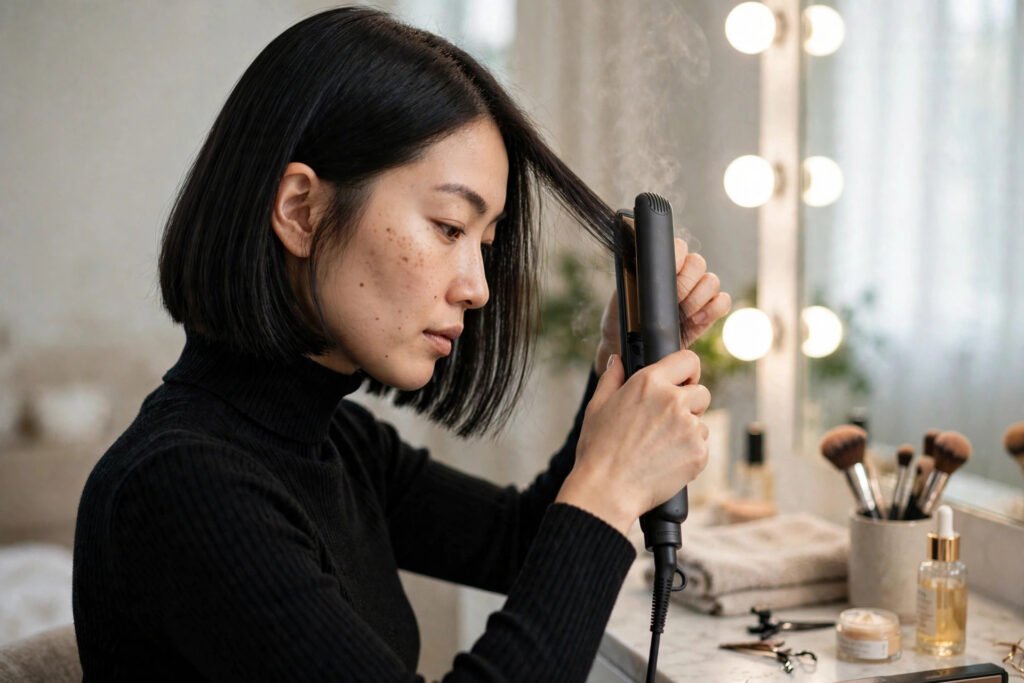
1. Sleek and straight. Apply heat protectant, blow-dry smooth with a flat brush, then run straighteners through in thin sections. Tuck one side behind the ear for instant polish. Finish with a drop of shine serum on the ends.
2. Soft waves. Wrap random sections around a curling wand, leaving the last inch straight to protect the blunt edge. Shake out and mist with texturising spray — the contrast between wavy lengths and a sharp perimeter is the modern way to wear it.
3. Textured and tousled. Work a pea-sized amount of texturising paste through dry mid-lengths, then pinch and twist small sections. This lived-in version keeps the edge but drops the formality — ideal for weekends.
One rule across all three: never round the ends under with a round brush unless you want a beveled bob instead. The blunt bob’s power is in its straight, unapologetic line.
Blunt Bob Maintenance and Upkeep

Sharp lines show growth fast, so book trims every 4 to 6 weeks — the single most important maintenance rule for this cut. Let it slide and the edge turns ragged, then wings outward at the shoulders, and the whole graphic effect collapses.
Between salon visits:
- Use a microfibre towel and heat protectant every time — frizz is the blunt bob’s worst enemy.
- A weekly gloss treatment keeps the ends reflective, especially if you chase the glass finish.
- Sleep on silk to keep the line smooth overnight and cut morning restyling in half.
- Ask your stylist to point-cut the very tips by a millimetre at each trim — it keeps the edge crisp without losing length.
Compared with softer styles like the French bob, the blunt bob asks more of your calendar but less of your mornings: the styling is simple, the upkeep is the trim schedule.
Blunt Bob Haircut FAQs
How often should I trim a blunt bob?
Every 4 to 6 weeks. The cut’s entire identity is its sharp perimeter, and even half an inch of growth softens the line enough to notice.
Is a blunt bob good for thin hair?
It is one of the best cuts for thin hair. With no layers removing weight, the ends look dramatically thicker — the blunt edge creates density where fine hair usually wisps away.
Can I wear a blunt bob with bangs?
Yes, and it is a classic pairing. A straight-across fringe echoes the graphic line of the cut; curtain bangs soften it. Match the fringe’s sharpness to the mood you want.
What’s the difference between a blunt bob and a regular bob?
“Bob” describes the length; “blunt” describes the technique. A regular bob haircut may have layers or graduation, while a blunt bob is strictly one length with a crisp, unlayered edge.
Will a blunt bob suit curly hair?
It can, but expect a different look: the sharp line relaxes into a strong rounded shape with beautiful volume. You will need regular trims to keep the silhouette intentional rather than overgrown.
Written by the New Light team. Fancy trying one of these shapes? Send us a message and bring your favourite photograph when you visit.