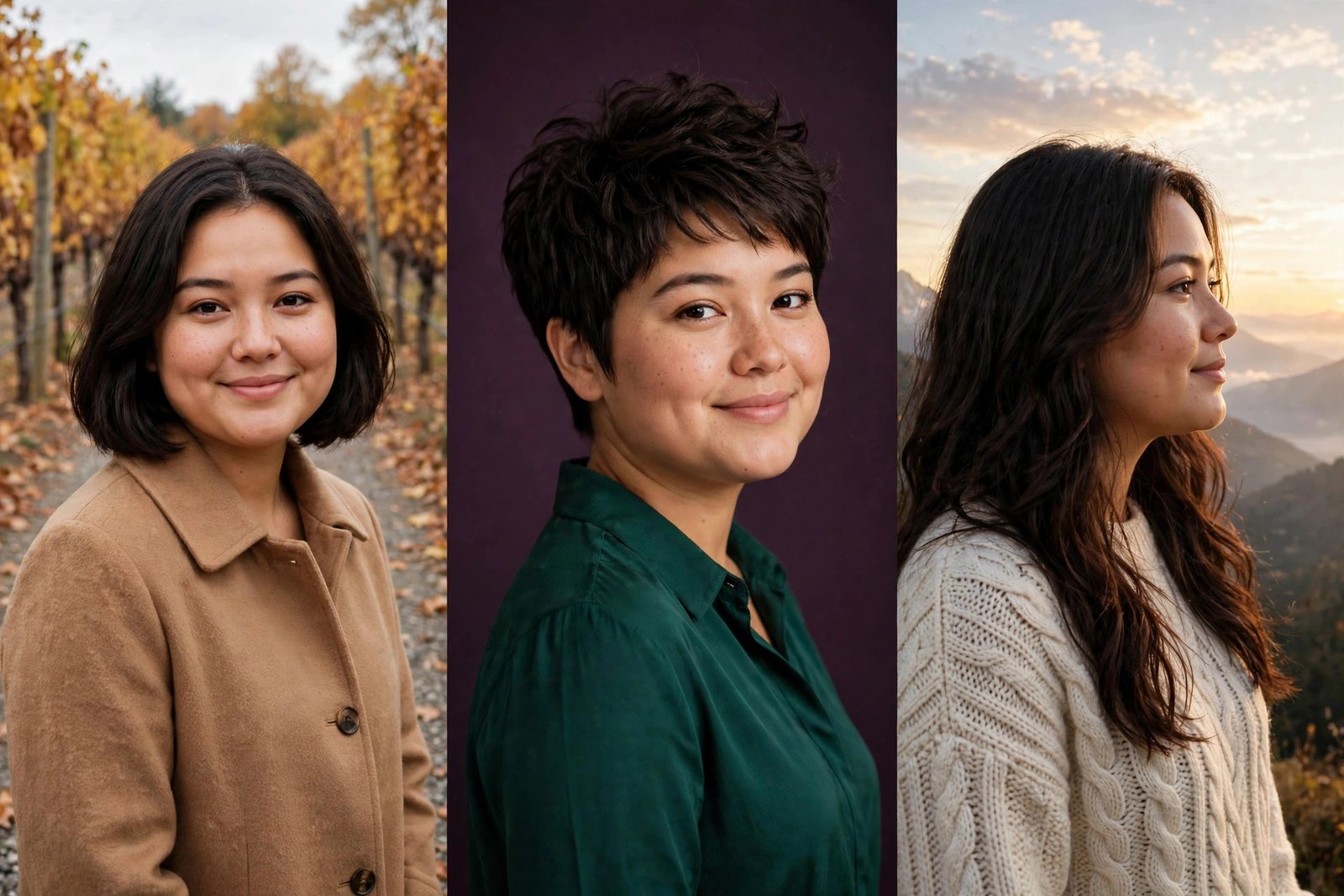
Bottleneck bangs are the ’70s fringe having a major revival — and the easiest bangs to live with. Named for the shape of a bottle’s neck, they start slim and short in the middle of the forehead, curve longer around the eyes, and finish longest along the cheekbones. The result is soft, shaggy and face-framing, without the commitment of a blunt fringe.
Coined by hairstylist Tom Smith, the style is often described as curtain bangs’ shaggier counterpart: a little more textured, a little more undone, and far more forgiving on a bad hair day. Worn by Stevie Nicks in the 1970s and by Jenna Ortega, Dakota Johnson and Halle Berry today, bottleneck bangs suit almost every face shape and hair type — provided the length and angle are tailored to you.
What Are Bottleneck Bangs?

Bottleneck bangs are a face-framing fringe cut shorter in the centre and gradually longer toward the sides, forming a soft inverted V — or, as celebrity hairstylist Lovette Candice puts it, an upside-down V in the top middle of the forehead that is narrow at the top and wider as it goes down.
The shape is the whole idea. The shortest pieces sit in the middle of the forehead, short enough to be worn falling straight rather than swept away. From there, the fringe curves longer past the eyes and finishes at cheekbone to jaw length at the sides, blending into face-framing layers. The cutting line stays soft and choppy, never blunt, which is why the style looks lived-in rather than precise.
That softness is also why bottleneck bangs are so adaptable. A stylist can adjust the length and angle to make cheekbones look wider or stronger, slim a wider face, or draw focus to the eyes and lips — all by changing where the longest pieces fall.
Bottleneck Bangs vs Curtain Bangs

Bottleneck bangs and curtain bangs are close cousins, and they are easy to confuse. Both part in the middle and frame the face — but they behave differently.
| Bottleneck bangs | Curtain bangs | |
|---|---|---|
| Centre length | Short enough to fall straight on the forehead | Swept away from the face to each side |
| Shape | Inverted V: short centre, long sides | Even sweep, like curtains opening |
| Texture | Soft, choppy, shaggy | Smoother, more polished |
| Styling effort | Very low — air-dry friendly | 3–5 minutes with a round brush |
| Best for | A ’70s, undone, textured look | A soft, romantic, classic look |
In short: curtain bangs fall away from the face, while bottleneck bangs are short enough in the centre to be worn falling straight. If you love the idea of curtain bangs but want something with more texture and less blow-drying, bottleneck bangs are the version to try. Our full guide to curtain bangs covers the smoother alternative in detail.
Bottleneck Bangs for Round Face

Bottleneck bangs are more adaptable to face shapes than most fringes, because the length and angle can be tuned to each face. For a round face, the goal is length and vertical lines, not width.
Ask for the longest version you are comfortable with — the side pieces reaching the jaw rather than stopping at the cheekbones — with a centre part and soft, choppy ends. Height at the crown helps too: a little root volume stretches the face visually and offsets the softness of the fringe.
Other face shapes have their own sweet spots:
| Face shape | Best bottleneck bang length | Why it works |
|---|---|---|
| Oval | Any length | Balanced proportions suit every version |
| Round | Jaw length at the sides | Vertical lines lengthen the face |
| Square | Cheekbone, soft and feathered | Curves soften a strong jaw |
| Heart | Longer, fuller, chin length | Balances a wider forehead with a narrow chin |
| Long | Shorter centre, cheekbone sides | Adds width and breaks up face length |
Whatever your shape, the rule is the same: bring photos, and let your stylist adjust the angle to your bone structure rather than copying a celebrity photo exactly.
Bottleneck Bangs for Long Hair

Bottleneck bangs with long hair are the classic ’70s pairing — think Stevie Nicks. On long hair, the short centre pieces give the face a focal point, while the long side pieces melt into layers and waves, so the fringe never looks like an add-on.
This is the easiest version to live with. The length means you can tuck the side pieces behind your ears, pin the centre back, or wear the whole fringe loose on days you do not style it. It pairs naturally with long layers, where the bangs simply become the shortest layer, and with soft waves, where the texture of the fringe matches the texture of the lengths.
Ask your stylist to cut the fringe with your normal parting, and to check it dry if your hair is wavy — bangs shrink as they dry, and a wet cut can end up shorter than expected.
Bottleneck Bangs with a Bob and Lob
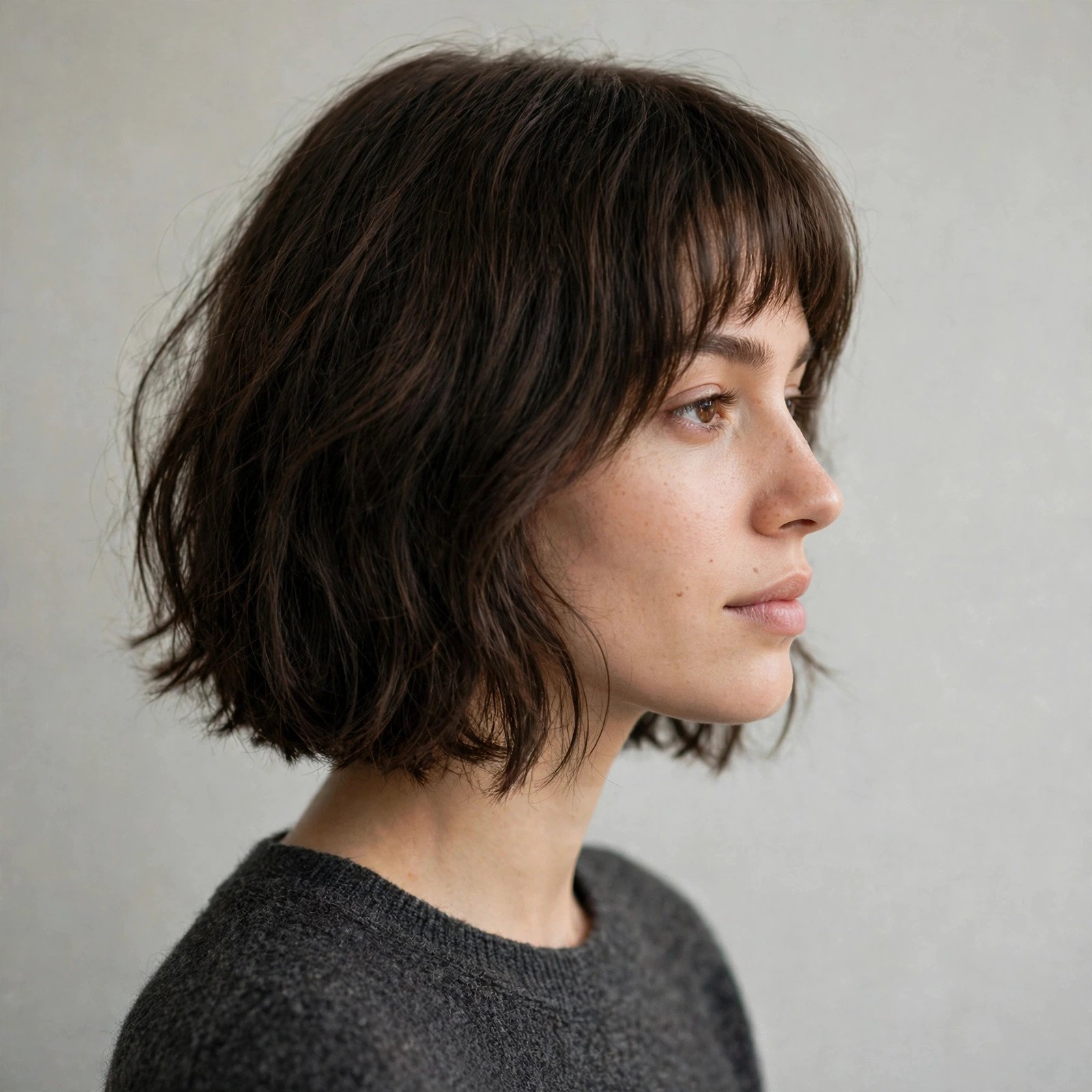
Bottleneck bangs are not only a long-hair style. With a bob, they add a soft, ’70s edge to a clean shape: a chin-length bob with bottleneck bangs reads playful rather than severe, because the choppy fringe breaks up the bob’s straight lines. Jenna Ortega’s tousled lob with bottleneck bangs is the modern reference point.
With a lob — a long bob — the effect is similar but softer still. The side pieces of the fringe blend into the lob’s face-framing layers, giving one continuous, feathered shape around the face. Keep the bob itself fairly simple: a blunt or lightly layered cut lets the fringe do the textural work, while a heavily shaggy bob plus bottleneck bangs can look busy.
Our guide to the bob haircut covers the bob lengths that pair best with a textured fringe like this one.
Bottleneck Bangs for Curly and Wavy Hair

Curly and wavy hair can absolutely wear bottleneck bangs — in fact, the style’s undone, textured character suits natural texture better than a blunt fringe does. The key is to work with the texture rather than fighting it: cut the fringe dry, curl by curl, so the stylist can see exactly where each piece will fall.
For wavy hair, scrunch a curl cream through damp bangs, part them in the middle, and let them air-dry — the waves form their own soft bottleneck shape. For curly hair, ask for longer bangs than you think you need, since curls shrink significantly as they dry. A diffuser on a low heat setting gives definition without frizz.
One honest note: on very curly hair, bottleneck bangs will not look like sleek straight-haired photos. They will look softer, fuller and more textured — a look in its own right, and one that suits the ’70s spirit of the cut perfectly.
How to Style Bottleneck Bangs
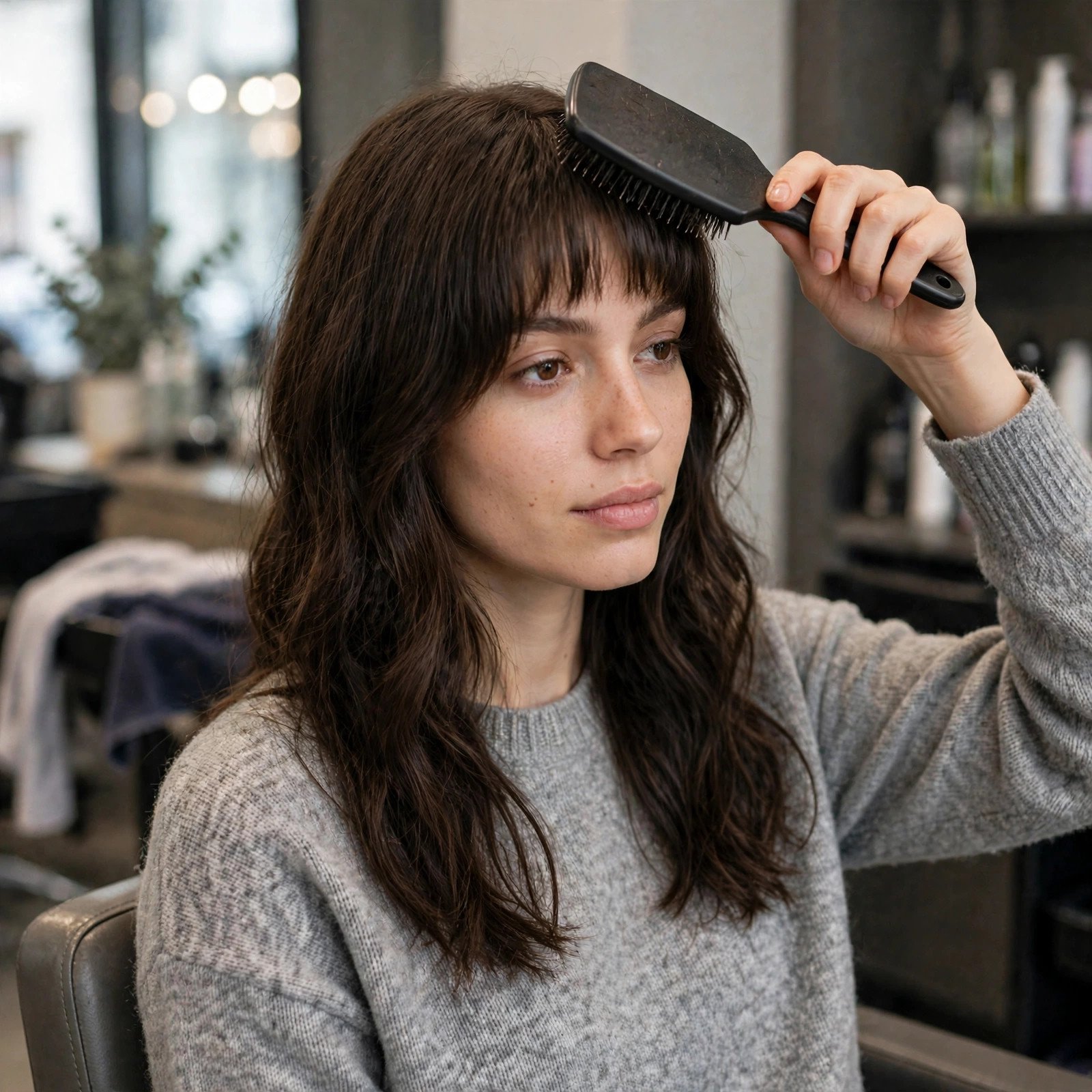
Styling bottleneck bangs is famously low-effort, which is one of their biggest selling points. The style is meant to look a little undone, so perfection is not the goal.
- Start damp. If the rest of your hair is dry, just dampen the fringe with a spray bottle.
- Brush them down. Brush the bangs all the way down with a flat brush, following the centre part.
- Add a soft bend. With a flat iron, give the bangs a gentle C-shaped bend, curving the longest side pieces slightly away from the face.
- Add texture. Spray a light texturising spray at the roots and ends for a lived-in, day-two effect — this stops the fringe looking overly polished.
- Leave them alone. The more you touch bottleneck bangs through the day, the flatter they get. Let the texture do the work.
No time to style at all? Let them air-dry, or diffuse if you have curls or waves. That relaxed, perfectly imperfect finish is exactly what the cut is designed for.
Bottleneck Bangs for Updos
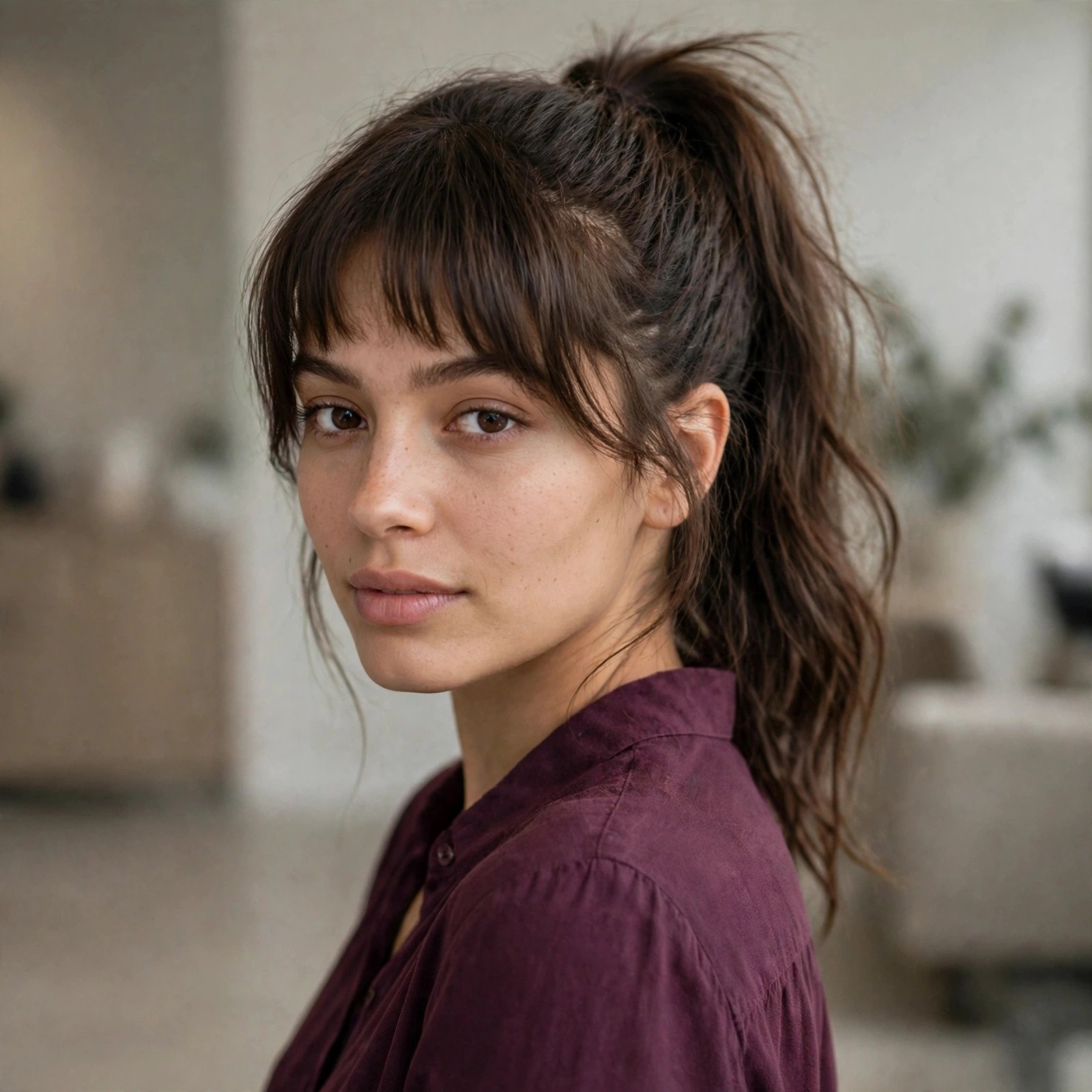
Bottleneck bangs are made for updos. Because the centre pieces are short and the side pieces are long, a few strands always escape — and with this cut, that is a feature, not a flaw.
A high ponytail with bottleneck bangs left loose around the face is the signature look: the fringe softens the pulled-back hair and keeps the style from looking severe. The same trick works with a messy bun, a braided bun, or a half-up style, where the long side pieces fall naturally alongside the face.
For a more polished occasion, smooth the centre pieces down with a flat iron and let only the longest side pieces escape. For a casual day, leave the fringe exactly as it air-dried. Either way, you get a finished-looking updo with almost no extra styling — one reason bottleneck bangs are so popular with people who wear their hair up often.
Bottleneck Bangs Maintenance

Bottleneck bangs are lower maintenance than blunt bangs, but they are not zero-maintenance. The fringe area gets oily faster than the rest of your hair because it touches your forehead, so dry shampoo on the bangs alone — even when the rest of your hair is clean — is a trick worth learning. Apply at the roots, wait a minute, then brush through.
Trim every three to four weeks to keep the bottleneck shape, since the short centre pieces grow out fastest and blur the inverted-V line. Wash just the fringe at the sink if needed: a two-minute wash revives the whole style. Avoid heavy oils on the bangs — they weigh the fringe down and make it look greasy — and keep heavy face creams off the forehead area where the bangs sit.
At night, a loose silk scrunchie or silk pillowcase reduces frizz, which matters more for a textured fringe than for a blunt one: frizz blurs the shape you are trying to keep.
Growing Out Bottleneck Bangs
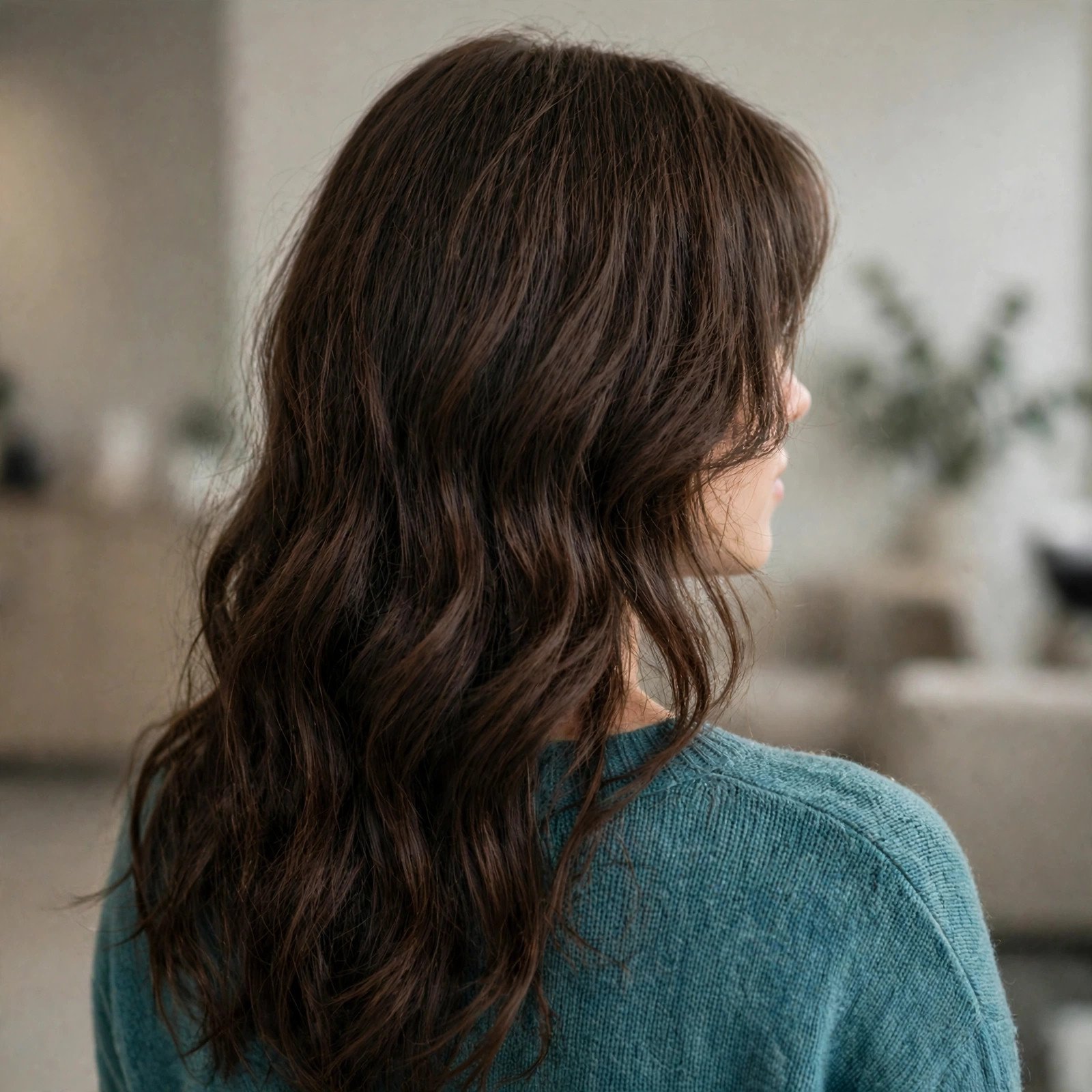
Growing out bottleneck bangs is famously painless, which is one of their biggest selling points. Because the cut already tapers into face-framing layers, there is no harsh line to grow through. The bangs simply get longer and become layers — a hairstyle in itself, not an awkward stage.
To make grow-out even smoother, ask your stylist to blend the ends at each trim rather than cutting the fringe back to its original length. Use clips or a side part on days the centre pieces sit in your eyes, and resist trimming them yourself: one uneven snip can undo months of even growth. Most people find their bottleneck bangs have fully grown into layers within three to four months, with no awkward phase at all.
That easy grow-out is a genuine advantage over blunt or baby bangs. If you are trying bangs for the first time and worry about commitment, bottleneck bangs let you test the look with a graceful exit.
What to Ask Your Stylist

The right request makes all the difference. Say: “Bottleneck bangs — short and soft in the middle, curving longer around the eyes and longest at the cheekbones, with a soft, choppy cutting line, blended into face-framing layers.” Tell your stylist whether you want the side pieces at cheekbone or jaw length, and how much time you will actually spend styling each morning.
Show photos of the exact shape you want, on a face shape and hair type like yours, and point out specifically what you like about each photo so those parts can be adjusted to your face. Ask for the cut to be checked dry, with your normal parting, and ask your stylist to show you the flat-brush-and-bend routine before you leave. Five minutes of coaching in the salon saves weeks of trial and error at home. If you are nervous, start longer: bottleneck bangs are easy to shorten at a follow-up, and a longer first version lets you test the look with almost no risk.
FAQs
What is the difference between bottleneck bangs and curtain bangs?
Curtain bangs fall away from the face in a soft sweep. Bottleneck bangs are short enough in the centre to be worn falling straight, with a choppier, more textured shape that lengthens toward the cheekbones.
Are bottleneck bangs low maintenance?
Yes, compared with blunt bangs. They are meant to look lived-in and undone, so air-drying works well, and they need a trim only every three to four weeks. They also grow out gracefully into layers.
Do bottleneck bangs work for curly hair?
Yes, for all hair types and textures, including curly hair. Cut them dry and keep them longer to allow for shrinkage, and work with your natural texture rather than straightening against it.
Do bottleneck bangs suit a round face?
Yes, especially in a longer version. Jaw-length side pieces create vertical lines that lengthen a round face, while height at the crown adds further lengthening.
How long do bottleneck bangs take to grow out?
Usually three to four months to blend fully into face-framing layers, with no awkward stage, because the cut already tapers into the rest of your hair.
Written by the New Light team. Fancy trying one of these shapes? Send us a message and bring your favourite photograph when you visit.