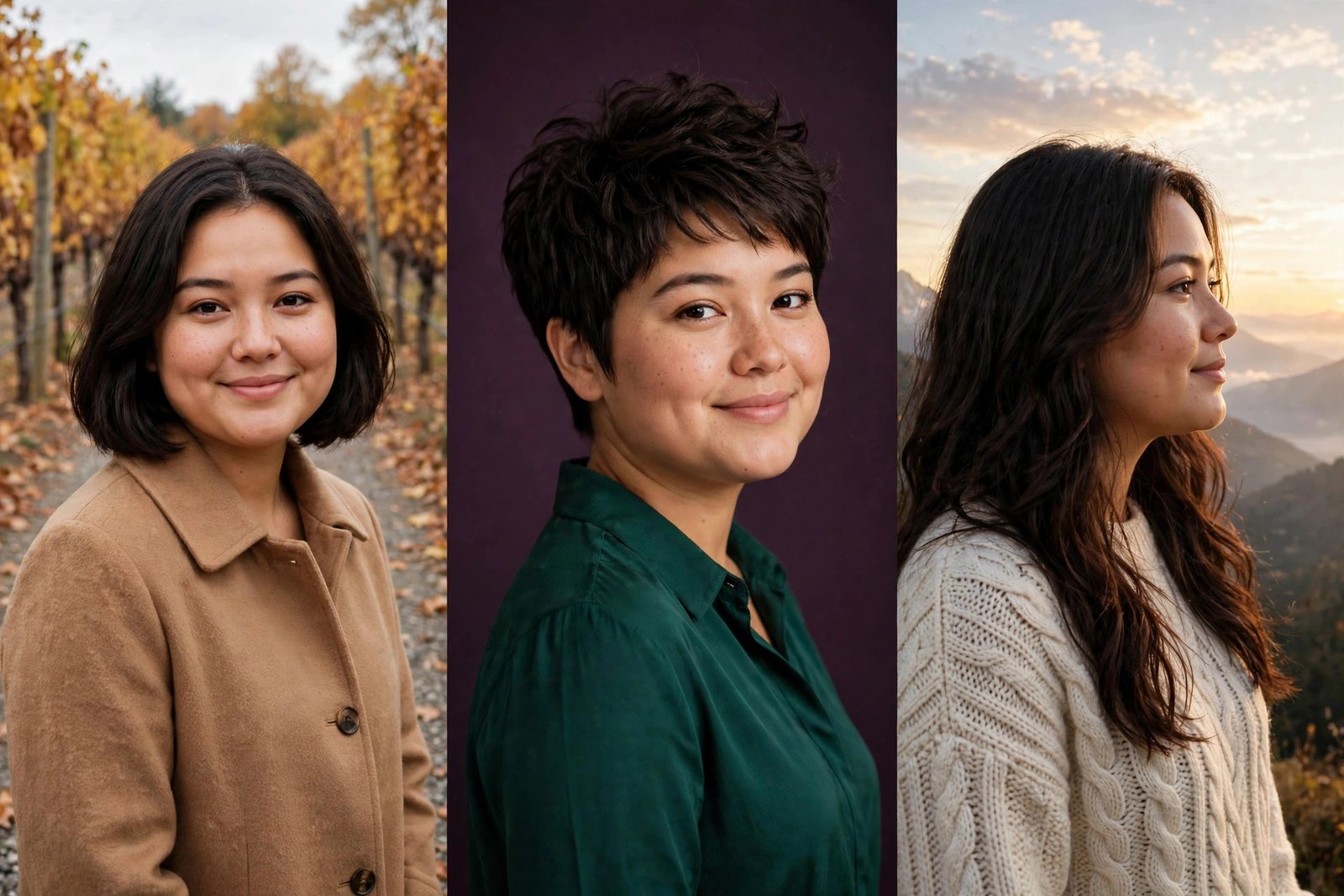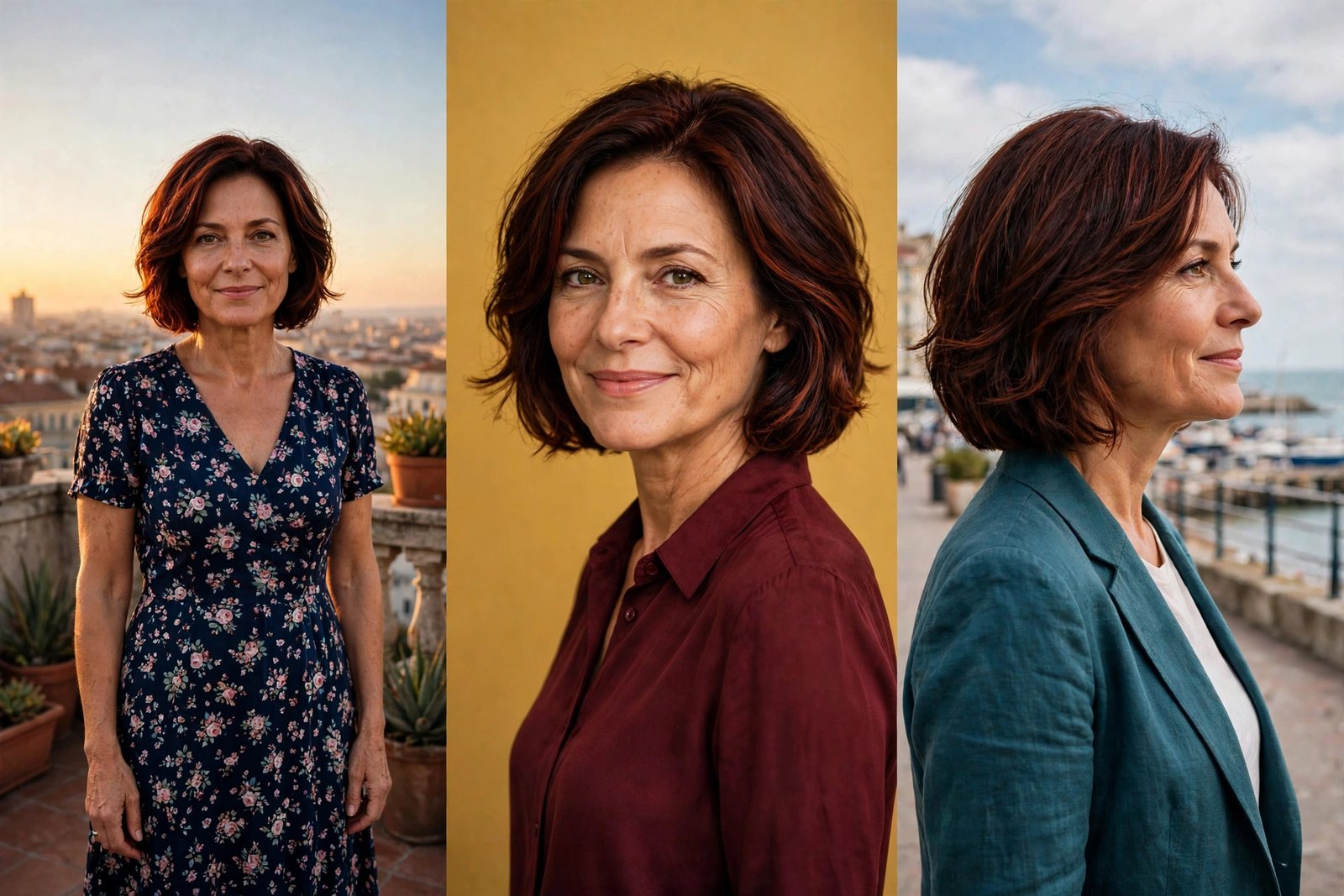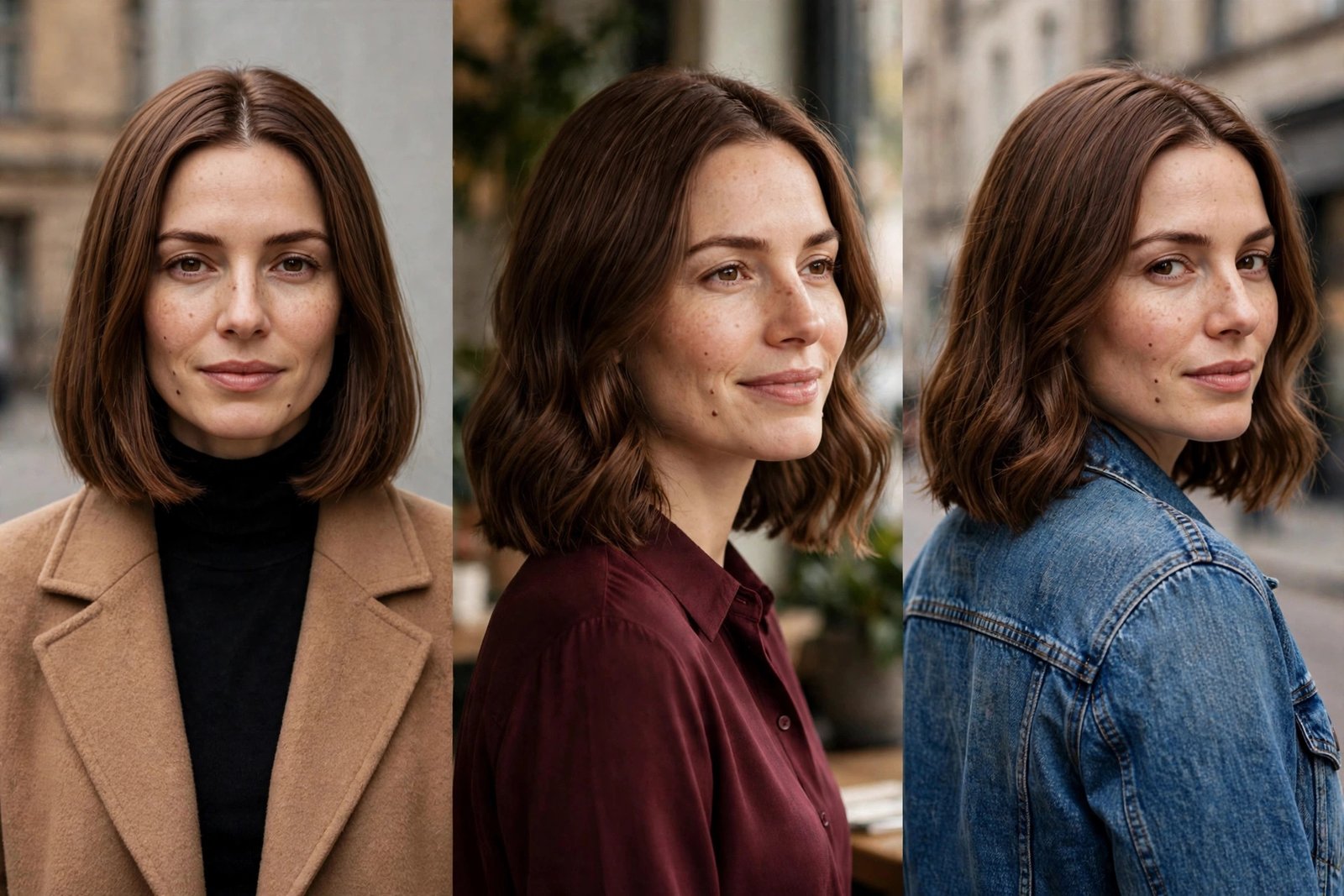
The lob — short for “long bob” — is the haircut that refuses to go out of style. Sitting between the chin and the shoulders, usually grazing the collarbone, it gives you the chic lines of a bob with far more room to play: sleek, wavy, tucked behind one ear or swept into a half-up style. It flatters most face shapes, suits nearly every hair type and grows out gracefully — the safest “big change” in the book.
What Is a Lob Haircut?

A lob is a bob cut long. Instead of ending at the chin or jawline, the hair falls somewhere between the chin and the shoulders — most often right at the collarbone. That extra length is what makes the cut so versatile: you keep the strong silhouette of a bob, but gain enough hair for waves, braids, ponytails and half-up styles that a short bob cannot do.
The lob is the perfect in-between cut: growing out a short bob, it is where hair starts feeling long again; going shorter from long hair, it lets you test the chop without the commitment. It works straight, wavy or curly.
Lob vs Bob: What’s the Difference?

The lob and the bob are close relatives, but the length difference changes how they wear:
| Feature | Classic bob | Lob (long bob) |
|---|---|---|
| Length | Chin to jawline | Collarbone to shoulders |
| Styling range | Sleek, tucked, minimal | Waves, braids, half-up, ponytails |
| Grow-out | Awkward flippy stage | Grows out gracefully |
| Face effect | Sharp, statement-making | Softer, more forgiving |
Choose the bob for a bold, polished statement (see our complete bob haircut guide for every variation). Choose the lob for the same chic energy with more styling freedom and an easier grow-out. Most people who are “bob-curious” are happiest starting here.
Collarbone Lob: The Classic Length
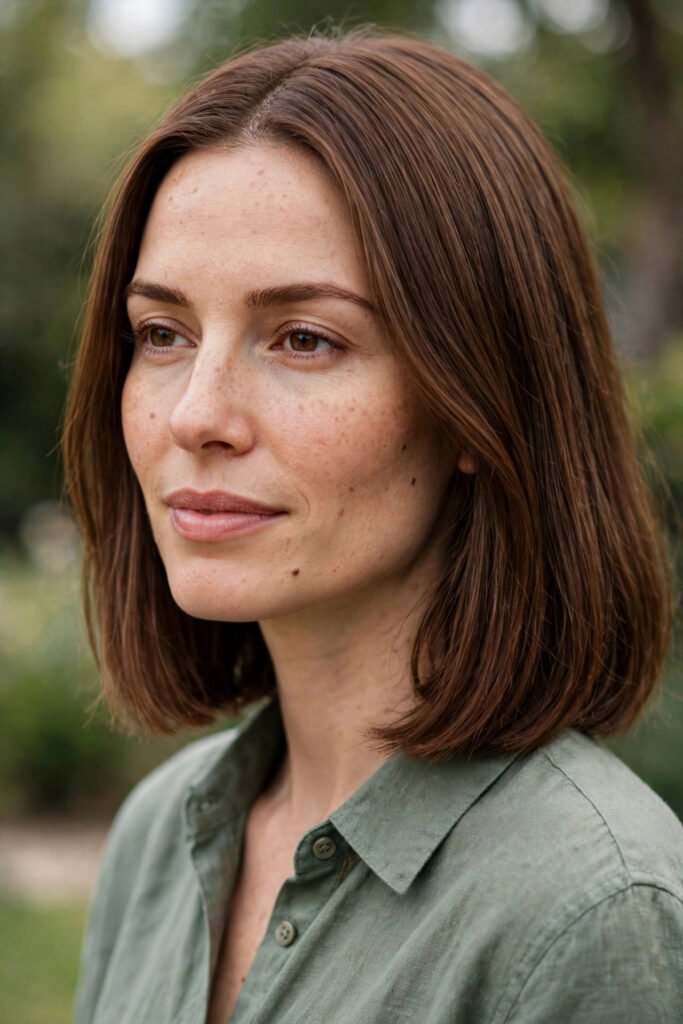
The collarbone lob is the most iconic version: hair dropping an inch or two below the shoulders, just kissing the collarbone. It is the length stylists recommend first because it flatters almost everyone — long enough to elongate the neck and slim the face, short enough to feel fresh and modern.
Wear it sleek and centre-parted for polish, or air-dried with texture cream for everyday ease. When in doubt, ask for collarbone length — the sweet spot for most faces and hair types.
Lob with Layers

Layers decide how your lob moves. A one-length lob with a blunt perimeter looks sleek and strong — the best choice for fine hair, because solid ends create the illusion of thickness. A layered lob has subtle internal layers or face-framing pieces that add movement, texture and lightness.
The current take is softness: “invisible layers” that lift the interior without breaking the clean outline, plus long face-framing pieces from the cheekbones. Ideal for thick hair, which needs weight removed to avoid a helmet-like shape. Rule of thumb: finer hair, fewer and longer layers; thicker hair, more texture.
Wavy Lob with Beachy Texture

The wavy lob is the signature lob look — tousled, beachy, everywhere from red carpets to street style. Waves add volume, dimension and movement, and make the cut look good even on second-day hair.
Wrap 1-inch sections around a wand or flat iron, alternating directions, leaving the last inch straight. Shake out once cool; mist with sea-salt spray. Naturally wavy? Scrunch curl cream into damp hair and air-dry. Texture also hides uneven growth — the go-to style between trims.
Lob with Bangs
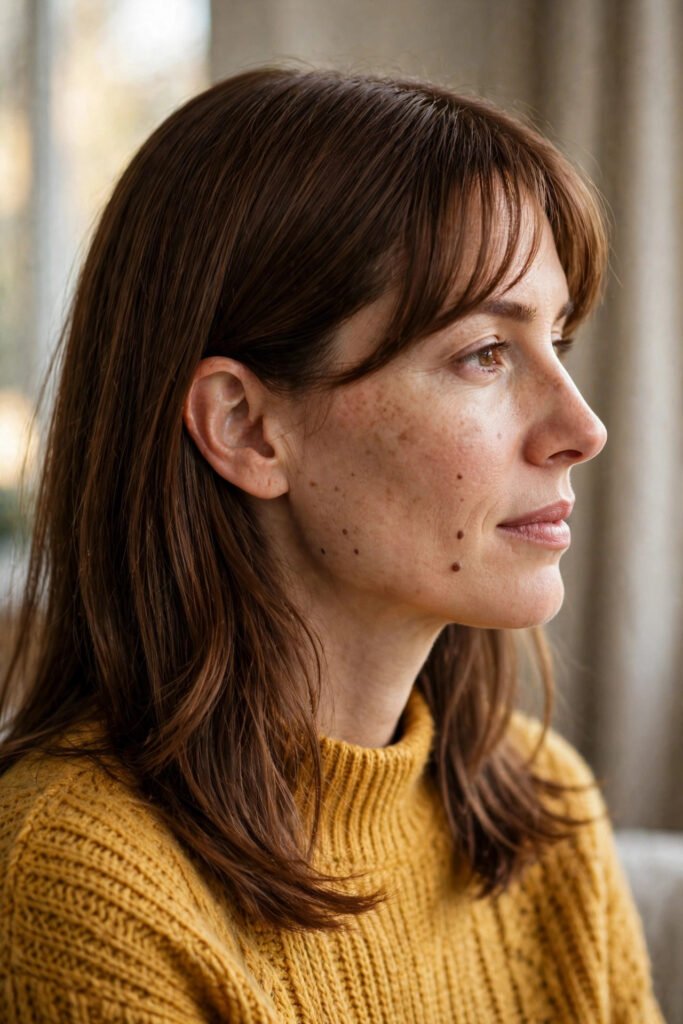
Bangs and lobs are a natural pairing, because the mid-length cut gives a fringe room to blend. Curtain bangs are the most popular match: parted in the middle, sweeping to each side, framing the cheekbones and melting into the lengths. They suit oval and heart-shaped faces especially well.
A side-swept fringe is the lowest-commitment option — it grows out cleanly and adds movement. A straight-across fringe makes the boldest statement and pairs best with a sleek lob. Practical bonus: on fine hair, a fringe adds the illusion of density at the front, where thin hair looks sparsest. And the lob is long enough to pin bangs back on an off day.
Shaggy Lob
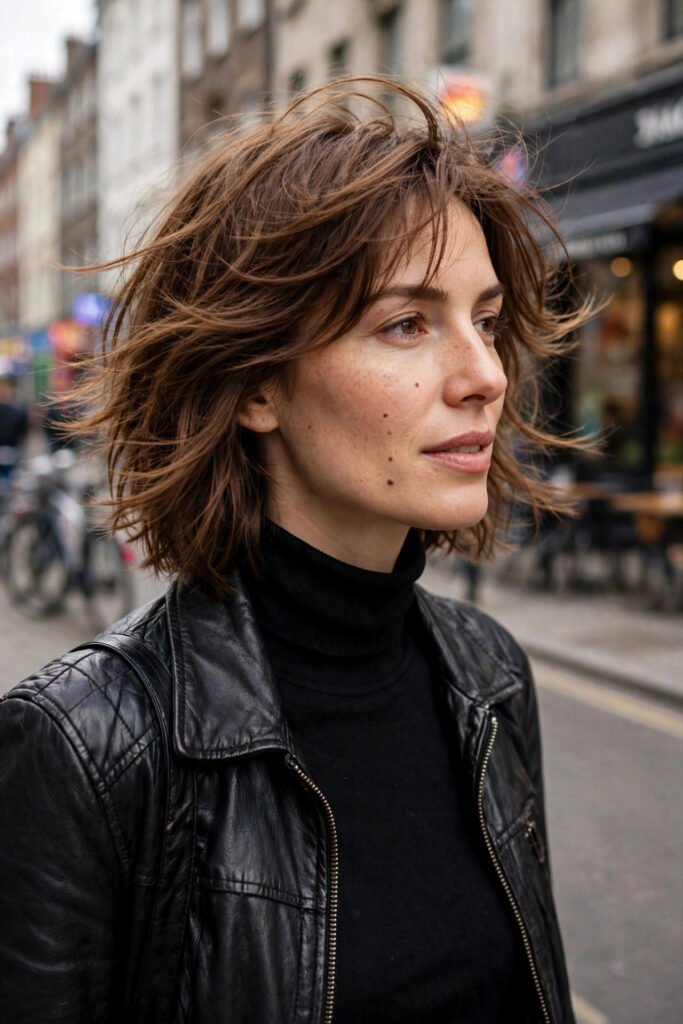
The shaggy lob is the modern shag at mid-length: choppy, broken-up layers, plenty of face-framing pieces, usually a curtain fringe. It is the highest-texture lob — deliberately undone, full of movement, made for effortless cool rather than perfect polish.
It creates volume without weight, so it works beautifully on medium to thick hair. On fine hair, keep the layers long and the ends blunt enough to preserve density. Styling is genuinely wash-and-go: air-dry with mousse or texture spray scrunched in and let the layers work. The shaggy lob looks better slightly messy — precision not required.
Inverted Lob: The Angled Version

The inverted lob is cut on an angle: shorter at the nape, gradually longer towards the front, so the silhouette slopes forward. It is the longer cousin of the A-line bob, and brings the same benefits — the diagonal line elongates the neck, slims the face and gives fine hair a fuller-looking front.
The angle can be subtle (the back an inch or two shorter) for a polished look, or dramatic for a bold, graphic statement. It suits straight hair best, since smooth hair shows the line most clearly, but works on wavy hair with a softer result. Love angled cuts but want more length than a short bob allows? This is your version.
Lob for Different Hair Types

The lob adapts to texture — but the cutting details matter:
- Fine or thin hair: choose a blunt, one-length lob with minimal layering — the solid perimeter makes ends look thicker.
- Thick hair: you need internal texture. Long layers or point-cut ends remove bulk so the lob moves instead of sitting like a triangle.
- Wavy hair: the lob and natural waves were made for each other. Keep layers long, scrunch and air-dry — often all you need.
- Curly hair: a layered lob with longer layers prevents the pyramid shape and lets curls spring with definition. Avoid heavy thinning (it creates frizz) and keep extra length for shrinkage.
Point-Cut Lob: Soft, Lived-In Ends

Point cutting is a technique, not a style: instead of cutting ends straight across, the stylist snips upward into the hair at an angle, creating soft, feathered ends. On a lob, it takes the severity out of a blunt line and gives natural movement and a lived-in feel.
Ideal if blunt cuts feel too harsh or thick hair needs lightened ends — soft ends also blur the line between fresh cut and grow-out. Ask for it by name: “point-cut ends, not blunt”.
How to Style and Maintain a Lob

Three looks worth mastering:
- Sleek and straight: blow-dry smooth with a paddle brush, flat-iron the mid-lengths and ends, finish with serum for shine.
- Beachy waves: wand or flat-iron waves, finger-combed out, finished with texture spray — the everyday signature.
- Half-up: gather the top section into a bun, twist or clip. The lob is the shortest length where half-up styles work properly.
Book a trim every 6 to 8 weeks to keep ends sharp — blunt lobs need it most, textured lobs can stretch longer. The lob grows out gracefully into shoulder-length hair with no awkward stage (our guide on how to grow out a bob walks through every phase).
FAQs
Is a lob haircut high maintenance?
No — one of the lowest-maintenance cuts. Wash-and-go works for wavy and textured versions; sleek versions need a quick blow-dry. Trims every 6 to 8 weeks keep the shape.
Does a lob suit round faces?
Yes, especially collarbone length and angled versions. Length below the chin elongates the face; a centre or side part with face-framing layers slims the cheeks.
How long does a lob take to grow out?
From collarbone length, expect 6 to 9 months to reach medium length. The grow-out is graceful — the lob simply becomes a longer bob, then shoulder-length hair.
Can you tie up a lob?
Yes. A collarbone lob handles low ponytails, half-up styles, small buns and braids. Very short lobs manage a half-up but may struggle with a full ponytail.
Lob or bob — which should I choose?
The lob for styling versatility, easier grow-out and a softer change. The bob for a bold, sharp statement.
Written by the New Light team. Fancy trying one of these shapes? Send us a message and bring your favourite photograph when you visit.