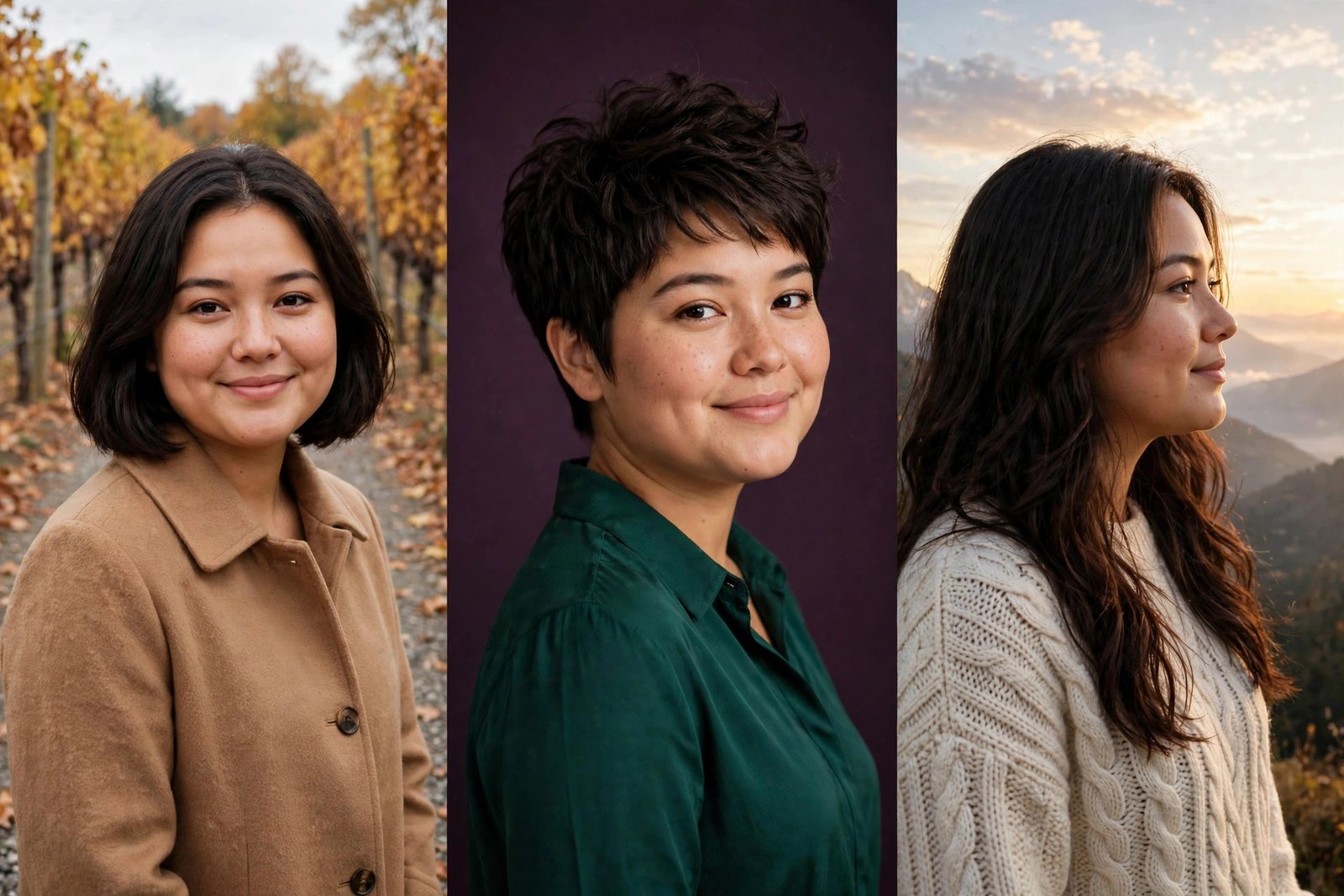
A blunt cut for long hair is the simplest cut that makes the biggest statement. Every strand ends at exactly the same length, with no layers, thinning or feathering to soften the edge. The result is a clean, heavy hemline that makes long hair look thicker, healthier and far more deliberate than hair simply left to grow out.
If your ends always look thin no matter how long you grow your hair, or you love a polished, expensive-looking finish, a blunt cut long hair style is probably the cut you have been looking for.
What Is a Blunt Cut for Long Hair?
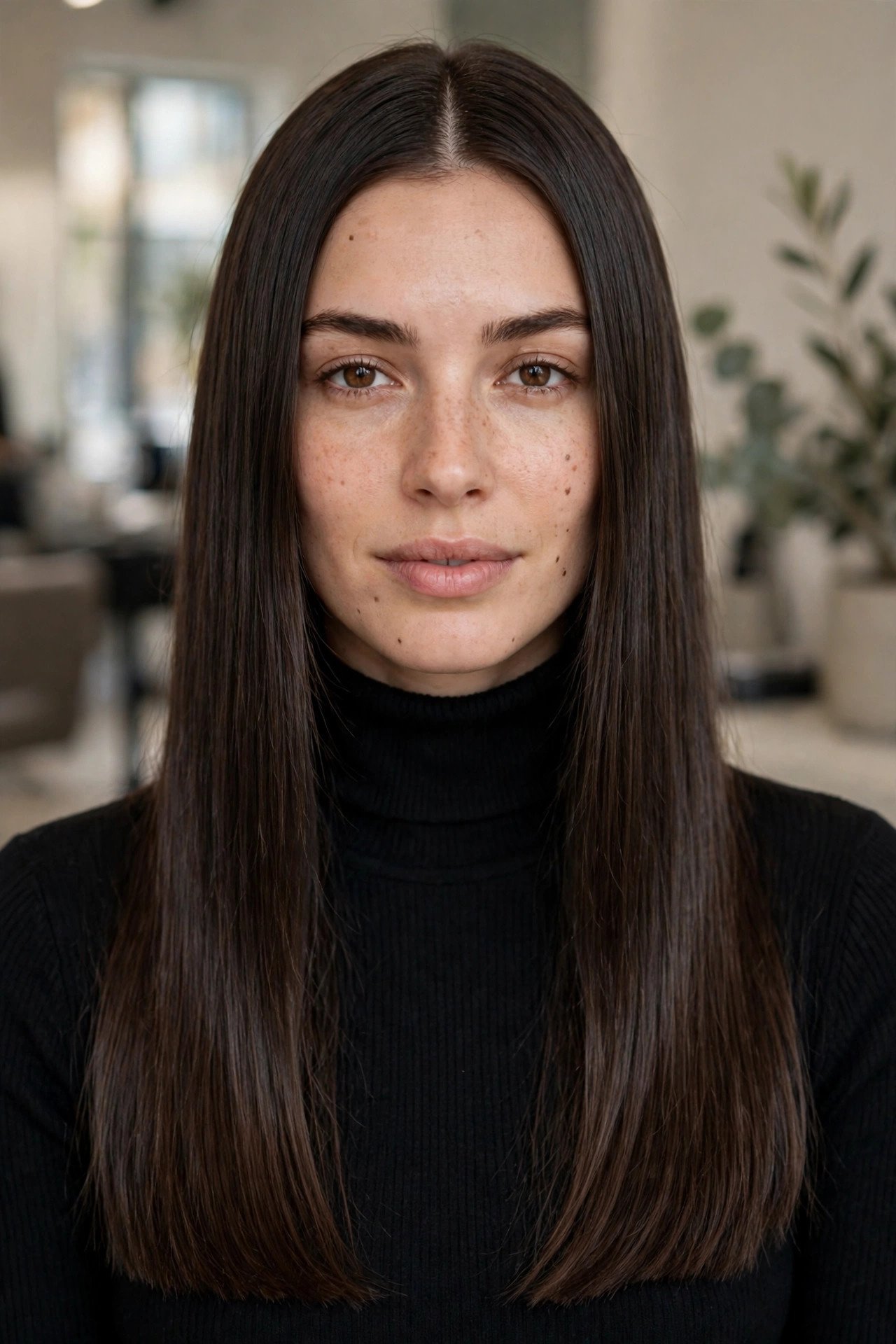
A blunt cut is a one-length haircut: the hair is combed straight down and cut across in a single horizontal line, usually somewhere between the chest and the waist for long hair. There are no shorter pieces on top, no face-framing layers and no texturising at the ends. The perimeter — the bottom edge — does all the talking.
That solid edge is what creates the illusion of thickness. When hair is layered, the ends taper away and can look see-through, especially on fine hair. With a blunt cut, the full density of your hair arrives at the same point, so the ends look as thick as the roots.
A blunt cut is not the same as a blunt bob. The blunt bob haircut uses the same one-length technique at chin or jaw length, while a blunt cut for long hair keeps that sharp edge at chest length or below, giving you far more styling options without losing the clean finish.
Blunt Cut vs Layered Hair: Which Is Better?

Neither cut is better in absolute terms; they solve different problems. Our guide to layered haircuts for women covers the layered side in full, but here is the short comparison:
| Blunt cut | Layered cut | |
|---|---|---|
| Ends | Thick, solid, one length | Softer, tapered, more movement |
| Volume | Weight at the ends, sleek shape | Volume at the crown, airy shape |
| Best for | Fine or thin-looking hair | Thick, heavy hair needing weight removed |
| Styling time | Fast: straighten or wave and go | More versatile, but needs more shaping |
| Grow-out | Line blurs gradually, stays tidy | Layers grow out softly with little upkeep |
| Look | Polished, sharp, minimal | Relaxed, textured, lived-in |
Choose a blunt cut if your main complaint is thin, wispy ends. Choose layers if your hair is so thick it feels heavy or triangular. A middle ground exists too: a blunt perimeter with hidden internal layers underneath, so the outside still reads as one length while the inside gains movement.
Blunt Cut Long Hair for Your Face Shape
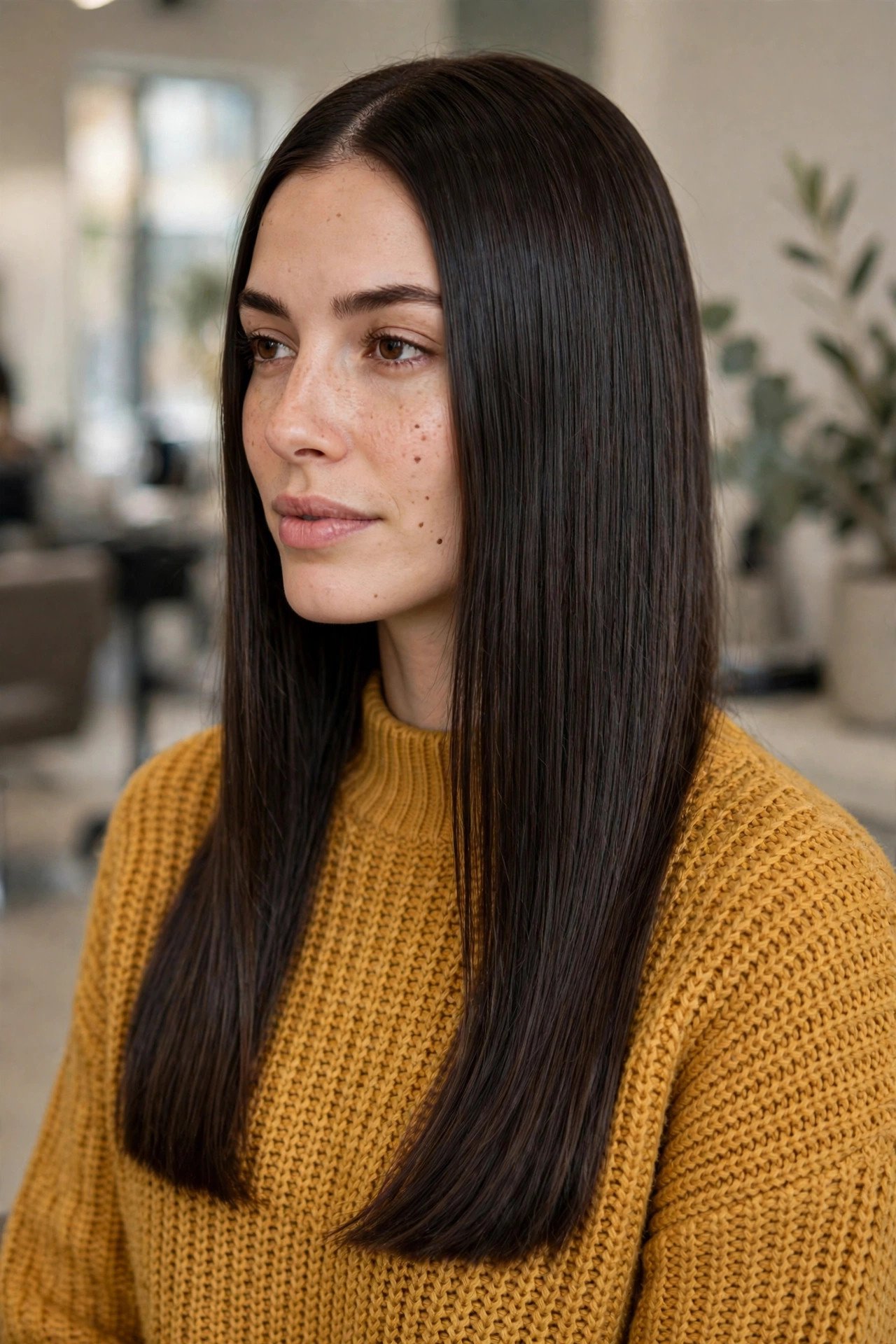
Long blunt hair frames the face with two long, straight panels, so the parting and length matter more than the cut itself. A centre part gives a symmetrical, editorial look and suits oval and heart-shaped faces. A deep side part softens a square jaw and adds root volume, which flatters round faces by breaking up the width.
For a round face, keep the length below the shoulders — the longer panels draw the eye downward. For a long face, a chest-length blunt cut with a side part, or with curtain bangs, stops the style adding even more length. Square faces benefit from one small softening touch: ask your stylist to round the very front corners by a centimetre or two, so the line does not sit harshly against the jaw.
Blunt Cut for Fine Hair

Fine hair is where a blunt cut earns its reputation. Fine strands taper naturally toward the ends, and layering them makes the problem worse. Cutting everything to one length instantly restores the appearance of density, because nothing is removed from the ends at all.
To get the most from a blunt cut on fine hair, keep the length at chest level or above; waist-length fine hair still thins toward the bottom from age and breakage. A root-lifting mousse keeps the top from lying flat, which is the one real risk of a one-length cut on fine hair. Avoid thinning shears completely, and ask for a straight-across cut rather than a point cut, which softens the very edge you want to keep sharp.
Blunt Cut for Thick Hair

Thick hair can wear a blunt cut beautifully, but it needs one adjustment: weight management. A fully blunt, waist-length cut on very thick hair can feel heavy, take ages to dry, and form a solid curtain with no movement. The fix is not visible layers, but internal texture — a few shorter pieces underneath, or a very slight bevel at the ends, so the hair still falls as one length from the outside.
Styling thick blunt hair is straightforward: smoothing cream tames frizz, and a flat iron or large-barrel iron gives a polished wave. Because the ends are heavy, they hold a wave well. Trim every 10–12 weeks; thick hair hides split ends well, but once they travel up the strand, the blunt edge looks ragged rather than sharp.
Blunt Cut for Wavy and Curly Hair
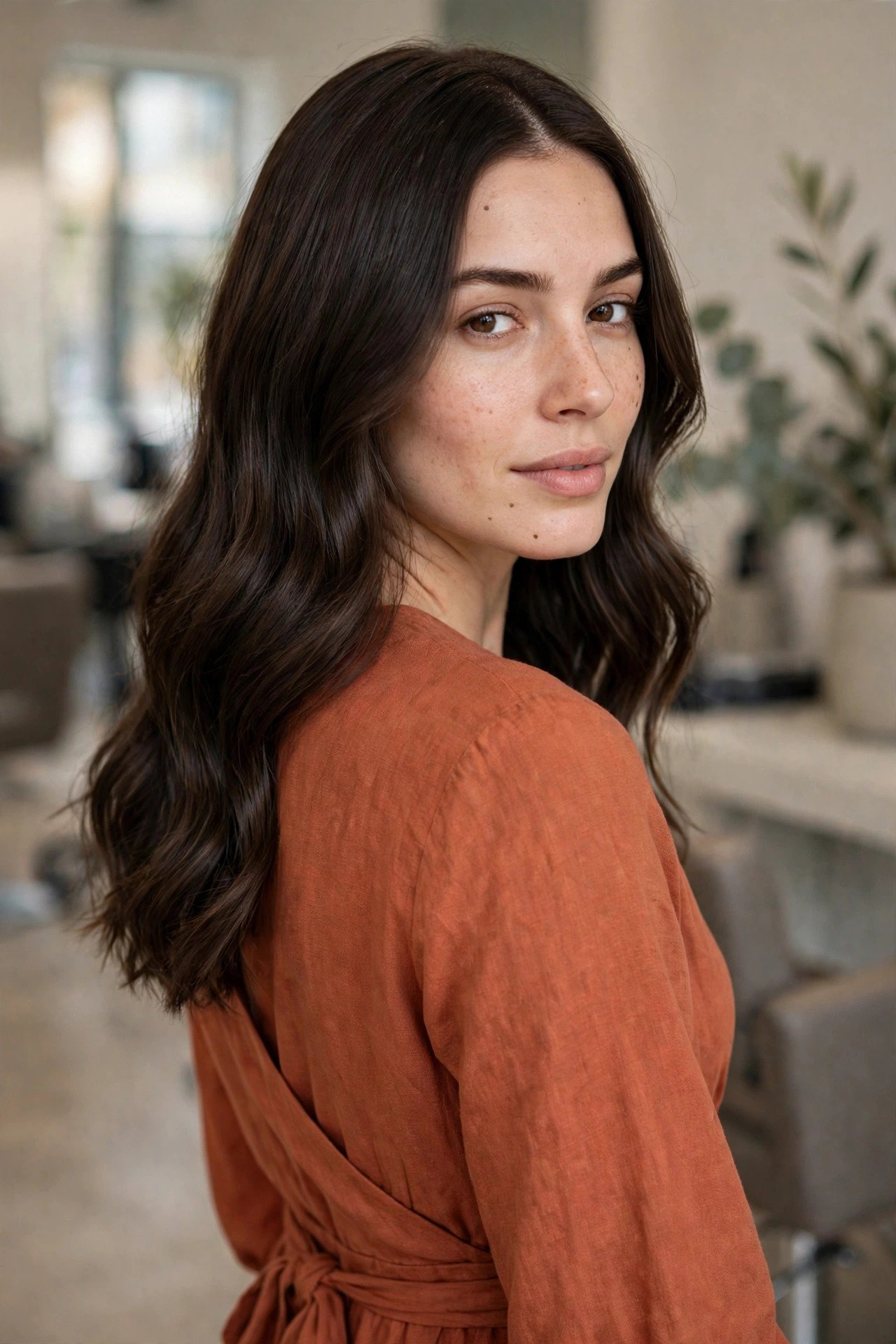
Wavy hair and a blunt cut are a natural pair: the waves add the movement a straight blunt cut lacks, while the blunt edge stops the waves thinning out at the bottom. The key is cutting wavy hair dry, or in its natural wave pattern, so the length is even once it dries. Cut wet, wavy hair springs up unevenly and the line disappears.
Curly hair needs more caution. A blunt cut on tight curls can create a triangular shape, with volume at the ends and flatness at the roots. Loose curls work well at long length, especially with curl cream scrunched through damp hair. For tighter curls, ask for a blunt shape with a little internal layering at the crown, cut dry by a stylist experienced with curly hair.
Blunt Cut Long Hair with Bangs

Bangs change a blunt cut from minimal to striking. Curtain bangs are the safest match: they part in the middle, sweep to each side, and soften the graphic edge without breaking the one-length story of the rest of the hair. Blunt bangs, cut straight across the forehead, double down on the geometry for a bold look — best on straight hair and oval or heart-shaped faces.
Wispy bangs sit between the two: light, piecey and forgiving, they suit anyone trying bangs for the first time. Have the bangs cut after the blunt length is set, so the stylist can balance the two lines. Bangs need a trim every 3–4 weeks, far more often than the blunt length itself.
How to Style a Blunt Cut at Home

The blunt cut is famously low-effort. Three finishes cover almost every occasion:
- Sleek and straight: Apply heat protectant, blow-dry in sections with a paddle brush, then pass a flat iron over the ends only.
- Soft waves: Curl large sections away from the face, let them cool, then brush through. The waves stay loose and the blunt edge stays visible.
- Air-dried texture: Scrunch a light styling cream into damp hair and let it dry naturally — a relaxed, lived-in blunt look with almost no effort.
For updos, the blunt edge is an advantage: a low ponytail looks thick and neat, and a braid holds together better when every strand is the same length. Avoid heavy oils on the ends — a pea-sized amount of shine serum is enough.
Blunt Cut Maintenance and Trims
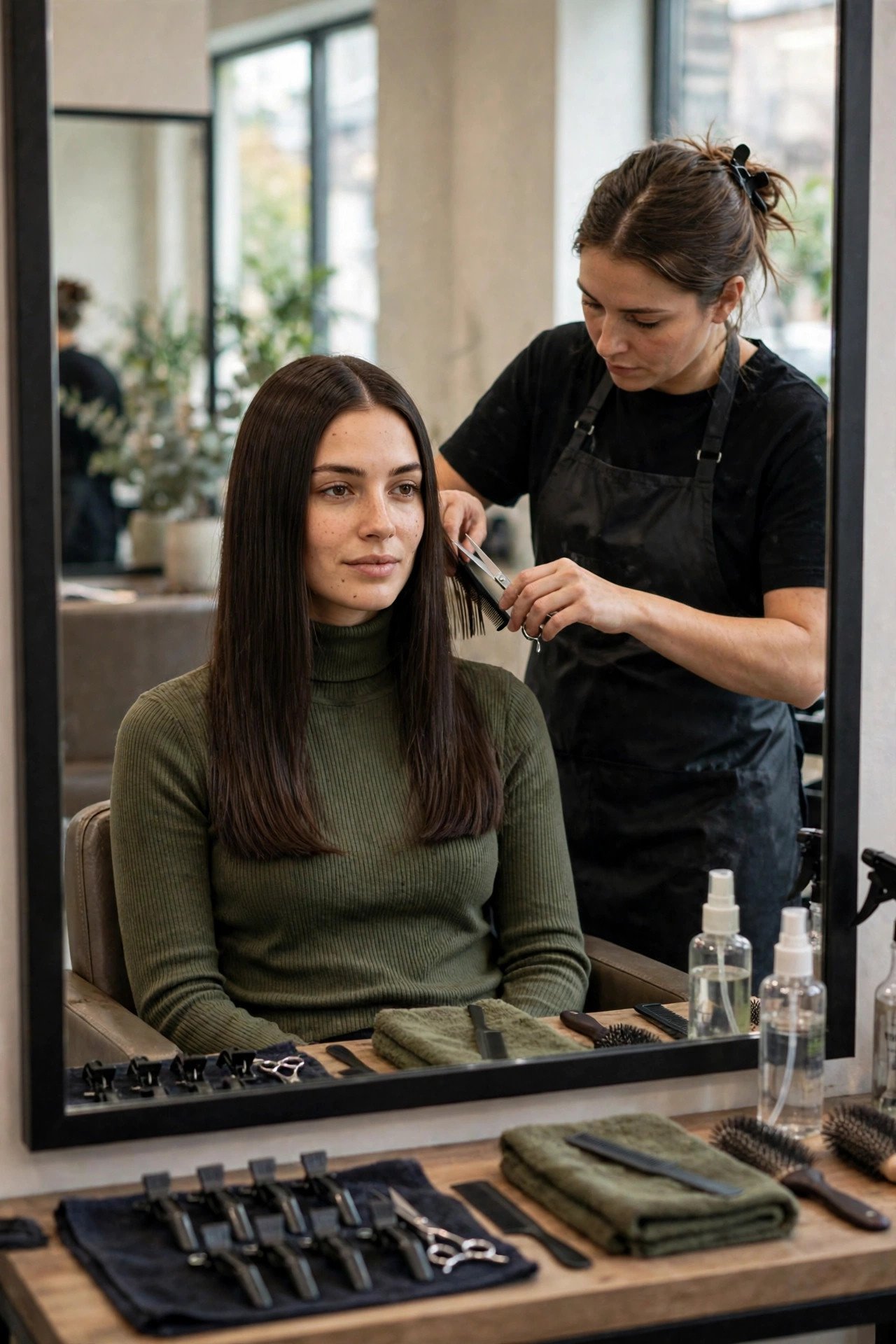
A blunt cut only looks blunt while the edge is fresh, so trims are not optional — they are the cut. Book a trim every 8–12 weeks, and ask for a “dusting” (a tiny trim of just the ends) between appointments if your hair splits easily.
At home, protect the edge: use a wide-tooth comb on wet hair, sleep on a silk pillowcase or in a loose braid to reduce friction, and use a weekly hydrating mask. Heat protectant is essential if you straighten or curl regularly — heat damage shows first at a blunt hemline, as frizz and fraying along the bottom edge.
What to Ask Your Stylist

Walk in with a clear request: “One length, no layers, cut straight across at [chest/waist] length.” Then add the details that matter: whether you want hidden internal layers for movement, whether the front corners should be slightly rounded, and whether you want bangs at the same appointment.
Bring two or three reference photos showing the exact hemline you want, and one photo of a length you do not want, so the stylist knows your limit. Ask to see the back in a mirror before you leave, so you can check the line is even. If you are growing out from layers, tell your stylist — growing out to a blunt cut takes several appointments, and they can plan it so you never have an awkward in-between stage.
FAQs
Does a blunt cut make hair look thicker?
Yes — that is its main benefit. Because every strand ends at the same length, the ends look as dense as the rest of the hair.
Is a blunt cut high maintenance?
Day-to-day styling is very low maintenance, but you need a trim every 8–12 weeks to keep the edge sharp, and bangs every 3–4 weeks.
Can I get a blunt cut if I have curly hair?
Loose waves and loose curls work well at long length, ideally cut dry. Very tight curls may need some internal layering to avoid a triangular shape.
Will a blunt cut suit a round face?
Yes, if the length sits below the shoulders and you wear a side part or curtain bangs. The long panels draw the eye downward and lengthen the face.
How long does a blunt cut take to grow out?
It grows out gracefully, since there are no layers to grow through. The line simply softens over a few months, and a dusting trim restores it.
Written by the New Light team. Fancy trying one of these shapes? Send us a message and bring your favourite photograph when you visit.