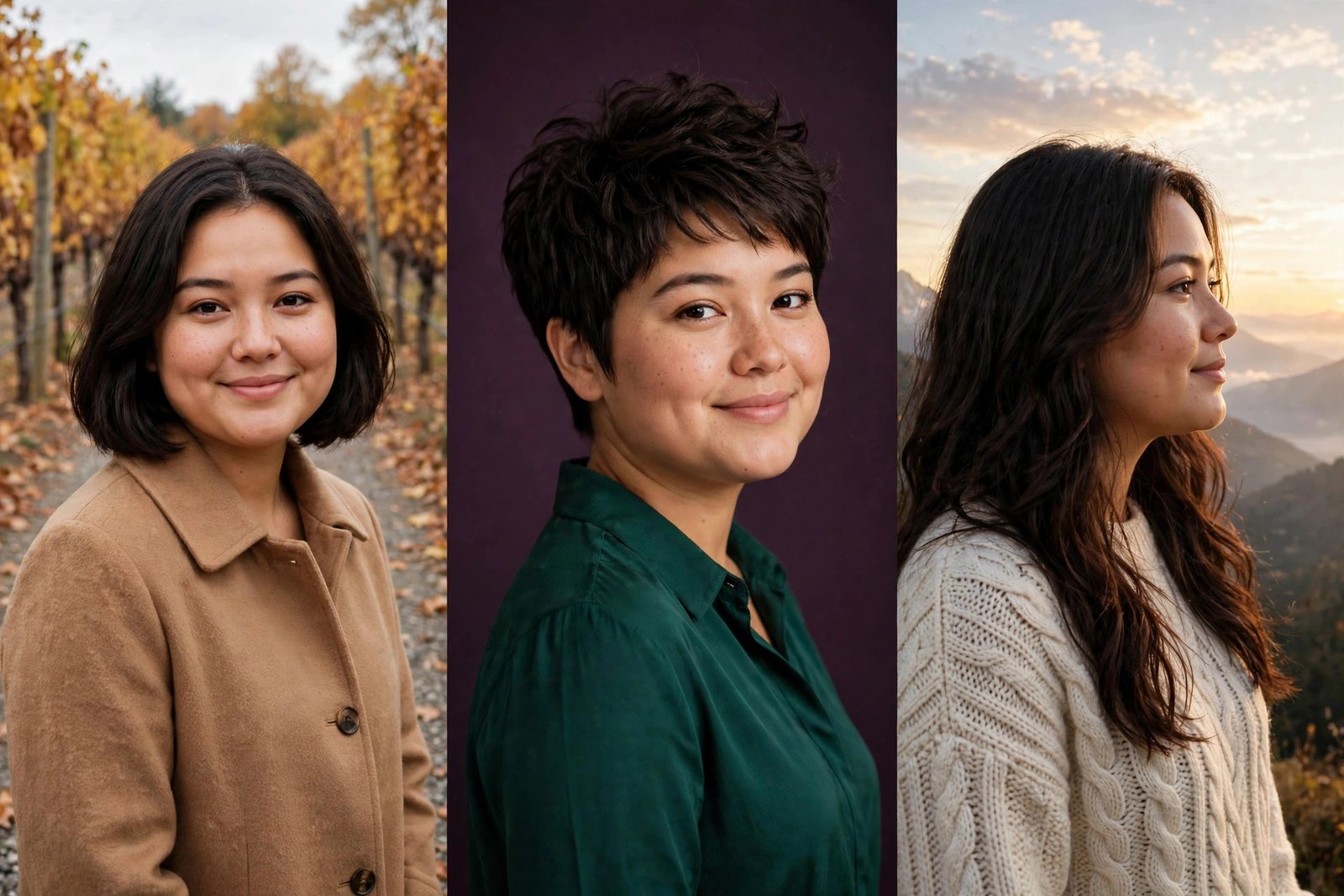
A layered haircut is the most versatile cut a woman can ask for. It suits every length, hair type and almost every face shape, because the layers do the work: they add movement, remove weight, build volume and frame the face, all without changing your overall length much. That is why layered haircuts for women never go out of style — they are simply reinterpreted each year. Here is the full guide.
What Is a Layered Haircut?

A layered haircut cuts the hair at varying lengths throughout, rather than one single blunt length. Shorter layers sit on top and around the face, while longer layers underneath keep the length and weight. The result is shape and movement built into the cut itself, so your hair looks styled even on days when you barely touch it.
Not all layers are the same, and the technique changes the finish completely:
| Layer type | How it is cut | Best for |
|---|---|---|
| Long layers | Gradual lengths from mid-length down | Keeping length with movement |
| Short layers | Shorter pieces through the top and crown | Volume and a bolder shape |
| Ghost layers | Hidden internal layers that remove weight invisibly | Fine hair that needs lift without looking thin |
| Razor cut | A razor tapers the ends for soft, feathered edges | Thick hair and textured finishes |
Knowing which type you want beforehand is the difference between a cut you love and one that just looks vaguely “layered”.
Long Layered Haircut

Long hair benefits from layers more than any other length. Without them, long hair hangs heavy and flat, forming a triangular shape that drags the face down. Long layers fix that: they take weight out of the mid-lengths and ends while keeping the length you grew so patiently.
A long haircut with layers takes several forms. Waterfall layers cascade softly from the crown to the ends, giving a flowing shape that air-dries beautifully on wavy hair. A V-shaped haircut for long hair keeps the back pointed, with layers graduating toward that V point — stunning worn straight or curled. Both pair naturally with the butterfly haircut, which uses dramatic two-tier layering for crown volume over long lengths.
Ask for layers starting at the chin for softness, or at the cheekbones for more drama, and trim every 10–12 weeks.
Medium Layered Haircut
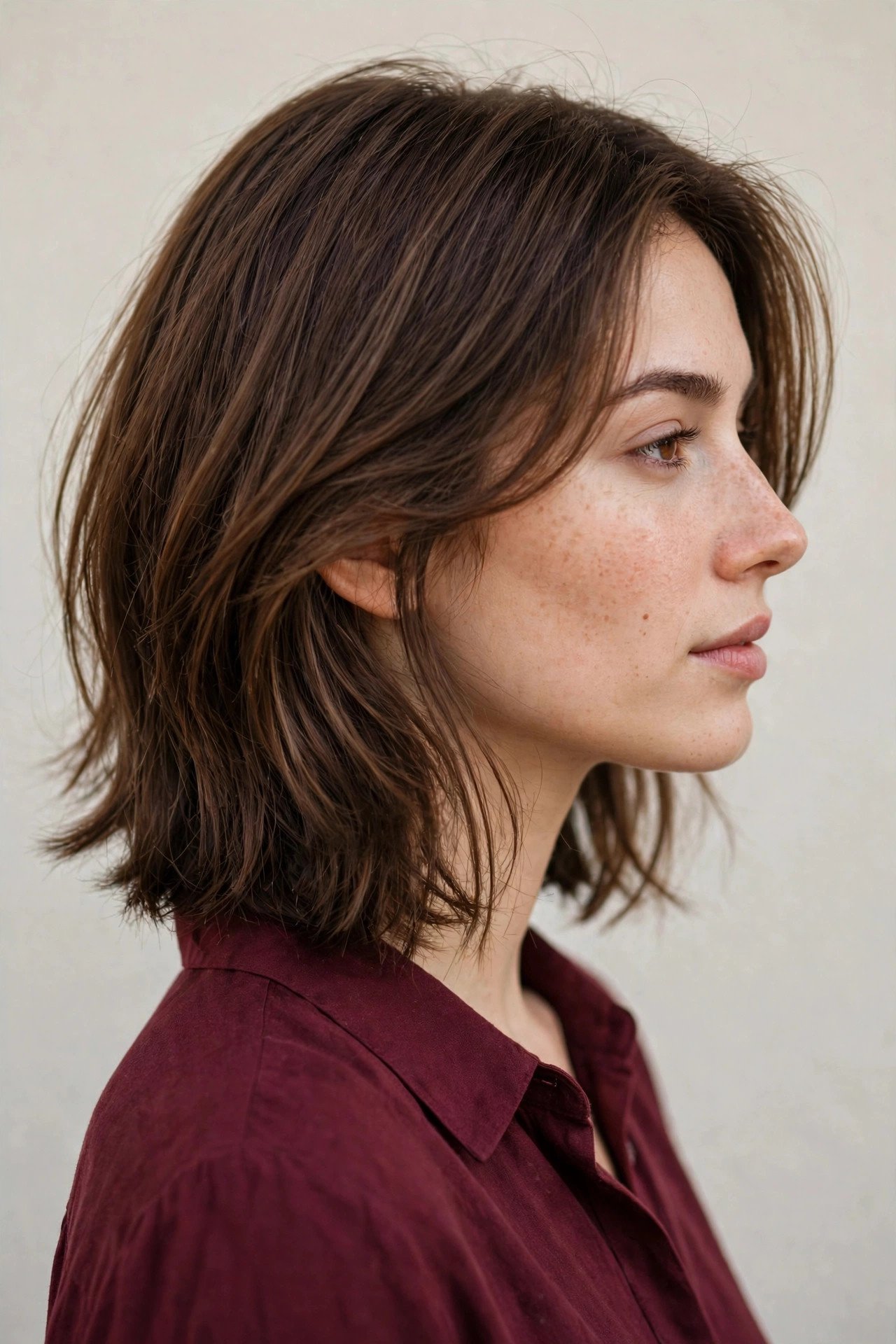
Medium length — roughly collarbone to shoulders — is where layers truly shine. The length is short enough to hold volume and long enough to style in a dozen ways, making the medium layered haircut the most requested length in salons.
The classic choice is the layered lob: a long bob with layers through the ends and around the face, polished enough for work and relaxed enough for weekends. Add curtain bangs for a soft 1970s feel, or keep the ends blunt with hidden internal layers for a sleek, expensive-looking finish. A medium layered cut also grows out gracefully, since the layers simply get longer rather than losing their shape.
This length suits every face shape and hair type, making it a safe first try — and it styles straight, wavy or with a round-brush blowout.
Short Layered Haircut

Short hair and layers are a perfect match, because layers stop a short cut from looking like a helmet. A short layered haircut adds texture, lift and personality — soft layers through a bob, a choppy crop, or a layered pixie with piecey ends.
Soft layers are the key: gentle, blended layering that creates movement without making the ends look thin or wispy. On a chin-length bob, layers around the crown give height; on a pixie, layers on top give styling options, from sleek to tousled. Short layered cuts need trims every 5–7 weeks, but they give you the fastest morning routine of any layered cut.
If you are moving from long hair to short, a layered bob is the gentlest transition, and our guide to short haircuts for women covers the other shapes worth considering.
Layered Haircut for Fine Hair
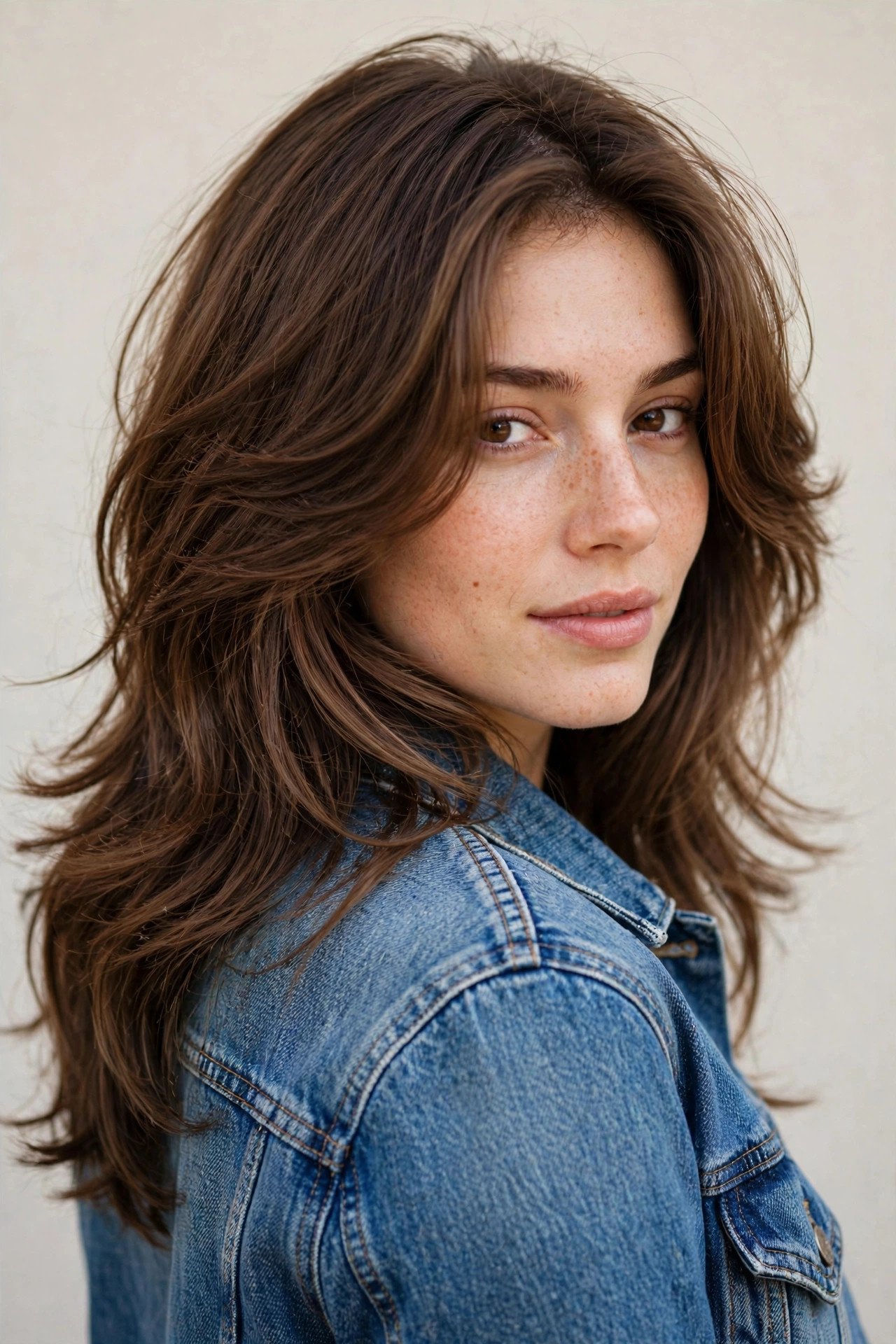
Fine hair needs layers handled with restraint. Too many short layers remove the very density that makes fine hair look full, leaving the ends wispy. The right approach is fewer, longer layers — and ghost layers, the hidden internal layering that removes weight and builds movement without visibly thinning the outline.
A layered haircut for fine hair works best when layers start at mid-length rather than high at the crown, and when the perimeter stays fairly full. A layered lob or a soft long cut with face-framing pieces gives lift where it matters without sacrificing thickness. Style with volumising mousse at the roots and skip heavy oils that flatten the layers by midday.
Layered Haircut for Thick Hair
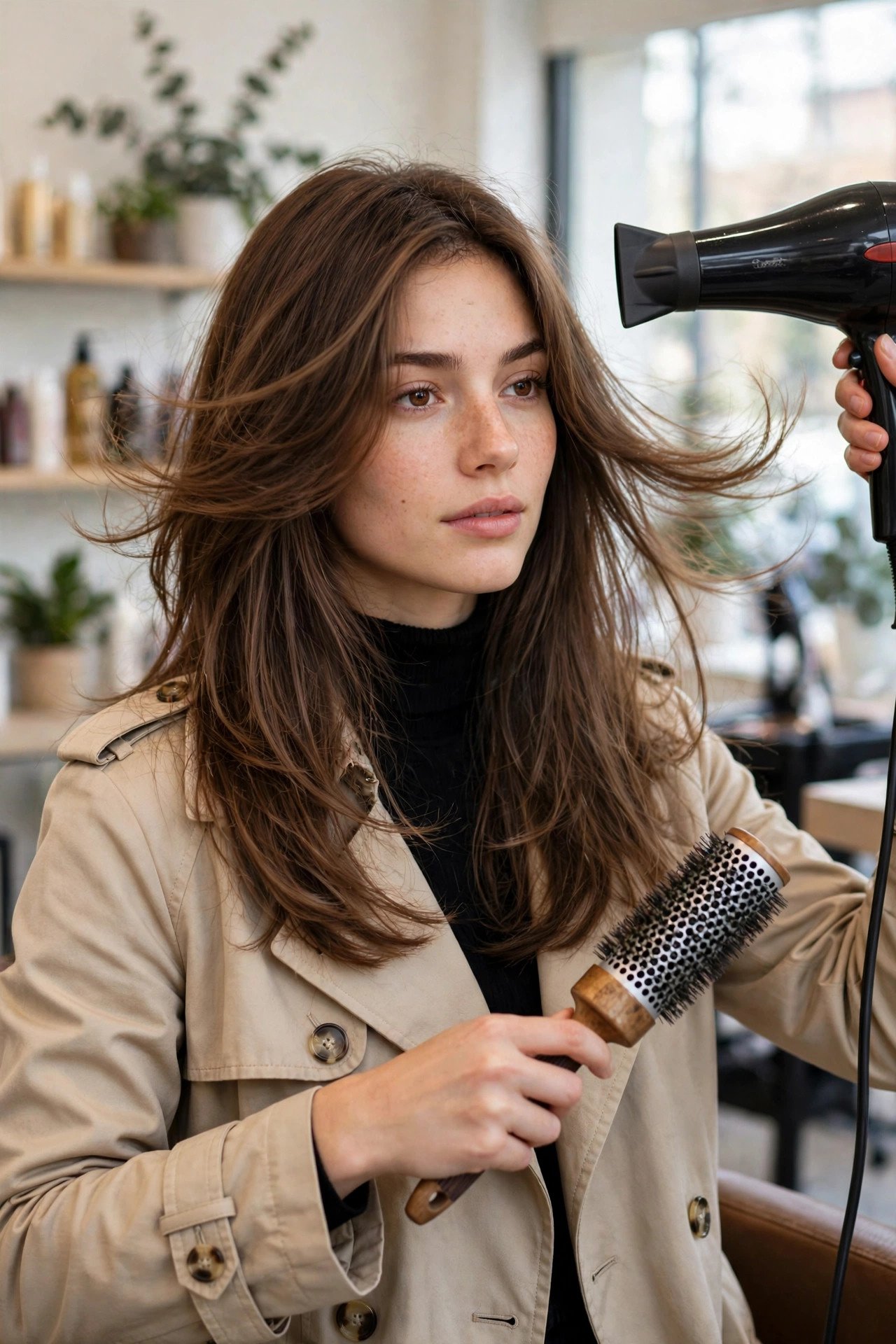
Thick hair has the opposite problem: too much weight, which makes it hot, slow to dry and hard to style. A layered haircut for thick hair solves all three by removing bulk from inside the cut, so the hair moves freely instead of sitting like a solid block.
Chunky layers throughout work well, and a razor cut is a brilliant option here — the razor tapers the ends and thins the weight without harsh lines, giving thick hair a softer, lived-in finish. The result dries faster and holds waves better. Use a smoothing cream on the mid-lengths and ends to control frizz, and embrace your natural texture rather than straightening it flat, which only makes thick hair look heavier.
Layered Haircut for Curly Hair
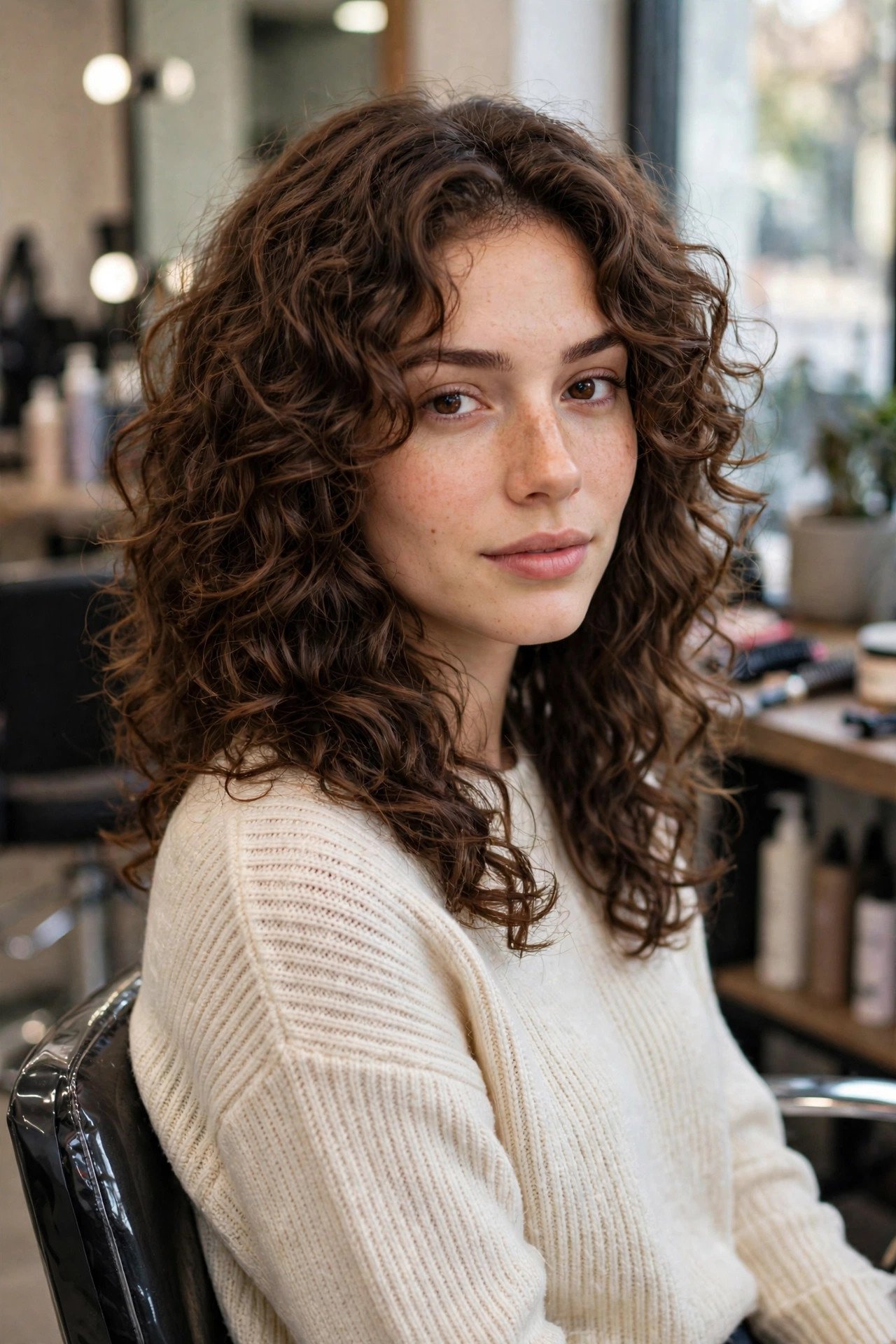
Curly hair and layers were made for each other. Without layers, curly hair grows into a triangle — flat at the top, wide at the bottom. Layers break up that shape, letting curls stack and spring at different lengths so the silhouette stays balanced and the curl pattern shows properly.
A layered haircut for curly hair should always be cut dry, or at least shaped on your natural curl pattern, because wet curls shrink and change length as they dry. Long, gradual layers are safest — short top layers can spring up too high and recreate the pyramid shape you were avoiding. Finish with curl cream and a diffuser.
Layered Haircut for a Round Face

For a round face, the goal of layering is length and slimming: layers that draw the eye downward and break up the width of the face. Long layers starting below the chin are ideal, especially face-framing layers for a round face that begin at the jaw and lengthen gradually, creating vertical lines that elongate the silhouette.
A side part helps further, sweeping layers across the face. Avoid layers that end right at cheekbone level with lots of width — that adds fullness exactly where you least want it. A long layered cut, a layered lob with a side part, or long face-framing pieces are the most flattering choices, and all keep your length while reshaping how your face reads.
Layered Haircut with Bangs

Bangs and layers are natural partners, because bangs are really just the shortest layer of all. A layered haircut with bangs works when the fringe blends into the face-framing layers instead of sitting apart from them like a separate piece.
Long layers with curtain bangs are the most forgiving combination: the bangs part in the middle, sweep to each side and melt straight into the layers, framing the face softly. They also grow out gracefully — a curtain bang simply becomes another face-framing layer. Ask your stylist to cut the bangs dry so they fall at their true length.
Face-Framing Layers for Long Hair

If you love your length and fear losing it, face-framing layers for long hair are the safest way into layering. Only the pieces around your face are cut shorter — typically starting at the chin or cheekbones — while the back keeps its full length. From behind, your hair looks untouched; from the front, it has shape, softness and movement.
It is also the easiest layered cut to maintain: the back needs only a regular trim, while the face pieces can be refreshed quickly between cuts. It flatters every face shape, because the starting point can move up or down to suit you: higher for oval and heart-shaped faces, lower for round and square faces.
Low-Maintenance Layered Haircut

The best low-maintenance layered haircut has long, blended layers and no fringe to maintain. Long layers grow out without losing shape, so you can stretch trims to 10–12 weeks, and the cut still looks good air-dried — the layers give it movement with zero styling.
To keep it truly low effort, follow three rules: keep layers long and blended, since short, choppy layers need frequent trims to stay sharp; skip the fringe, because bangs need trimming every 3–4 weeks while face-framing layers do not; and work with your texture, since layers enhance natural wave and curl so you style less, not more.
At the salon, bring photos of layered cuts on hair like yours, be honest about your morning styling time, and agree on the shortest layer length before cutting starts.
FAQs
What is the best layered haircut for women?
It depends on your length and hair type. A long layered cut suits most women, a layered lob is the most versatile medium option, and soft layers through a bob are best for short hair.
Do layers make hair look thinner?
Only if cut too short or too many. Long, blended layers and ghost layers add movement without removing visible density, which is why they suit fine hair.
What is the difference between layers and a razor cut?
Layers are a cutting pattern — hair cut at different lengths. A razor cut is a tool technique: the razor tapers the ends for a softer, feathered edge, often used to create layers on thick hair.
How often should layered hair be trimmed?
Every 6–8 weeks for short and medium layered cuts, and every 10–12 weeks for long layered cuts.
Are layered haircuts low maintenance?
Long, blended layers are very low maintenance and air-dry well. Short, choppy layers and layered cuts with bangs need more frequent trims, so choose the layer type that fits your routine.
Written by the New Light team. Fancy trying one of these shapes? Send us a message and bring your favourite photograph when you visit.