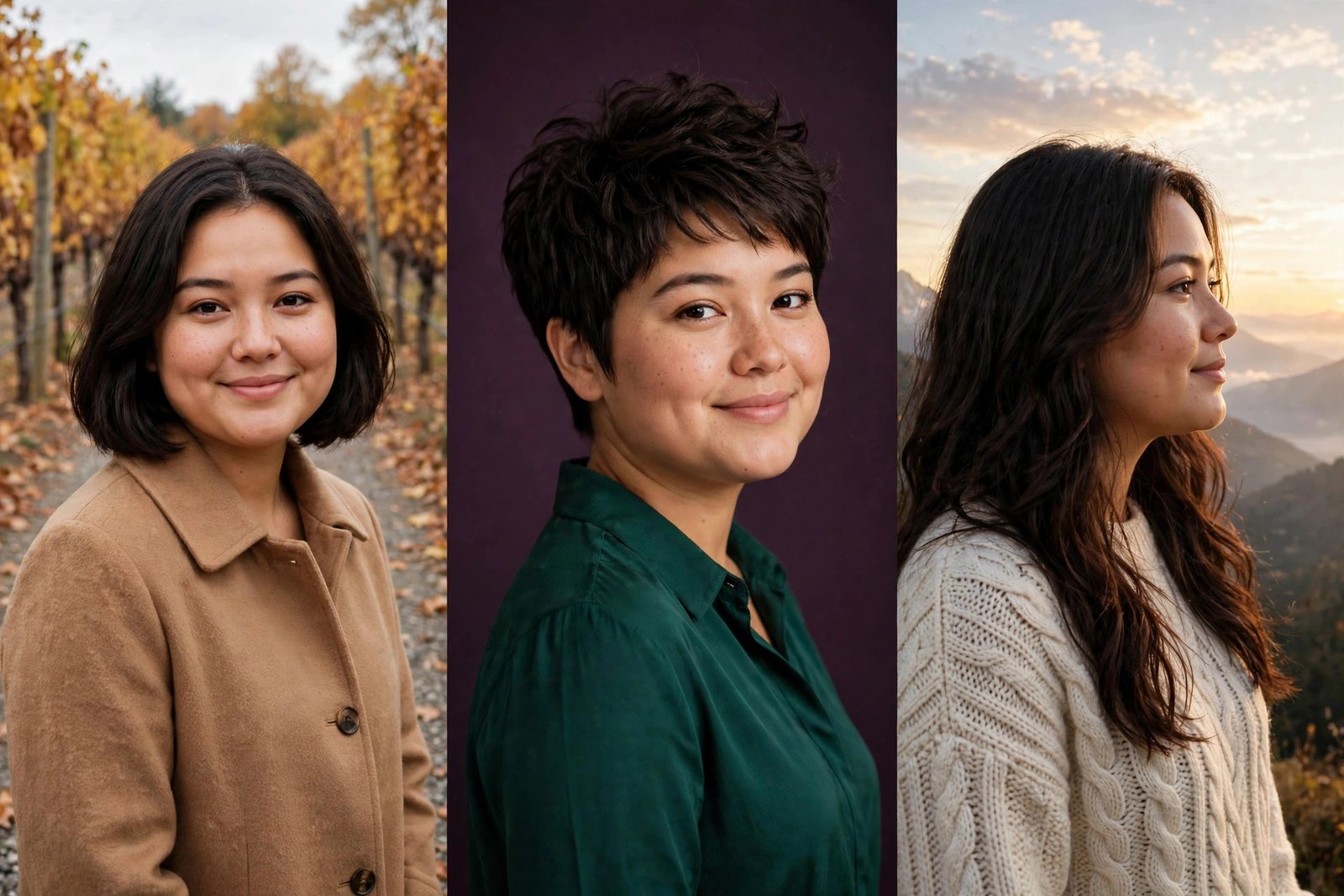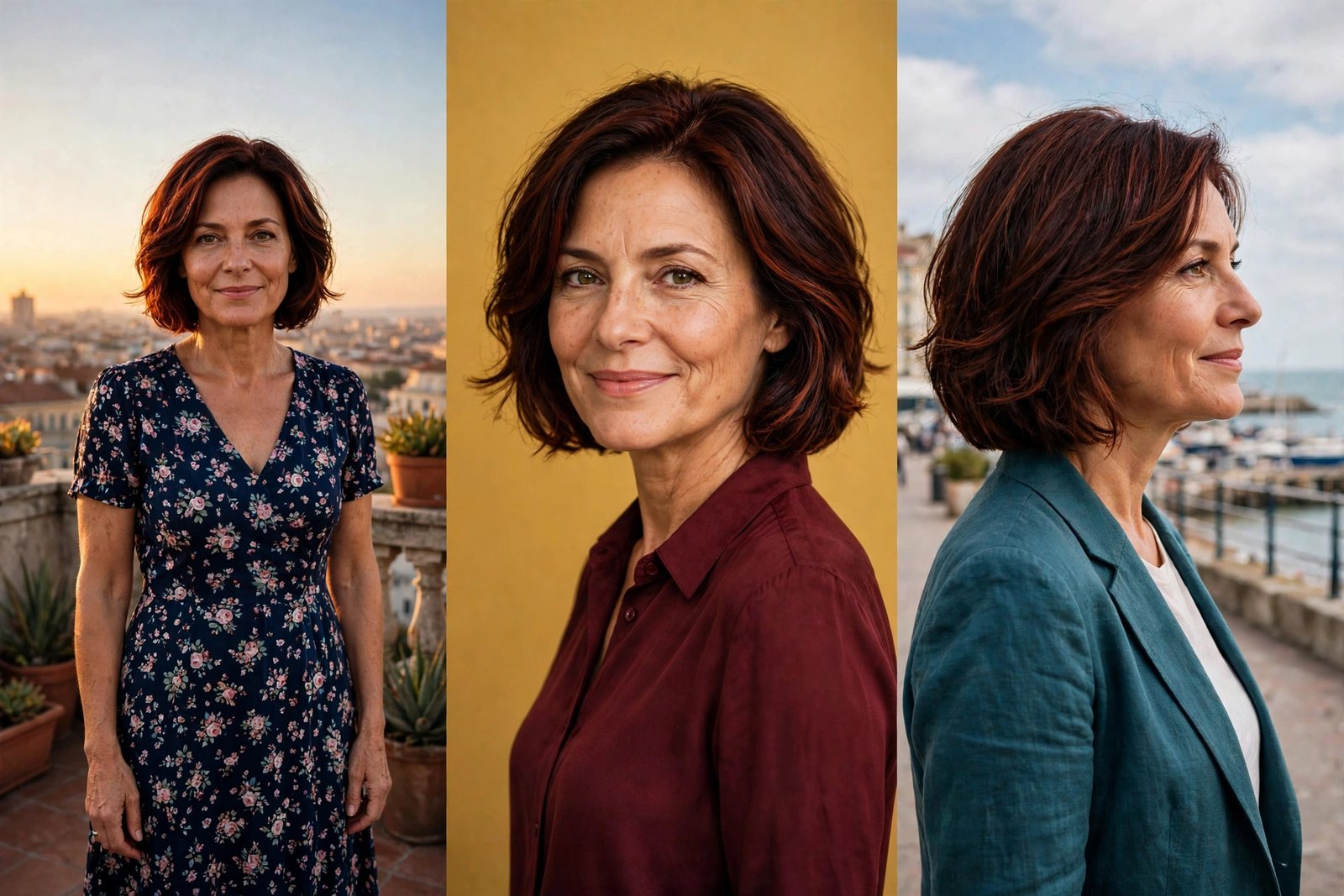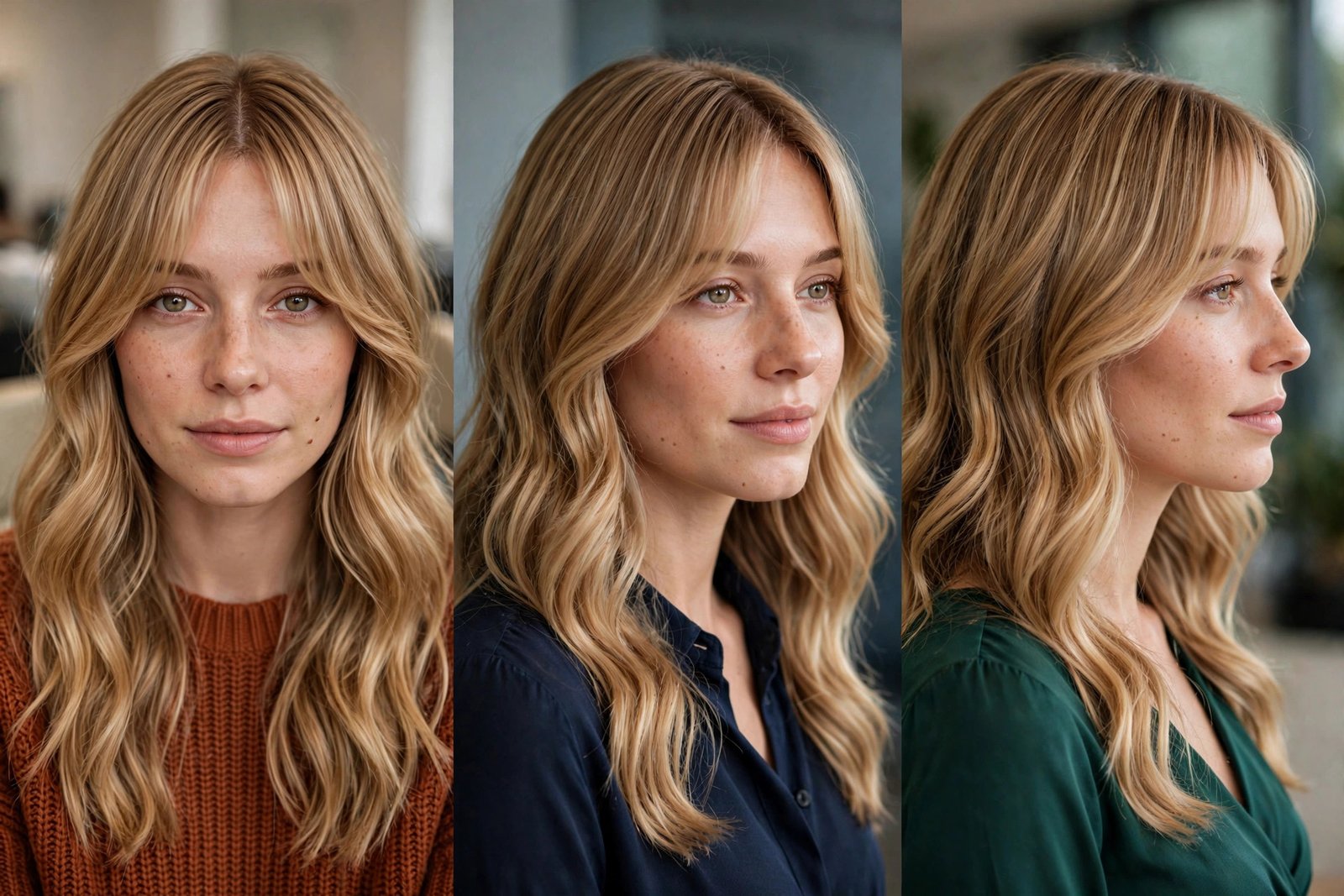
Curtain bangs are the rare haircut that suits almost everyone. Parted in the middle and swept to each side like curtains opening on a window, they frame the face, soften strong features and blend into the rest of your hair — all without the commitment of a heavy, straight-across fringe. No wonder they have stayed popular from Brigitte Bardot in the 1970s to Dakota Johnson and Sabrina Carpenter today.
Whether you are considering curtain bangs for the first time or already have them and want to style them better, this guide covers the lengths, face shapes, hair types and styling routines that actually work.
What Are Curtain Bangs?

Curtain bangs are a face-framing fringe cut shorter in the centre and longer toward the sides, parted down the middle or slightly off-centre. The shortest pieces usually sit around the eyebrows or cheekbones, while the longest pieces taper down to the jaw, blending seamlessly into layers or long hair.
Unlike blunt bangs, which cover the forehead in a straight line, curtain bangs leave the centre of the forehead partly open. That is why they feel lighter, grow out gracefully, and suit people who have always been afraid of bangs. They are also forgiving on a bad hair day: if one side misbehaves, you can sweep it back, pin it, or let it blend into the rest of your hair.
Curtain Bangs for Long Hair

Long hair and curtain bangs are the classic pairing. On long hair, curtain bangs break up a long stretch of one-length hair, add shape around the face, and make the whole style look considered rather than simply grown out. The bangs for long hair should be long themselves — shortest at the cheekbones, longest tapering to the chin or jaw — so they melt into the length instead of sitting on top of it.
This is the easiest version to live with. The length means you can tuck them behind your ears, pin them back, or wear them as loose face-framing pieces on days you do not style them. They also pair naturally with a blunt cut for long hair, where the soft bangs balance the sharp hemline, and with long layers, where the bangs simply become the shortest layer.
Ask your stylist to cut them dry or nearly dry if your hair is wavy, since bangs shrink as they dry and a wet cut can end up far shorter than expected.
Curtain Bangs with Face Framing Layers
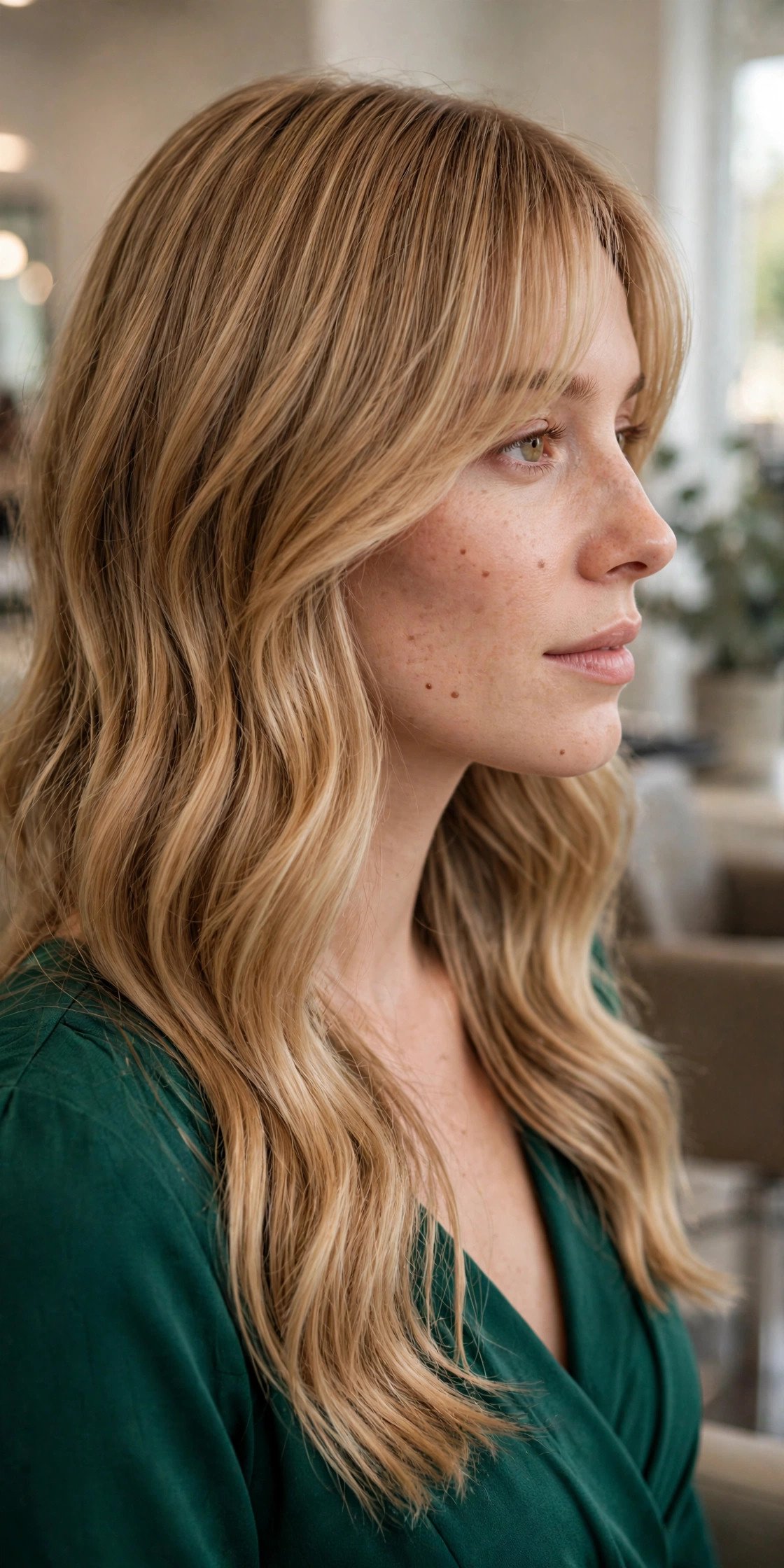
Curtain bangs with face framing layers are essentially one continuous idea: the bangs are the shortest face-framing layer, and the layers cascade outward from there. Ask for layers that start at the cheekbones and graduate down past the chin, so there is no visible step between the bangs and the rest of the hair.
This combination is the secret behind most of the curtain-bang photos you save online. The layers give the hair movement and prevent the bangs looking like an add-on, while the bangs give the layers a focal point around the face. It works on medium and long hair, straight, wavy or curly.
Our guide to layered haircuts for women explains how to choose the layer length that matches your bangs, from soft long layers to a more dramatic face frame.
Curtain Bangs for Round Face

A round face benefits more from curtain bangs than almost any other face shape, provided the length is right. Go longer, not shorter: bangs that end at the cheekbones or below create vertical lines down the sides of the face, which visually lengthen it. Short, eyebrow-length curtain bangs add width at exactly the widest point of a round face and can make it look rounder.
Ask for the longest curtain bangs you are comfortable with — cheekbone to chin length — with a centre part and soft, feathered ends rather than a blunt edge. A little root volume helps too: flat bangs on a round face emphasise width, while lifted roots draw the eye upward.
Other face shapes have their own sweet spots:
| Face shape | Best curtain bang length | Why it works |
|---|---|---|
| Oval | Any length, cheekbone is classic | Balanced proportions suit every version |
| Round | Chin length or longer | Vertical lines lengthen the face |
| Square | Cheekbone, wispy and feathered | Softness balances a strong jaw |
| Heart | Longer, fuller, chin length | Balances a wider forehead with a narrow chin |
| Long | Eyebrow to cheekbone | Adds width and breaks up face length |
Whatever your shape, the rule is the same: when in doubt, cut longer. You can always go shorter next time, but you cannot glue bangs back on.
How to Style Curtain Bangs
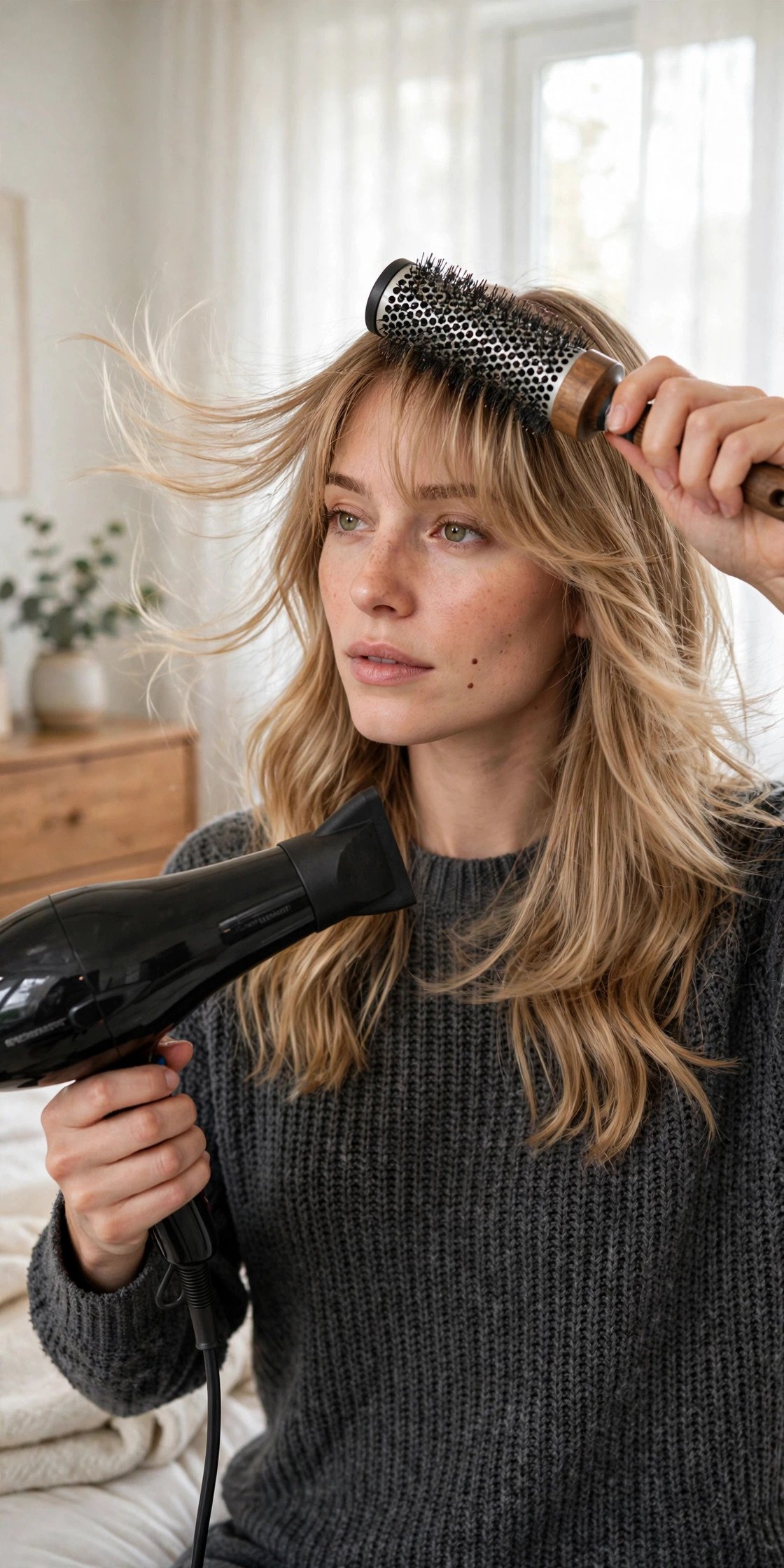
Styling curtain bangs is easier than styling blunt bangs, but it does need a routine. The golden rule is to style them while they are damp — once bangs dry in the wrong direction, they are stubborn to fix.
- Start damp. If the rest of your hair is dry, just dampen the bangs with a spray bottle.
- Add a little product. A pea-sized amount of volumising mousse or light styling cream at the roots gives hold without stiffness.
- Part in the middle. Split the bangs into two equal sides along your natural centre part.
- Blow-dry outward. With a round brush, brush each side away from the face and slightly downward, directing airflow from root to tip.
- Let them cool. Leave the shape to set for a minute before touching it — this is what makes the style last.
No time to blow-dry? Twist each side away from the face while damp and clip it for ten minutes, or use a large Velcro roller on each side. A flat iron can work too, but bend it outward at the ends rather than pulling straight down, or you will lose the curtain sweep.
Curtain Bangs vs Blunt Bangs

Choosing between curtain bangs and blunt bangs is really a question of commitment. Curtain bangs are softer, more versatile and easier to grow out; blunt bangs are bolder, more graphic and more high-maintenance.
| Curtain bangs | Blunt bangs | |
|---|---|---|
| Forehead coverage | Partly open in the centre | Fully covered, straight line |
| Face shapes | Almost all, with length adjusted | Best on oval and heart shapes |
| Styling time | 3–5 minutes with a round brush | Needs daily straightening for a clean line |
| Grow-out | Blends into layers in weeks | Awkward stage, needs regular trims |
| Best hair | Straight, wavy, curly, fine or thick | Straight or slightly wavy, medium to thick |
| Vibe | Soft, romantic, effortless | Bold, editorial, dramatic |
If you have never had bangs, start with curtain bangs. If you later want something bolder, your stylist can cut them shorter into a blunt fringe. Going the other way is the slower journey.
Curtain Bangs for Curly and Wavy Hair

Curly and wavy hair can absolutely wear curtain bangs — the natural texture gives them a beautiful, lived-in look that straight hair has to work for. The key difference is the cut: curly curtain bangs must be cut dry, curl by curl, so the stylist can see exactly where each piece will fall. A wet cut on curly hair almost always ends up too short once it dries.
For wavy hair, scrunch a curl cream through damp bangs, part them in the middle, and let them air-dry — the waves form their own soft curtain shape. For curly hair, ask for longer bangs than you think you need, since curls shrink significantly. One honest note: on very curly hair, curtain bangs will not look like sleek straight-haired photos. They will look softer, fuller and more textured — a look in its own right, and many people prefer it.
Growing Out Curtain Bangs
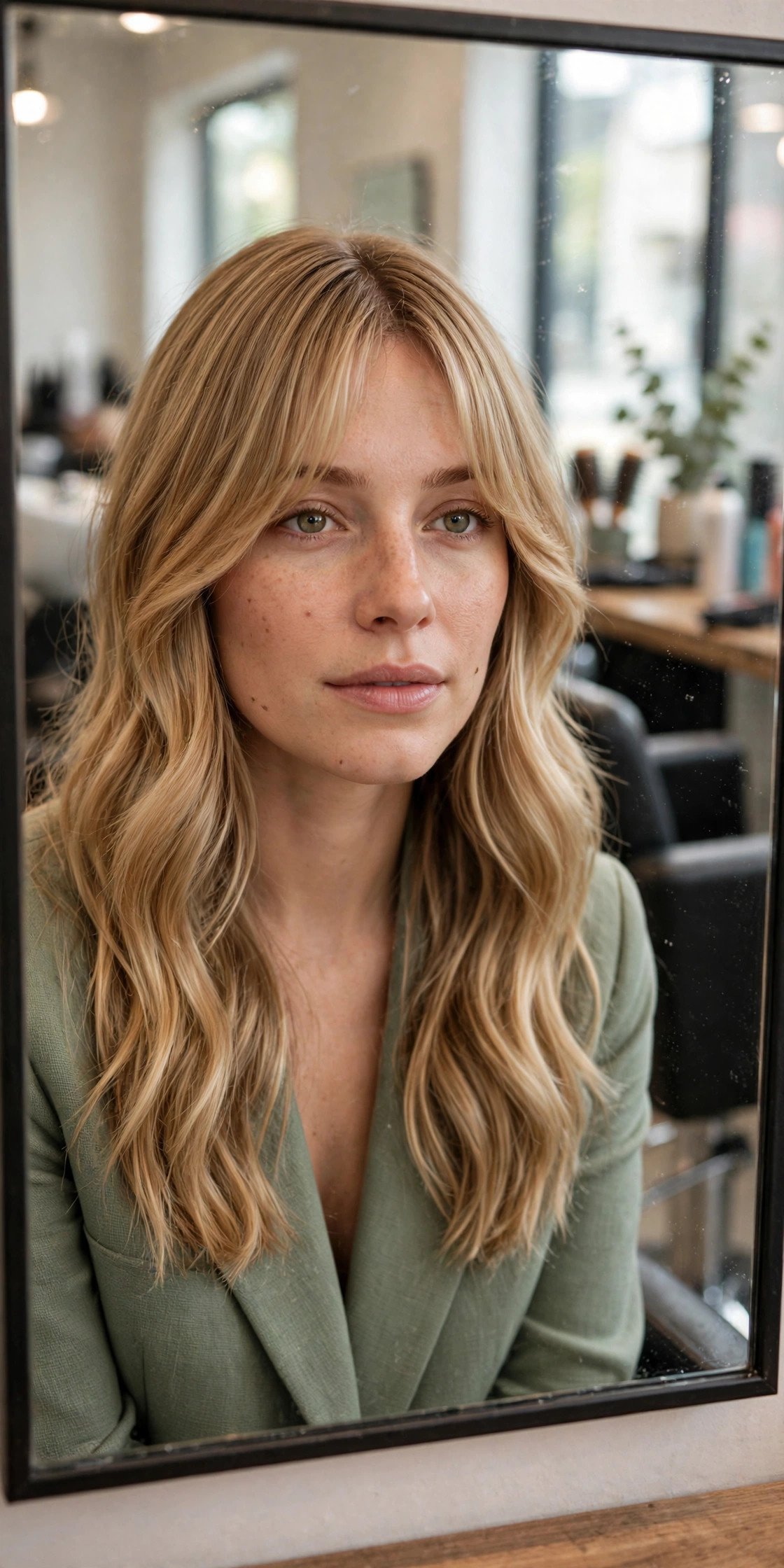
Growing out curtain bangs is famously painless, which is one of their biggest selling points. Because they already taper into layers, there is no harsh line to grow through. The bangs simply get longer and become face-framing layers — a hairstyle in itself, not an awkward stage.
To make grow-out even smoother, ask your stylist to blend the ends at each trim rather than cutting the bangs back to their original length. Use clips or a side part on days the length sits in your eyes, and resist trimming them yourself: one uneven snip can undo months of even growth. Most people find their curtain bangs have fully grown into layers within 3–4 months, with no awkward phase at all.
Curtain Bangs Maintenance

Curtain bangs need less upkeep than blunt bangs, but they are not zero-maintenance. The fringe area gets oily faster than the rest of your hair because it touches your forehead, so dry shampoo on the bangs alone — even when the rest of your hair is clean — is a trick worth learning. Apply at the roots, wait a minute, then brush through.
Trim every 5–7 weeks to keep the shape, and wash just the fringe at the sink if needed: a two-minute wash revives the whole style. At night, a loose silk scrunchie or silk pillowcase reduces frizz. Avoid heavy oils on the bangs — they weigh the fringe down and make it look greasy — and keep heavy face creams off the forehead area where the bangs sit.
What to Ask Your Stylist

The right request makes all the difference. Say: “Curtain bangs, parted in the middle, shortest at [eyebrow/cheekbone] length, tapering to [chin/jaw] at the sides, blended into layers.” Show photos of your own face shape and hair texture, and tell your stylist how much time you will actually spend styling each morning — that decides whether you need a longer, forgiving version or can handle a shorter, more styled one.
Ask for the cut to be checked dry, with your normal parting, and ask your stylist to show you the blow-dry routine before you leave. Five minutes of coaching in the salon saves weeks of trial and error at home. If you are nervous, start long: curtain bangs are easy to shorten at a follow-up, and a longer first version lets you test the look with almost no risk.
FAQs
Do curtain bangs suit a round face?
Yes, especially in a longer length. Chin-length curtain bangs create vertical lines that lengthen a round face, while short bangs can add width.
Are curtain bangs high maintenance?
No, compared with blunt bangs. Expect 3–5 minutes of styling on damp hair and a trim every 5–7 weeks. They also grow out gracefully into layers.
Can I have curtain bangs with curly hair?
Yes, if they are cut dry and kept longer to allow for shrinkage. Curly curtain bangs look softer and more textured than straight versions.
How long do curtain bangs take to grow out?
Usually 3–4 months to blend fully into face-framing layers, with no awkward stage, because the cut already tapers into the rest of your hair.
Do curtain bangs work on fine hair?
Yes, but keep them wispy rather than thick, and use volumising mousse at the roots. Heavy, thick bangs can look sparse on fine hair.
Written by the New Light team. Fancy trying one of these shapes? Send us a message and bring your favourite photograph when you visit.