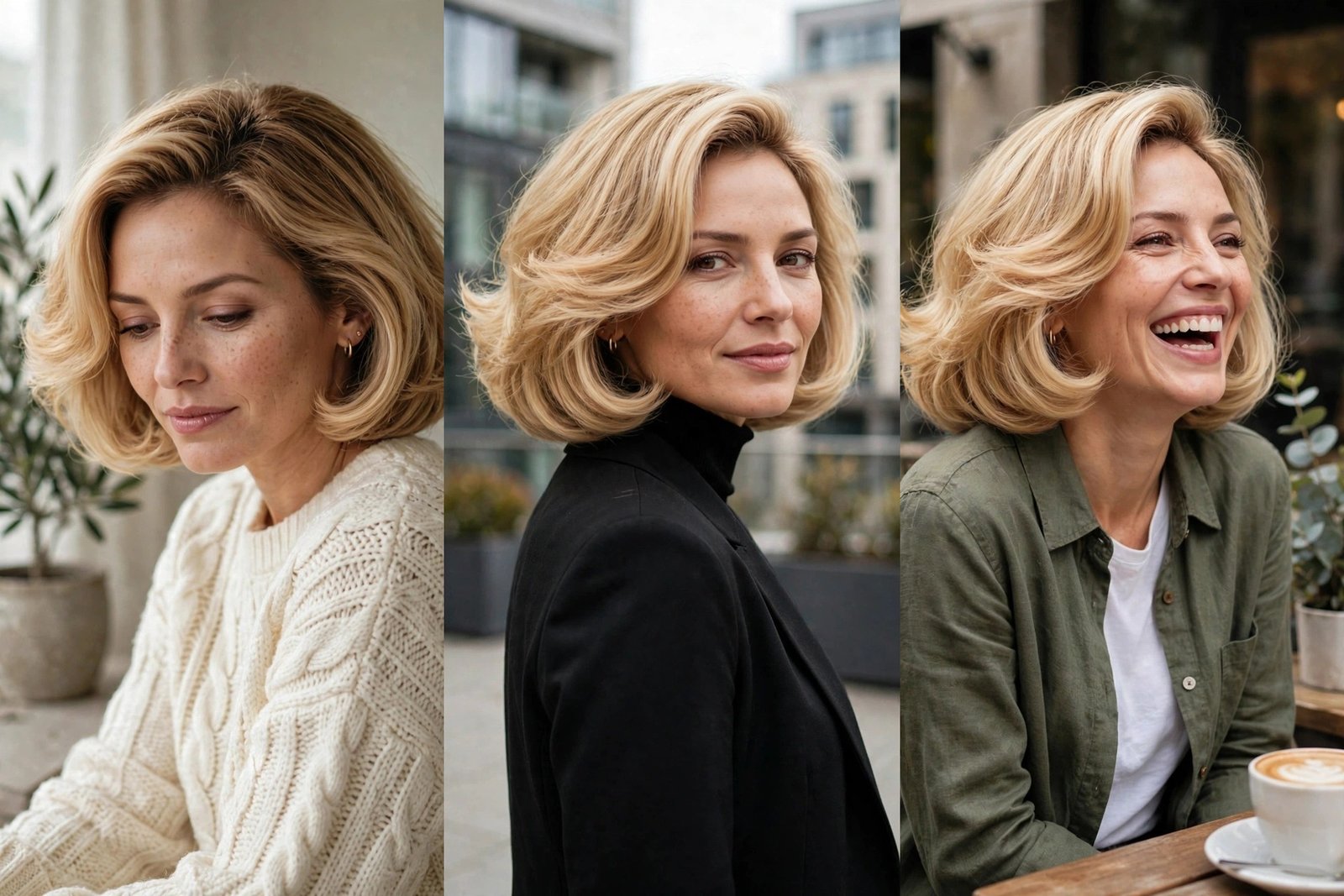
If the French bob is effortless chic, the Italian bob is effortless glamour. Coined by The Hair Bros as the Italian ’60s bob, this chin-length cut builds volume at the crown and carries weight at the ends — the opposite of flat, minimalist hair. Think Sophia Loren’s soft fullness with a glossy modern blowout. Here is the anatomy of the cut, how it differs from the French bob, the softer Riviera variation, who it suits, and the at-home blowout.
What Is an Italian Bob Haircut?
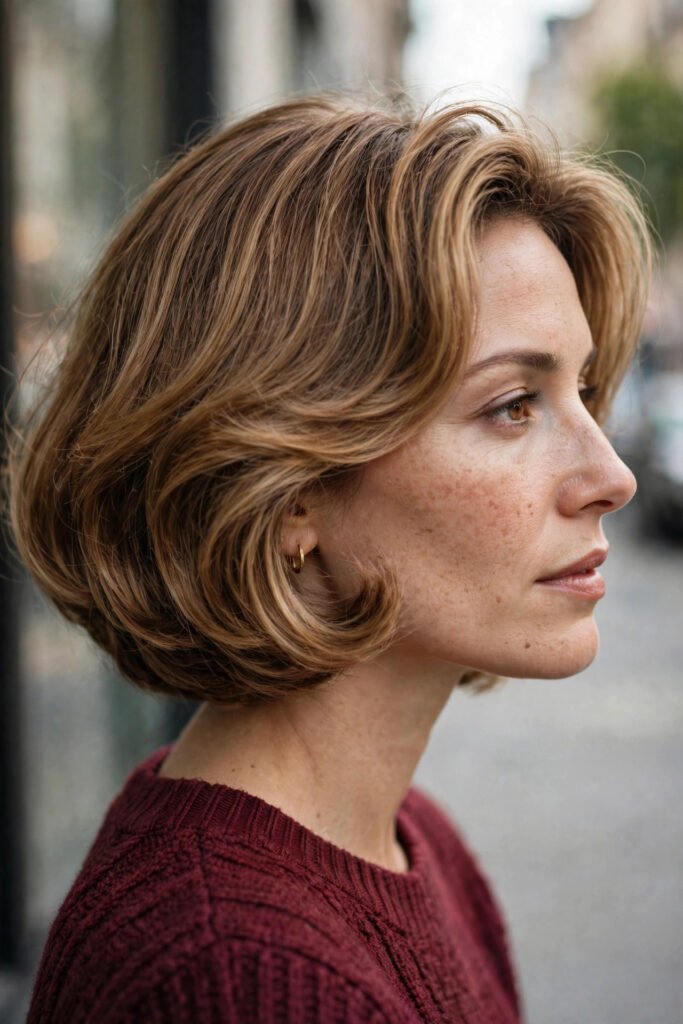
The Italian bob is a one-length bob cut just at or below the chin, defined by volume rather than precision. Hair carries weight at the bottom with chunky, blunt ends, while subtle internal layering lifts the crown and sides. Ends roll under — or dry naturally — for the signature bouncy, beachy-full finish. It is long enough to tuck behind the ears, yet short enough to turn heads. The look is touched, not sculpted: soft volume, gentle movement, a glossy but never glassy finish.
Italian Bob vs French Bob

Shorthand: the Italian bob has body, the French bob has edge. Choose Italian for volume and polish; French for wash-and-go texture.
| Feature | Italian Bob | French Bob |
|---|---|---|
| Silhouette | Full, rounded | Crisp, close to the face |
| Length | Chin or just below | Chin or above |
| Texture | Bouncy blowout volume | Undone, airy |
| Finish | Glossy, polished | Matte, lived-in |
| Styling time | 10–15 minutes | About a minute |
| Vibe | Riviera glamour | Parisian chic |
Our bob haircut guide compares every bob length side by side, and if you want this silhouette dialled up further, the baroque bob takes the volume even further.
The Riviera Bob: A Softer Italian Bob

The Riviera bob is the Italian bob on holiday: same chin-skimming length, worn softer and a touch longer, with sun-kissed, beachy texture. Where the classic version is blown smooth and glossy, the Riviera air-dries with salt-spray waves and a more relaxed perimeter — Amalfi coast rather than Milan fashion week. Ask your stylist for the Italian base with slightly longer ends and lighter layers, then use a curling wand on alternating sections for the undone wave. Best for summer, wavy hair, and anyone who finds the full blowout too much daily maintenance.
Who Does an Italian Bob Suit?

Fine hair is the surprise winner: the blunt, weight-preserving base makes it look fuller, provided your stylist avoids over-thinning. Thick hair works with strategic internal layering to control width; curly hair with a rounded cut and controlled layering to prevent a triangle shape.
- Oval: every version works beautifully.
- Heart and diamond: the volume at the jaw softens narrower chins.
- Long: lip-to-chin length with curtain bangs balances proportions.
- Round: trickier — ask for a slightly longer length and a deep side part to avoid widening the face; the short, wide version is not your friend.
How to Style an Italian Bob at Home

The bounce comes from the blow-dry, not the cut:
- Apply volumizing mousse to damp roots.
- Rough-dry with a vent brush to about 75 percent, lifting at the crown.
- Blow-dry section by section with a large round brush, rolling each section under.
- Set the crown in large rollers for ten minutes while you finish getting ready.
- Remove the rollers, brush through gently, and mist with flexible-hold spray.
The result is the signature bouncy, full finish. On second days, revive the roots with dry shampoo — the shape holds well between washes.
What to Ask Your Stylist
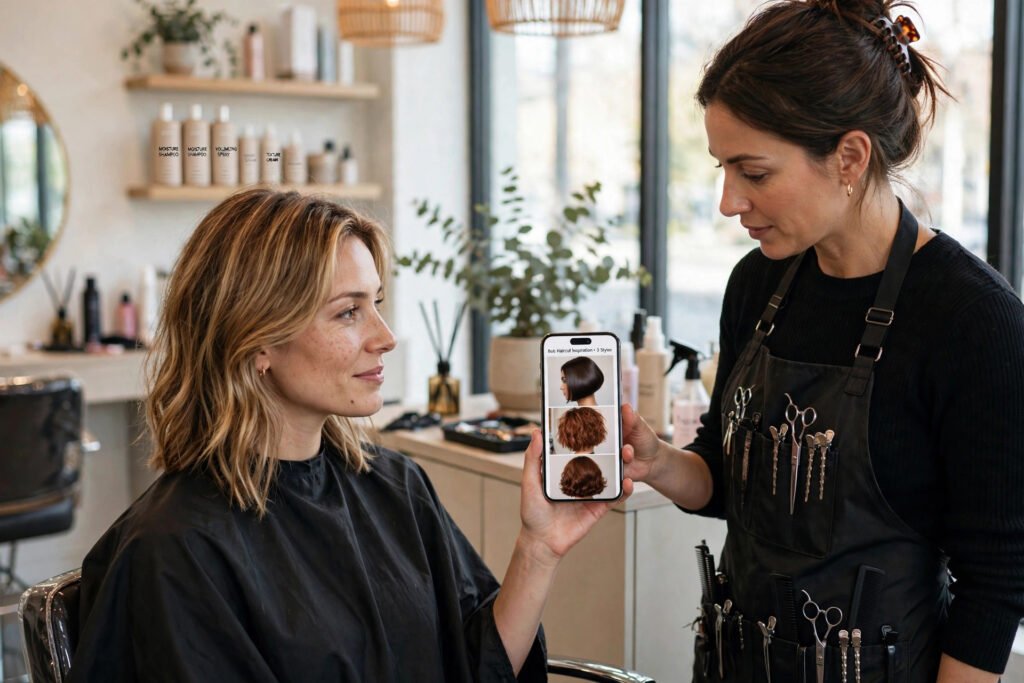
Ask for “a one-length, chin-length bob with a full perimeter, subtle internal layers, and ends that roll under — shaped for volume, not sharpness.” Show photos of the finish you want, because “Italian bob” gets confused with the French bob. For fine hair, insist on minimal thinning and a one-length base to preserve weight. For thick hair, request weight removal underneath the crown to keep the silhouette controlled. Skip short blunt bangs — they box the face in; a curtain fringe blending into the cheekbone layers is safer. Trim every six to ten weeks to keep the rounded shape.
FAQs
Italian bob vs French bob — what is the difference?
Italian bobs are fuller, glossier, and usually slightly longer with a blowout finish; French bobs are shorter, crisper, and proudly undone.
Is the Italian bob good for fine hair?
Yes — when you keep weight. A one-length base with minimal thinning and subtle internal layers adds lift without collapsing.
Can curly hair wear an Italian bob?
Yes. The key is a rounded cut with controlled layering to prevent a triangle shape while keeping bounce and definition.
How often do I need trims for an Italian bob?
Most lengths look best with trims every six to ten weeks; shorter versions need more frequent reshaping.
Can I wear an Italian bob with bangs?
A curtain fringe that blends into the cheekbone layers works well. Avoid short blunt bangs, which narrow and box in the face.
Written by the New Light team. Fancy trying one of these shapes? Send us a message and bring your favourite photograph when you visit.