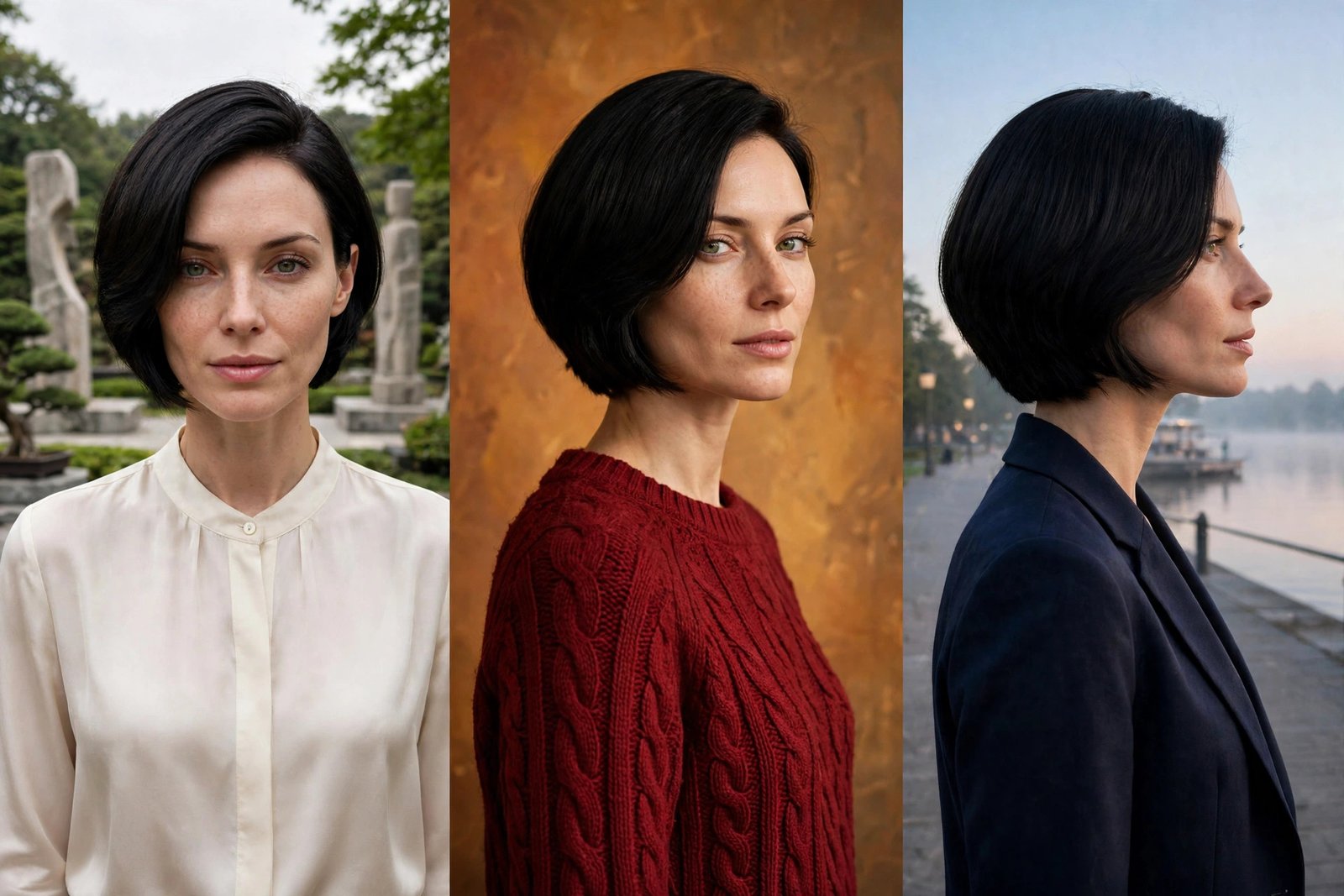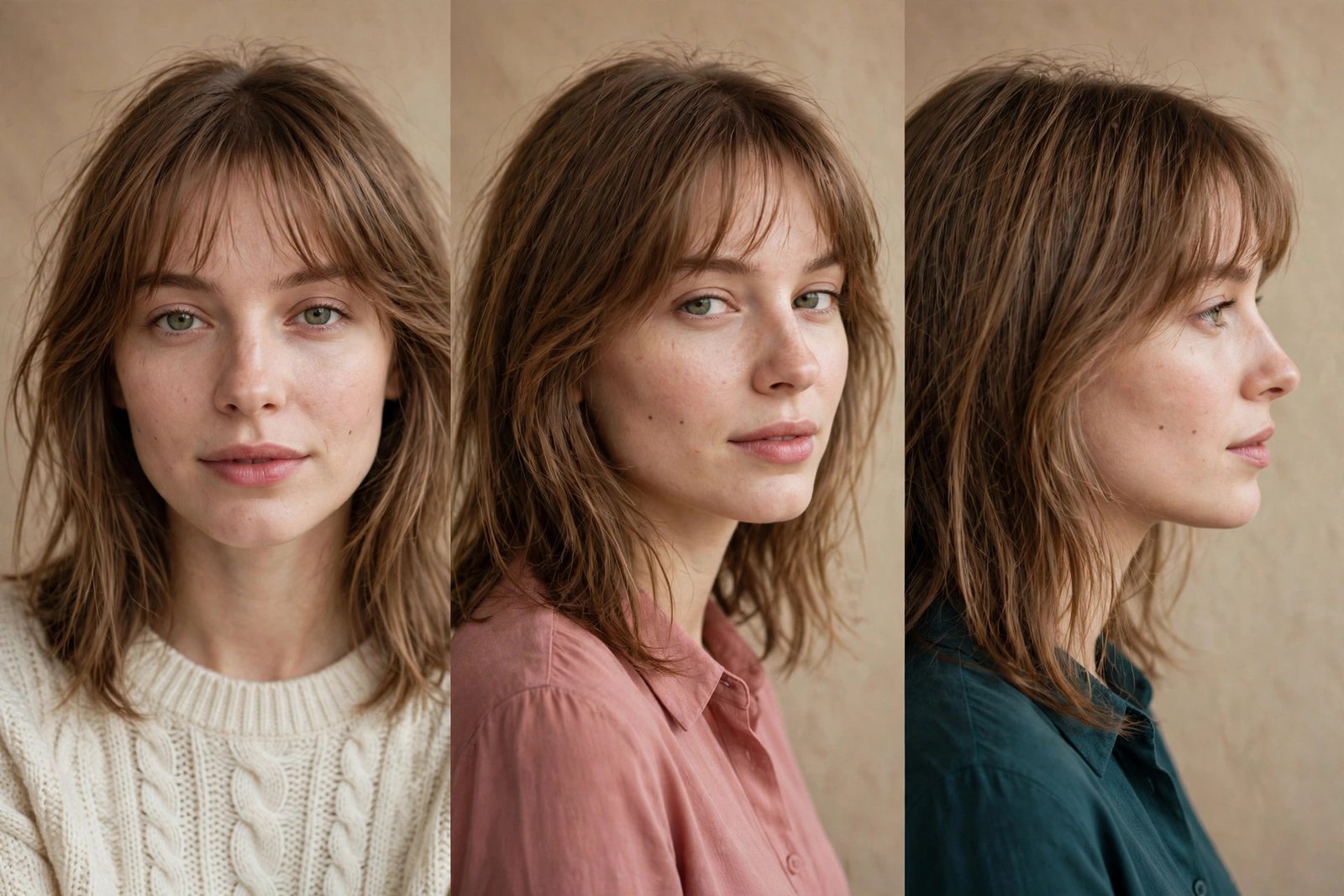
Fine hair does not rule out bangs — it just changes which ones work. The right fringe makes fine hair look thicker by adding shape and movement around the face. The secret is restraint: a narrow section, light ends and lift at the root.
What Makes Bangs Work on Fine Hair?
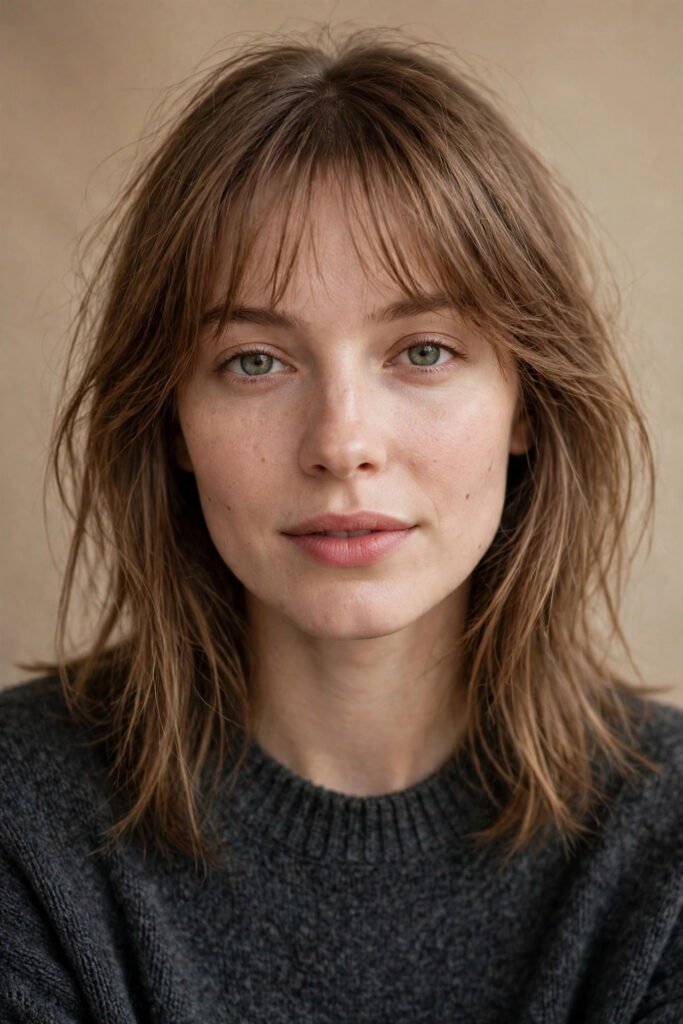
Good bangs for fine hair use a small section, so the rest of your hair keeps its density. Their ends are point-cut or textured, which stops a harsh, see-through line, and they have a little bend at the root so they never fall flat. Avoid very thick fringes cut from far back on the crown: they steal volume from the rest of your cut.
| Bang style | Best for | Effort |
|---|---|---|
| Wispy | First-time bangs, soft look | Low |
| Curtain | Face framing, easy grow-out | Low |
| Side-swept | Thinning hairline, round faces | Low |
| Bottleneck | Low-maintenance, shaggy cuts | Low |
| Baby | Bold look, strong hairline | Medium |
| Blunt | Straight fine hair, oval faces | Medium |
| Choppy | Texture and movement | Medium |
Wispy Bangs for Fine Hair
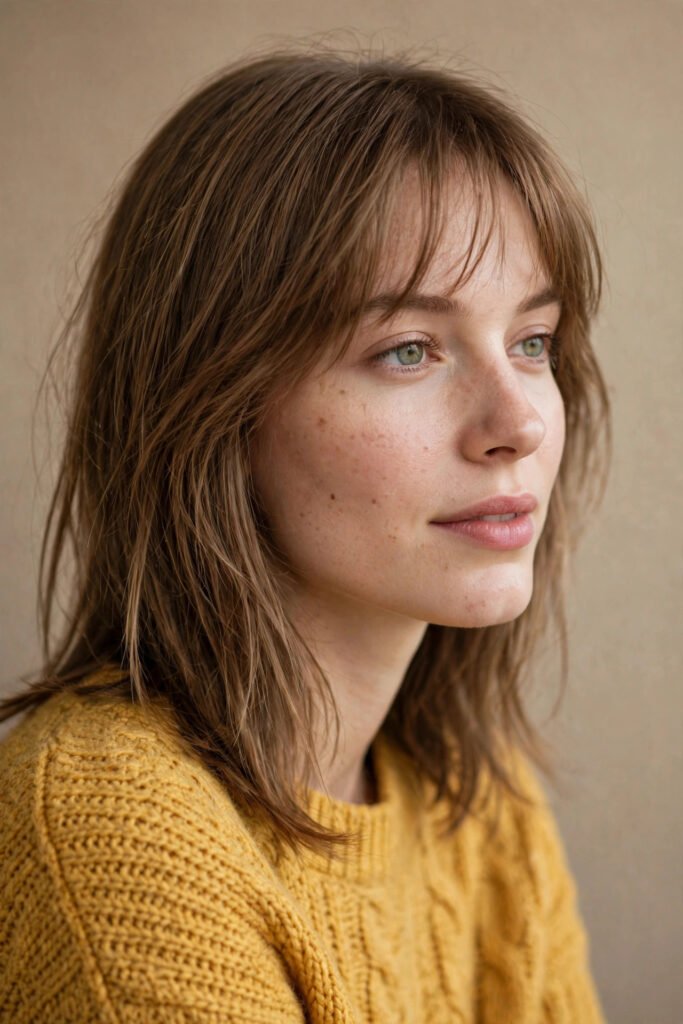
Wispy bangs are the safest first fringe for fine hair. They use only a thin section, and their feathered ends let skin show through, so the fringe looks soft rather than sparse. Ask for point-cut ends at eyebrow length, with longer pieces at the sides. See our wispy bangs guide for lengths and face shapes.
Curtain Bangs for Fine Hair
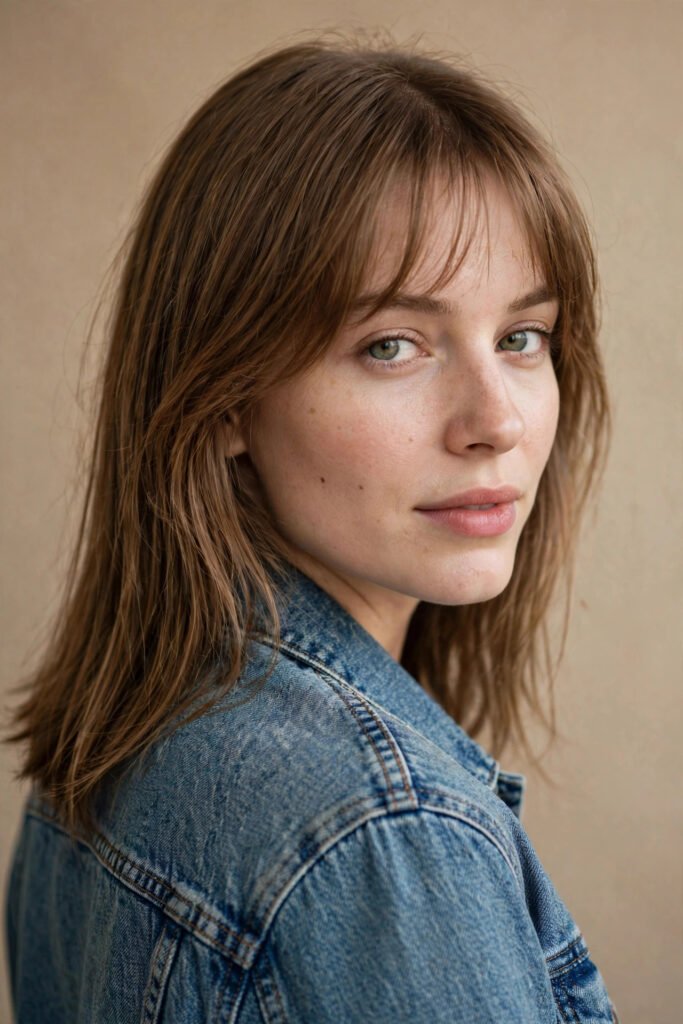
Curtain bangs part in the centre and sweep to each side, from cheekbone to jaw. They suit fine hair because they spread the shape outward instead of asking one thick panel to cover the whole forehead, creating width and movement around the face. Keep the shortest pieces a little longer than you think — extra length gives fine hair more surface to bend and stack, so it looks fuller.
Side-Swept Bangs for Fine Hair
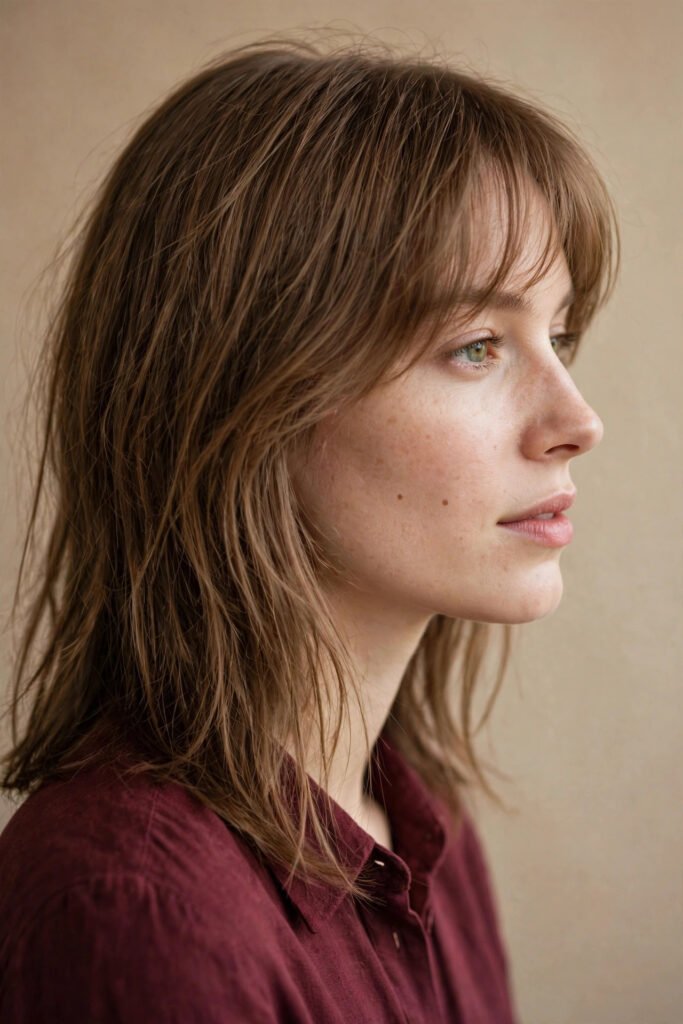
Side-swept bangs are one of the most reliable choices for fine or thinning hair. The diagonal direction does much of the work: hair crossing from one side to the other layers over itself, creating the illusion of more body at the front. They also disguise a thinning hairline, since you can sweep the fringe toward the sparser side. Ask for a deep side part and a fringe ending around the cheekbone.
Bottleneck Bangs for Fine Hair
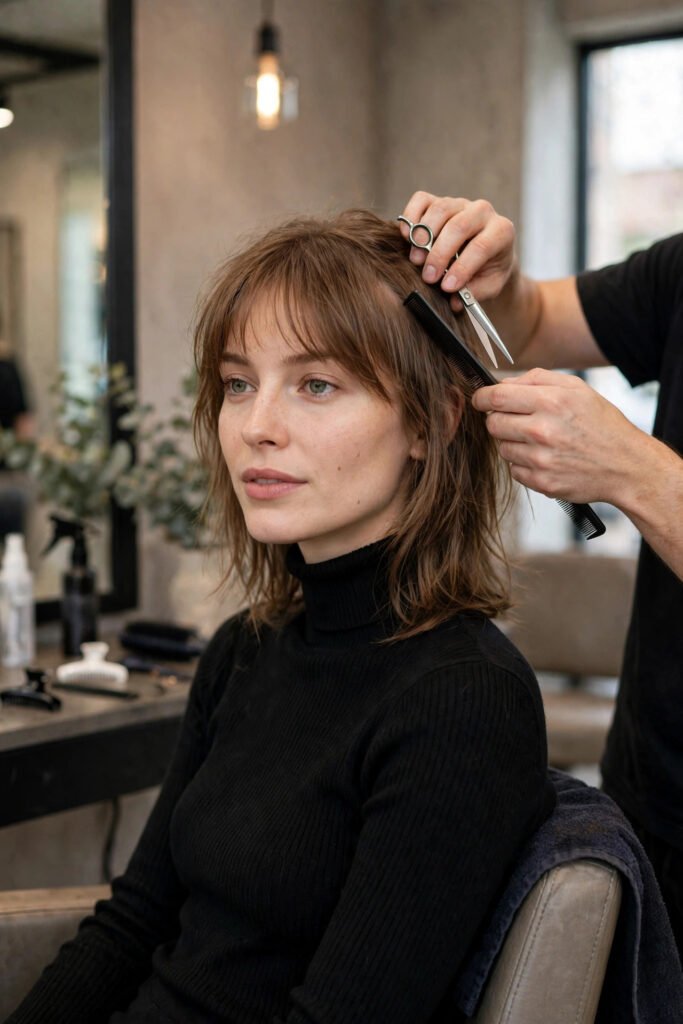
Bottleneck bangs are narrow at the top, widen through the cheekbones, then taper back into the lengths. This shaggy, face-framing fringe gives structure without overwhelming fine hair, and it is one of the lowest-maintenance options here. Because the shape is soft and blended, it grows out into layers rather than an awkward ledge.
Baby Bangs for Fine Hair

Baby bangs — short, above the brow — can work on fine hair, but only with a reasonably full front hairline and a textured, irregular edge. Cut too blunt or too dense, they fall flat and draw attention to thinness. The trick is minimal density and choppy ends, so the fringe looks deliberate, not sparse. They suit oval and heart faces best.
Blunt Bangs for Fine Hair
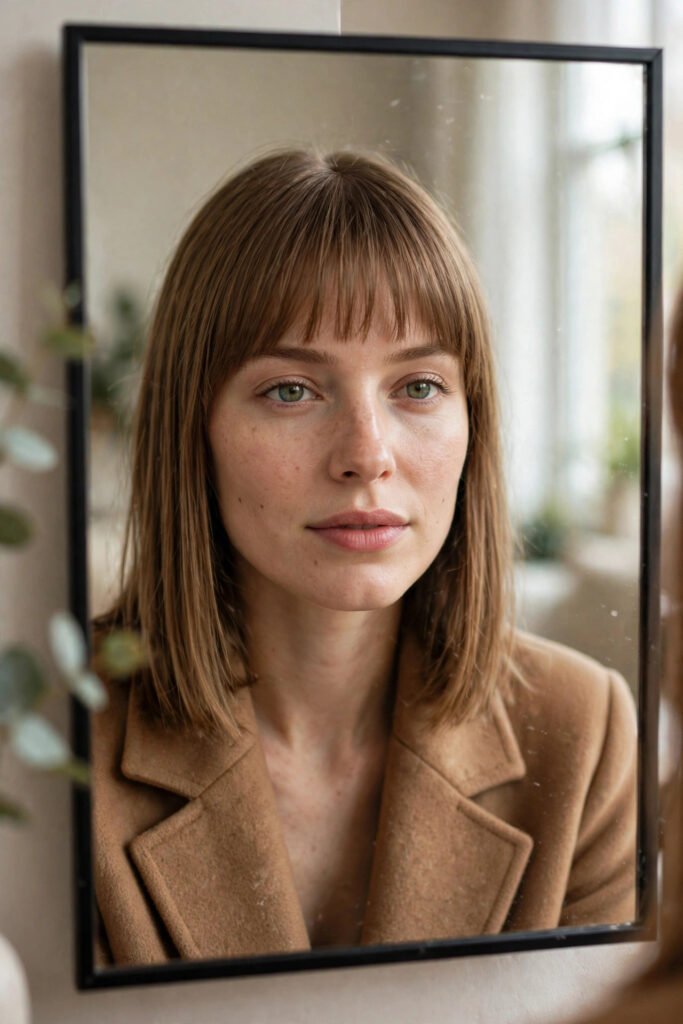
Blunt bangs on fine hair are a precision job. A clean, solid line instantly adds density across the forehead — but only if your hair is straight and your stylist keeps the section narrow, cutting from just behind the hairline rather than deep into the crown. If your hair is wavy or sparse, a soft blunt line with lightly textured ends is safer.
Choppy Bangs for Fine Hair
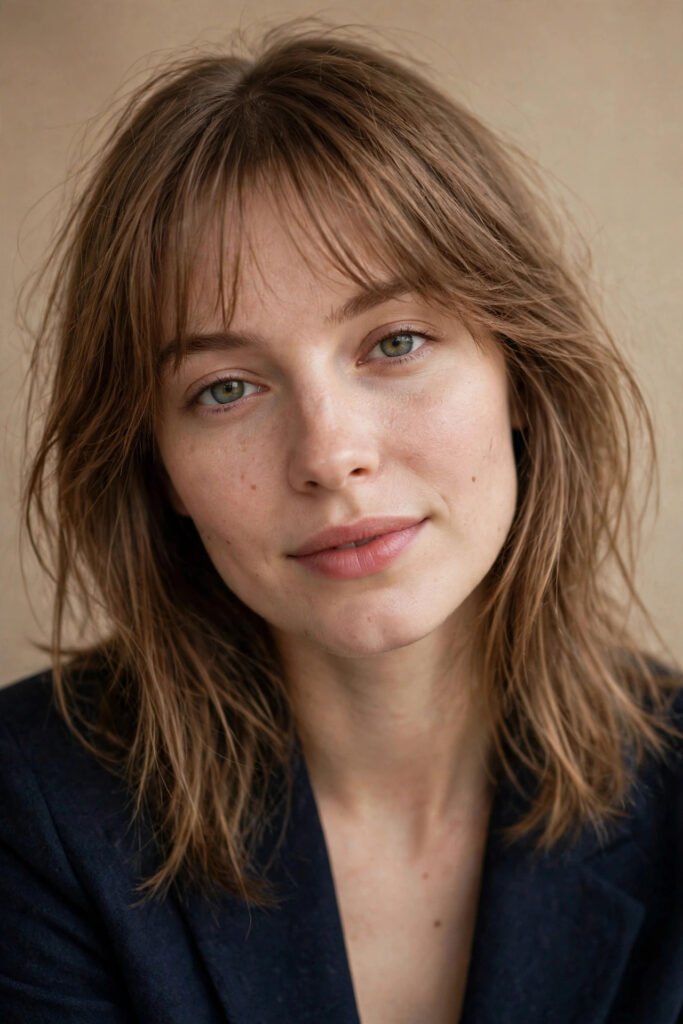
Choppy bangs use uneven, piecey ends to create texture and the illusion of volume: the separated pieces catch light differently and look thicker than a single flat panel. They work best on straight to wavy fine hair with some natural movement, and they forgive a less-than-perfect blow-dry. Ask for point-cutting and internal texture rather than thinning shears, which can make fine ends look wispy in the wrong way.
Best Bangs for Fine Hair by Face Shape
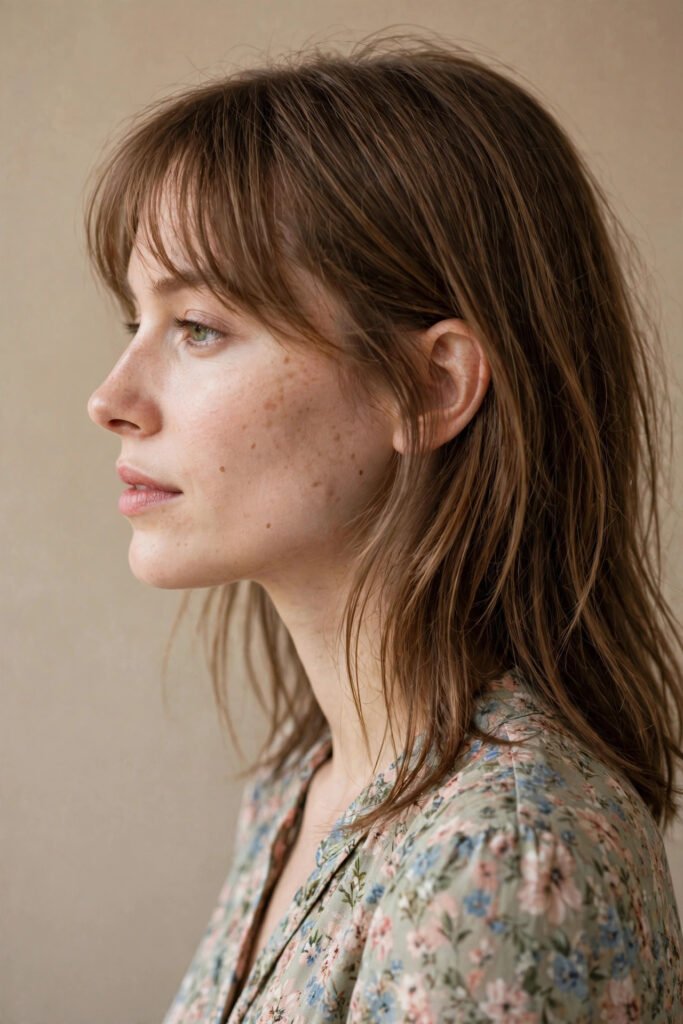
- Oval: almost any style works — wispy, curtain, soft blunt or baby bangs.
- Round: side-swept or curtain bangs, with longer sides to lengthen the face.
- Square: wispy or curtain bangs with soft, feathered edges to balance the jaw.
- Heart: wispy or side-swept bangs that break up forehead width without bulk.
- Long: fuller curtain or soft blunt bangs, adding horizontal shape to offset length.
If you are unsure, start with curtain or wispy bangs: both are forgiving, easy to grow out, and suit most faces.
How to Style and Maintain Bangs on Fine Hair
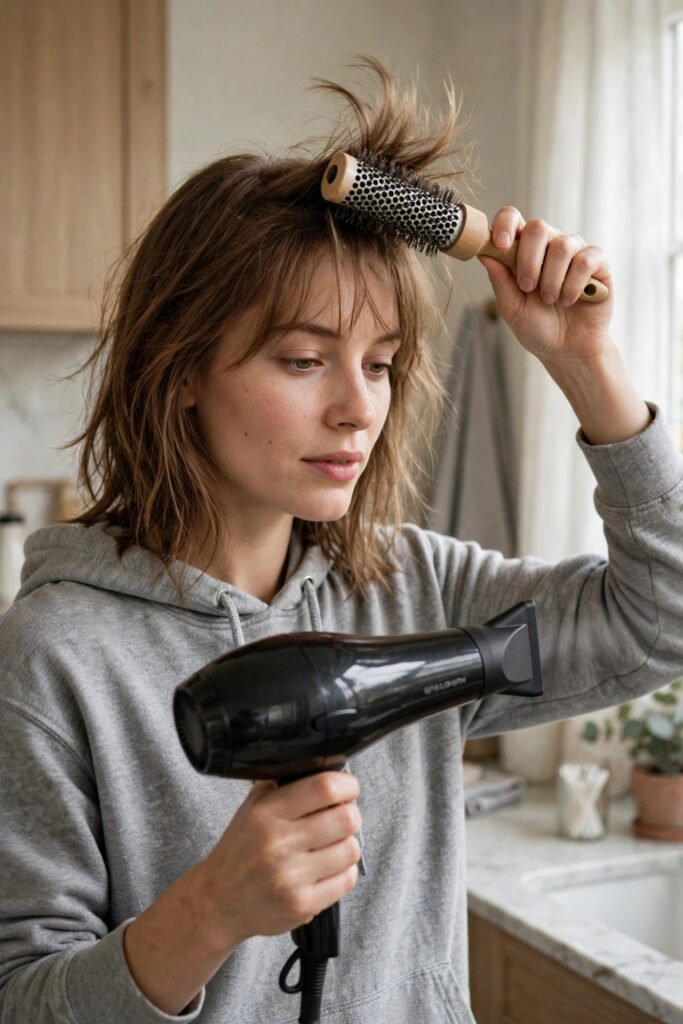
Styling fine-hair bangs is about lift, not hold: blow-dry bangs first, while damp, directing air down and forward from the root, with a lightweight volumising spray at the roots only. Heavy oils flatten fine hair fast. On no-wash days, dry shampoo revives the fringe in seconds, and trims every four to six weeks keep the shape.
FAQs
Do bangs make fine hair look thinner?
Only if cut too thick or too blunt. A narrow section with textured ends makes fine hair look fuller.
What is the lowest-maintenance bang for fine hair?
Curtain or bottleneck bangs: both blend into layers as they grow, so trims can stretch to six or eight weeks.
Can I get bangs if my hairline is thinning?
Yes — side-swept bangs are the best cover, since the diagonal sweep layers hair over sparser areas.
Should fine-hair bangs be cut wet or dry?
Dry, or at least finished dry: fine hair lifts as it dries, and a dry cut shows exactly where the fringe will sit.
How long do bangs take to grow out on fine hair?
Expect three to six months to reach chin length. Curtain and wispy styles grow out most gracefully.
Written by the New Light team. Fancy trying one of these shapes? Send us a message and bring your favourite photograph when you visit.