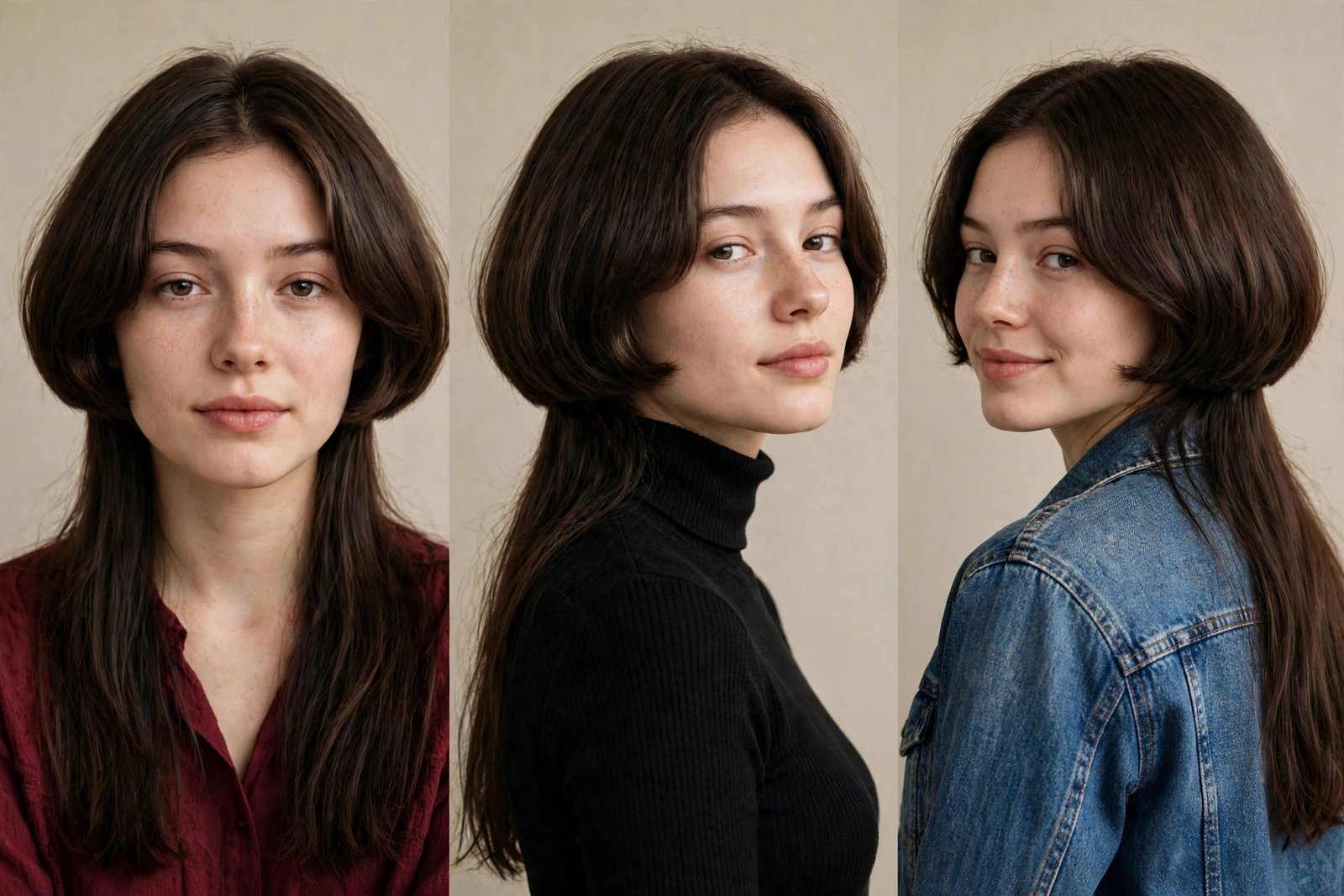
Two haircuts on one head, worn on purpose — that is the jellyfish haircut. A short, rounded layer sits on top like a jellyfish’s bell, while long hair flows underneath like its tentacles. It is bold, it photographs beautifully, and it is not a cut to walk into unprepared.
What Is a Jellyfish Haircut?

A jellyfish haircut is a two-tier cut: the top section is cut short and round, usually ending between the ear and the jaw, while everything underneath is left long, often past the shoulders. Its defining feature is the clear, visible gap between the two lengths. Most layered cuts blend one length into the next; the jellyfish cut keeps the two sections deliberately separate. If a stylist blends them too much, the shape disappears and you end up with an ordinary layered cut. The look traces back to Japan’s hime cut and spread through K-pop styling and social media.
Jellyfish Haircut vs Wolf Cut
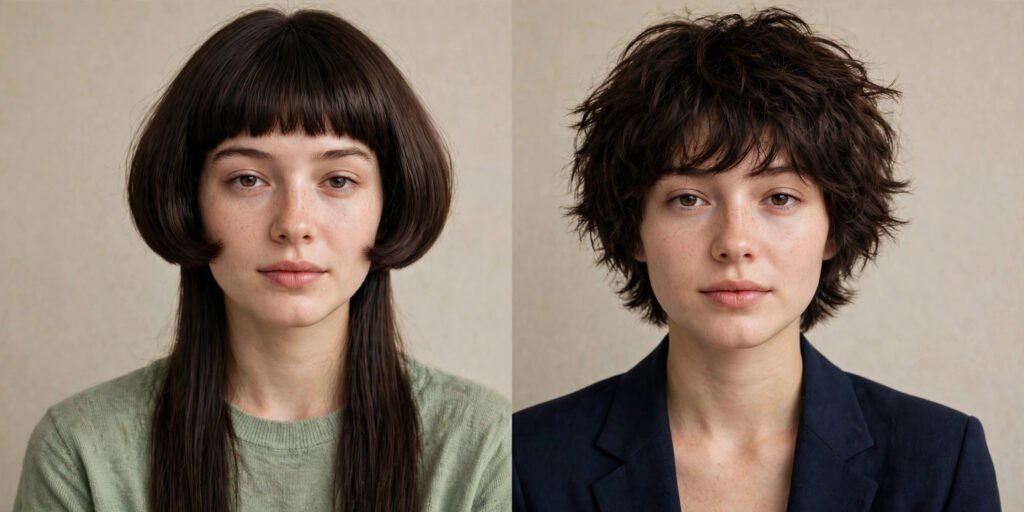
The wolf cut is the jellyfish cut’s closest rival. A wolf cut blends lots of choppy layers from crown to ends, with volume all over and a wild finish. A jellyfish cut picks exactly two lengths and keeps them apart — a round cap on top, long lengths below, with a gap you can see.
| Feature | Jellyfish Haircut | Wolf Cut |
| Layers | Two, with a clear gap | Many, blended throughout |
| Top shape | Round, bob-like cap | Choppy, shaggy volume |
| Overall feel | Sculptural and graphic | Wild and undone |
If you love wolf-cut drama but want something sharper, the jellyfish cut is the one. For a softer, blended layered cut, see our shag haircut guide instead.
Jellyfish Haircut for Straight Hair
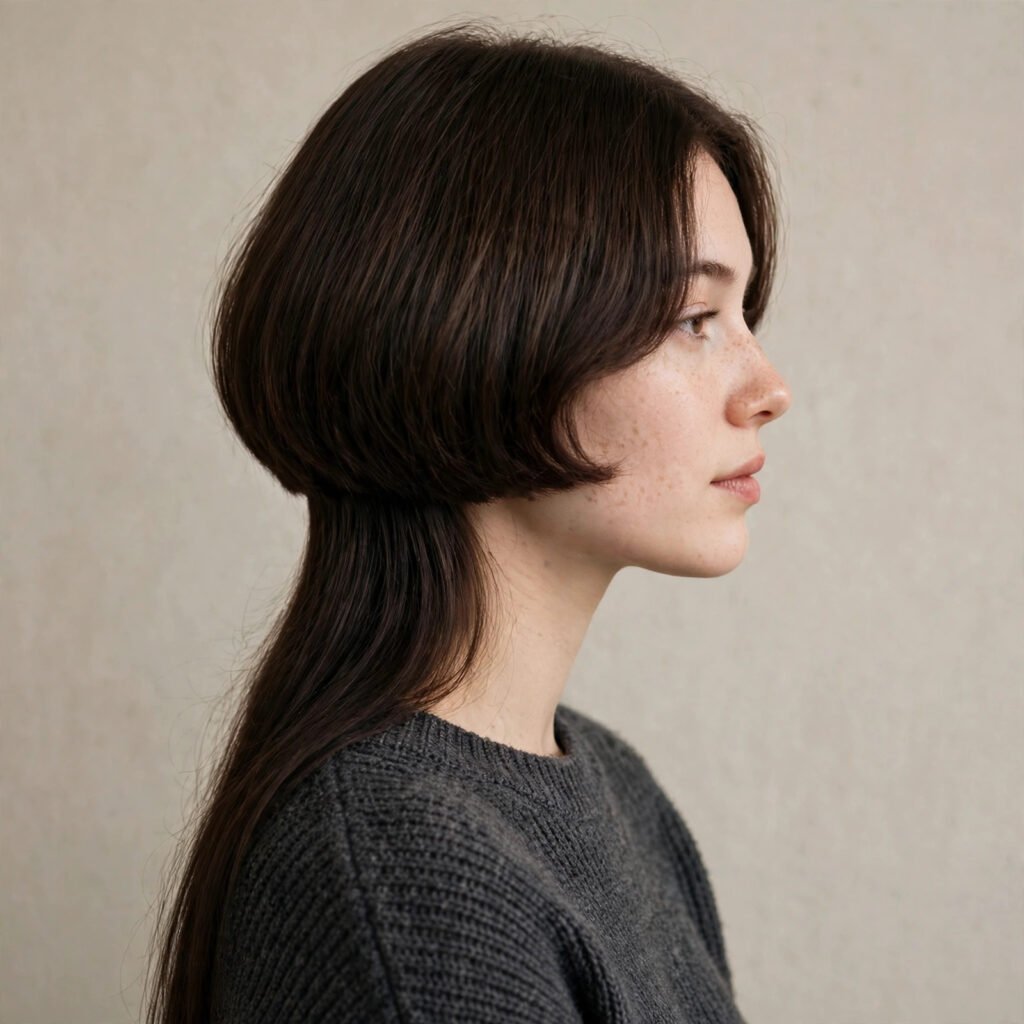
Straight hair is the jellyfish cut’s natural home. The gap between the round top and the long bottom reads crisply, the shape holds between washes, and the silhouette looks exactly like the photos that made the cut famous. Keep the long section sleek, curve the top layer under slightly with a round brush, and expect to trim the top every six to eight weeks — straight hair shows regrowth fastest.
Jellyfish Haircut for Wavy Hair

Wavy hair softens the jellyfish cut into something more wearable. Loose waves blur the hard line just enough to make it feel less graphic, while the two lengths stay clearly different. Let waves air-dry with a light texture cream, and only tidy the top layer with a round brush when you want a neater finish. Avoid heavy products: anything that weighs the top layer down flattens the cap, and the cap is doing all the work.
Jellyfish Haircut for Curly Hair
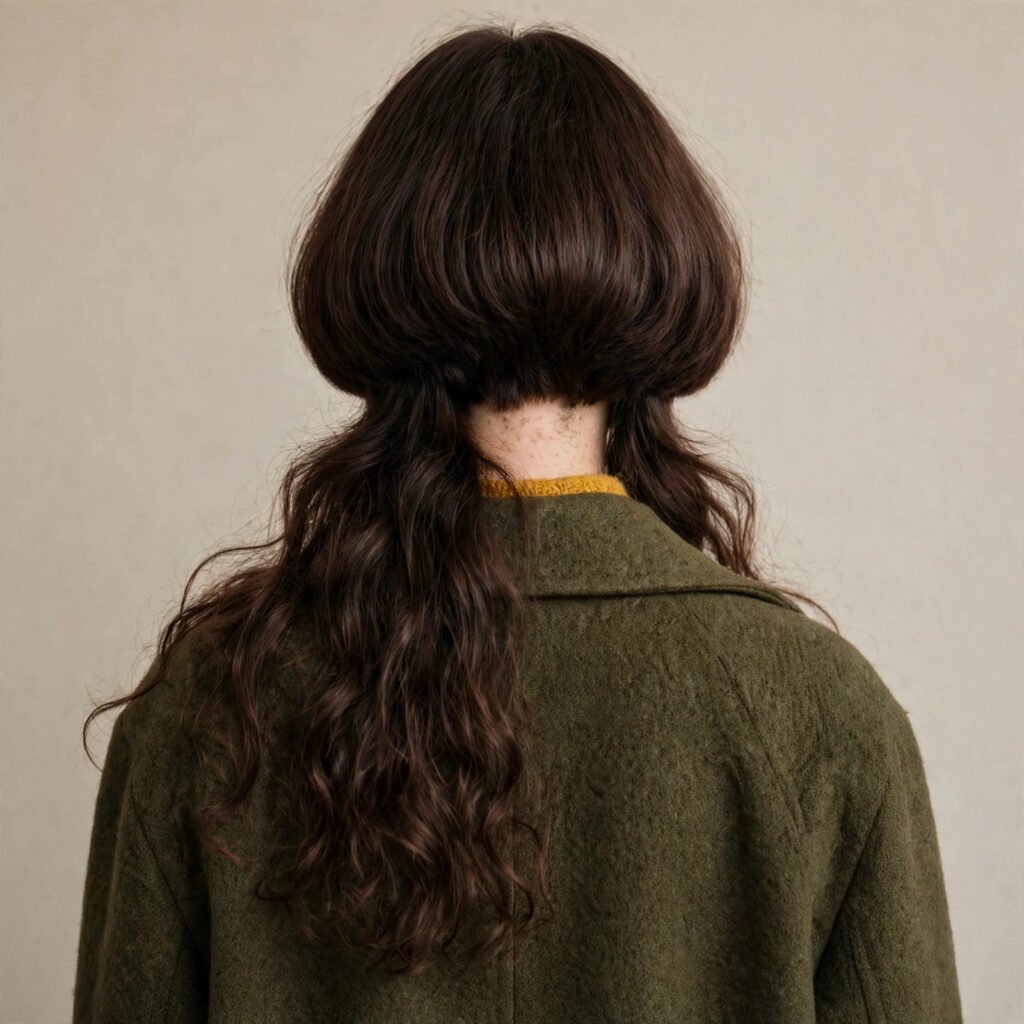
Curly hair needs honesty here. Curls shrink up as they dry, which softens the gap the cut depends on, so the two layers can start reading as one shape. Loose waves and soft curls can carry the look; very tight curls usually cannot. If you still want the shape, ask for longer top layers, a cut done on dry hair, and minimal thinning. Curl cream and a diffuser keep the shape controlled without flattening the top.
Jellyfish Haircut with Bangs

Bangs complete the jellyfish look for many wearers. Blunt bangs sharpen the graphic, bob-like top, while wispy or curtain bangs soften it and connect the cap to the face. Either way, the fringe should belong to the top section, not float separately from it. Wispy bangs are the safer first step: they keep the drama while leaving room to grow the fringe out. Blunt bangs suit straight hair best, where their clean edge matches the cut’s precision.
Jellyfish Haircut for a Round Face
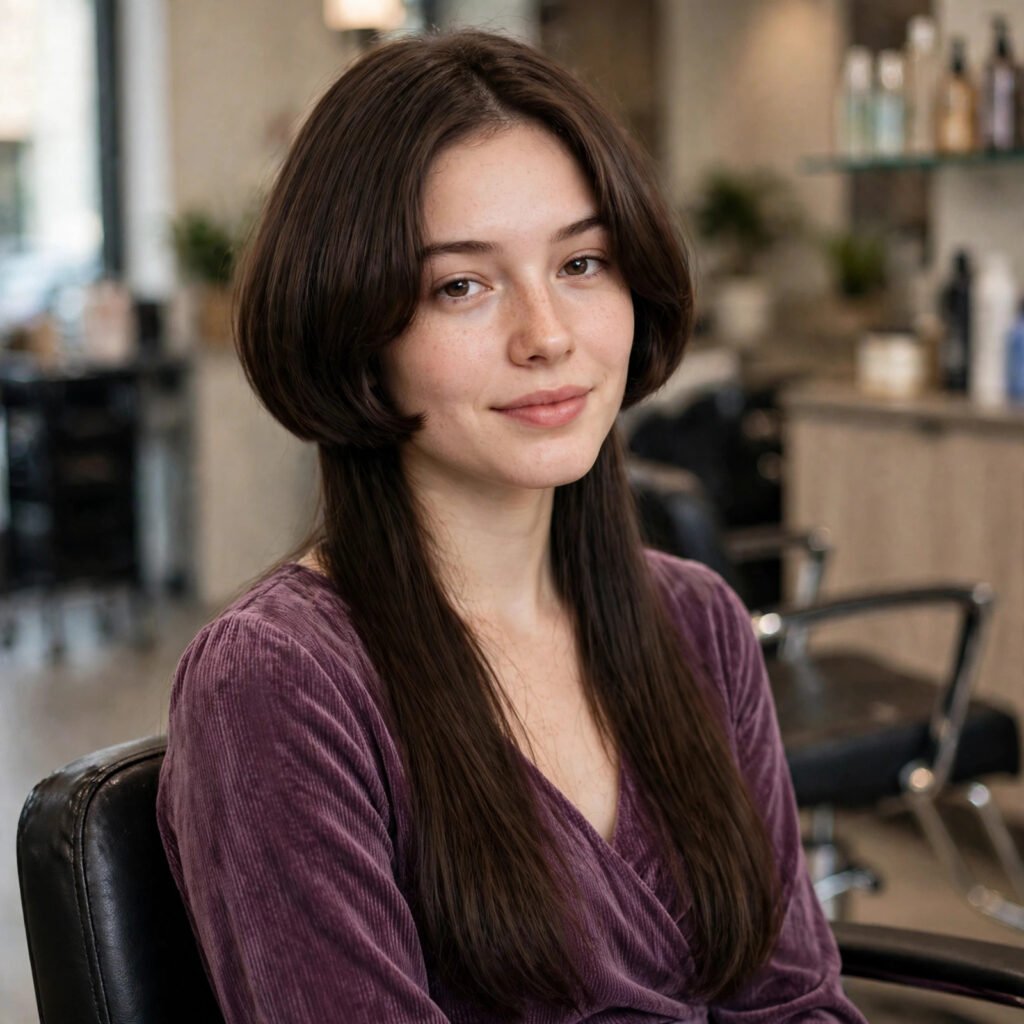
A round face and a jellyfish cut can work well together, because the long bottom section adds vertical length that balances the roundness of the cap. The trick is where the top layer ends: chin length or just below it is most flattering, while a very short, wide cap can emphasise width. Ask for a slightly longer, softer top layer and face-framing pieces that fall past the cheekbones, drawing the eye downward.
How to Style a Jellyfish Haircut

Styling is mostly about keeping the two layers looking like two layers. Left to air-dry with no attention, the top layer flattens into the rest and the shape disappears.
- Blow-dry the top separately: use a round brush and curve the ends under to hold the round shape.
- Dry the lengths straighter: keep the long part sleeker so the two sections still look different.
- Keep product light: heavy creams flatten the cap; a little texture spray where the layers meet helps the gap look planned.
- Budget five to ten minutes: this is not a wash-and-go cut.
How to Ask Your Stylist for a Jellyfish Haircut

Bring photos — front, side and back views. Words alone will not do it here, because the same description can turn into very different cuts depending on how hard the gap is cut. Say exactly: “a short, round top layer ending at my jaw,” “keep the length underneath,” and “a visible gap between the two — I do not want them blended.” Then ask how sharp the gap should be, where the top should end, and what the cut will look like at three and six months.
Growing Out a Jellyfish Haircut

Growing out a jellyfish cut is harder than growing out most cuts. Both layers grow at the same speed, so the gap never closes on its own. To return to one length, you must stop trimming the top and keep trimming the long part until the two meet — a process that takes months, with an awkward in-between stage. Most wearers soften the gap with a midway trim instead, turning the cut into a layered style like an octopus haircut on the way back.
FAQs
Is the jellyfish haircut the same as a wolf cut?
No. A wolf cut blends many choppy layers throughout, while a jellyfish cut keeps exactly two lengths apart with a visible gap.
Will a jellyfish cut work on fine hair?
Usually not well. The round top layer needs enough hair to hold its shape, and on fine hair it can look thin instead of full.
How long does my hair need to be?
Past your shoulders at least, and longer is better — the long part needs enough length for the contrast to show.
How often does a jellyfish haircut need trimming?
Every six to eight weeks for the top layer, which loses its round shape as it grows. The long part needs only a dusting every few months.
Can you get a jellyfish cut on curly hair?
You can, but curl shrinkage softens the gap the cut relies on. Loose waves work; on tight curls, a different layered cut is usually better.
Written by the New Light team. Fancy trying one of these shapes? Send us a message and bring your favourite photograph when you visit.