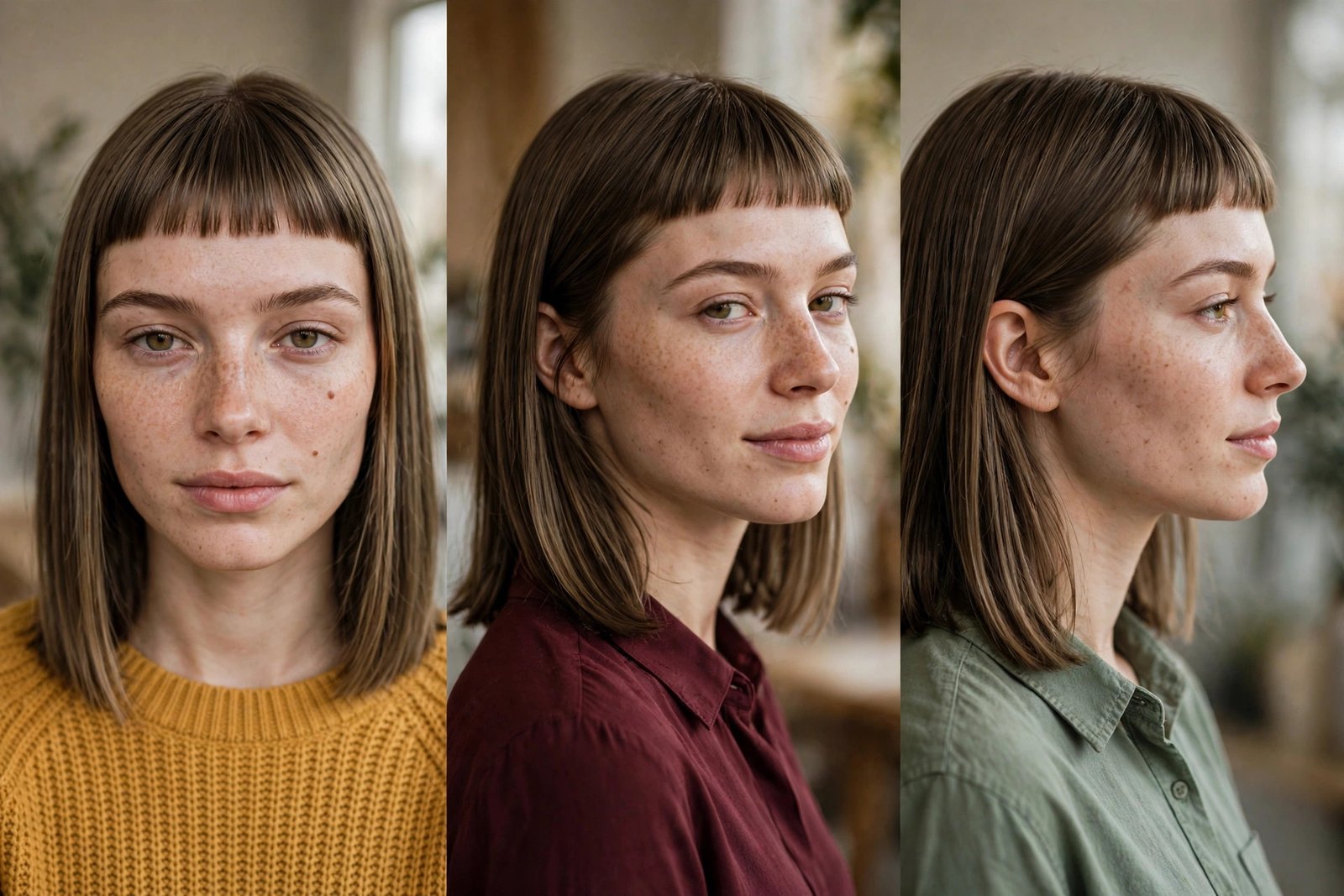
Baby bangs are the shortest fringe you can ask for — and the boldest. Cut well above the eyebrows, often halfway up the forehead, they turn even a simple haircut into a statement. Where longer fringes soften and blend, baby bangs draw a clean, graphic line across the forehead and throw the focus straight onto your eyes and cheekbones.
They go by several names — micro bangs, micro fringe, baby fringe — but the cut is the same: a narrow, short panel of hair at the very front, worn blunt or softly textured. This guide covers what baby bangs really are, who they suit, how they work with bobs, long hair and curls, and the honest upkeep you need to know before you commit.
What Are Baby Bangs?
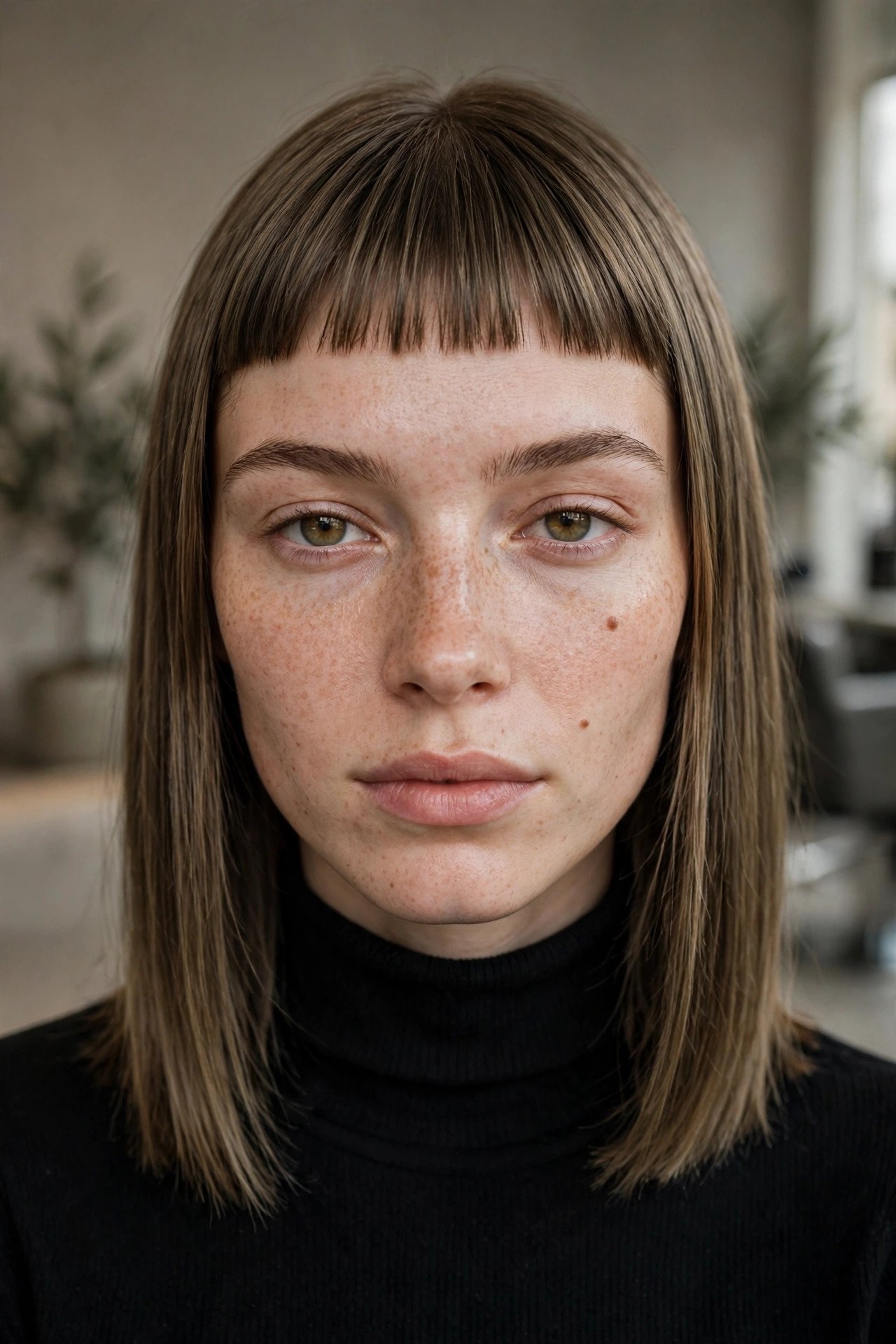
Baby bangs are a very short fringe that sits well above the brow line, usually one to two inches above the eyebrows and sometimes as high as mid-forehead. Unlike a full fringe, which uses a deep section of hair, baby bangs use a narrow, shallow section — roughly the width between your pupils — so they sit like a small panel rather than a heavy curtain across the forehead.
They are usually cut blunt, in one straight line, though softer versions are textured at the ends or given a slight arc that follows the shape of the forehead. The effect is architectural: a crisp horizontal line that contrasts with the rest of the hair, whether that hair is long and sleek or short and choppy.
The names cause confusion, so here is the simple version: “baby bangs” is the older, original name; “micro bangs” is the more common modern term; “micro fringe” is the British name for the same cut. Some stylists draw a small distinction — baby bangs hovering just above the brows, micro bangs cut shorter still, closer to the hairline — but in most salons, if you show a photo, the name does not matter.
Baby Bangs vs Curtain Bangs

Baby bangs and curtain bangs sit at opposite ends of the fringe spectrum, and choosing between them is really a question of commitment.
| Baby bangs | Curtain bangs | |
|---|---|---|
| Length | Well above the eyebrows | Eyebrow to chin length, swept to the sides |
| Forehead coverage | A short, visible panel | Centre left partly open |
| Styling time | Under a minute, daily | 3–5 minutes with a round brush |
| Grow-out | 6–12 months, with an awkward stage | 3–4 months, blends into layers |
| Can you pin them back? | No — too short to tuck away | Yes, easily |
| Vibe | Bold, graphic, editorial | Soft, romantic, effortless |
If you have never had bangs, curtain bangs are the safer first step: they grow out gracefully and can be pinned back on a bad day. Baby bangs are the opposite on both counts — there is nowhere to hide a bad cut, and growing them out takes patience. That is also what makes them so striking when they are right.
Baby Bangs for Round Face
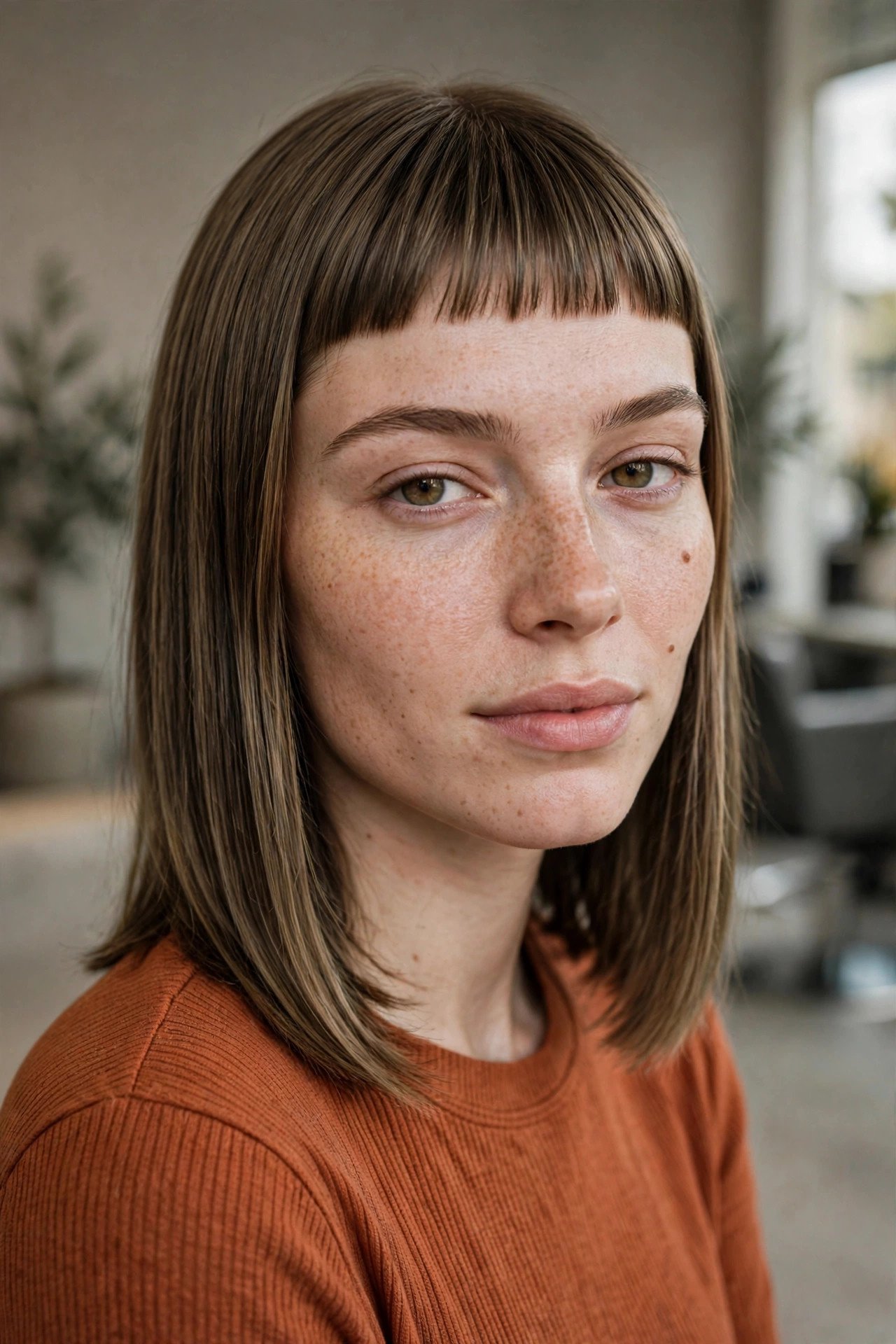
Baby bangs are more face-dependent than most fringes, because they expose the whole forehead and jaw. That does not rule out a round face — but it does mean the details matter.
A blunt, heavy line straight across the forehead can emphasise width on a round face. Softer versions sit better: a slightly arched line, textured ends, or a narrower section that does not extend past the temples. A little root lift helps too, drawing the eye upward rather than sideways.
Other face shapes have their own sweet spots:
| Face shape | How baby bangs work | Best version |
|---|---|---|
| Oval | The easiest fit | Any length, blunt or textured |
| Heart | Shows off cheekbones beautifully | Classic blunt, mid-forehead |
| Square | Strong jaw meets a straight line — intentional | Blunt, with softened corners |
| Round | Trickier — width needs managing | Arched, textured, narrower section |
| Long | Shortens the forehead visually | Slightly longer, just above the brows |
One hard limit applies to every face shape: a very short forehead. If there is little space between your hairline and your brows, baby bangs have nowhere to sit. Bring photos of your own face shape and hair texture to the consultation, and ask your stylist for an honest verdict before the scissors come out.
Baby Bangs for Long Hair
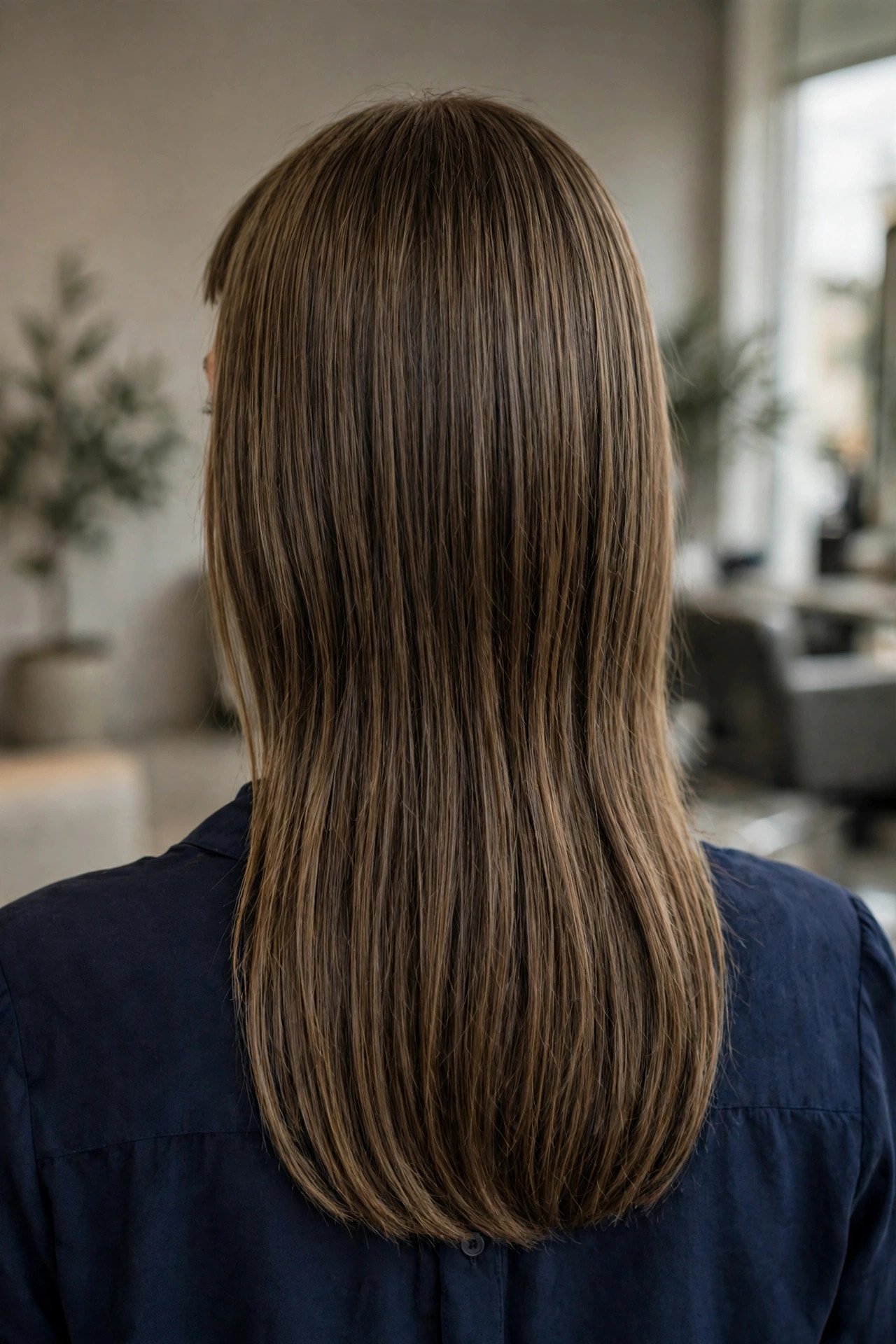
Baby bangs with long hair are the version you see most on social media, and the contrast is the whole point. A tiny fringe over long, flowing lengths looks dramatic precisely because the difference in length is so extreme — a short, precise line against a long, soft fall of hair.
This pairing works best when the long hair is kept fairly sleek or gently waved. Very frizzy or heavily layered long hair can fight the clean line of the fringe. Keep the lengths simple — straight, softly waved, or pulled into a high ponytail that puts the fringe fully on display — and let the bangs do the talking.
Ask your stylist to cut the fringe dry or nearly dry. At this length, even a small amount of shrinkage as the hair dries changes the look completely, and a wet cut can end up far shorter than intended.
Baby Bangs with a Bob
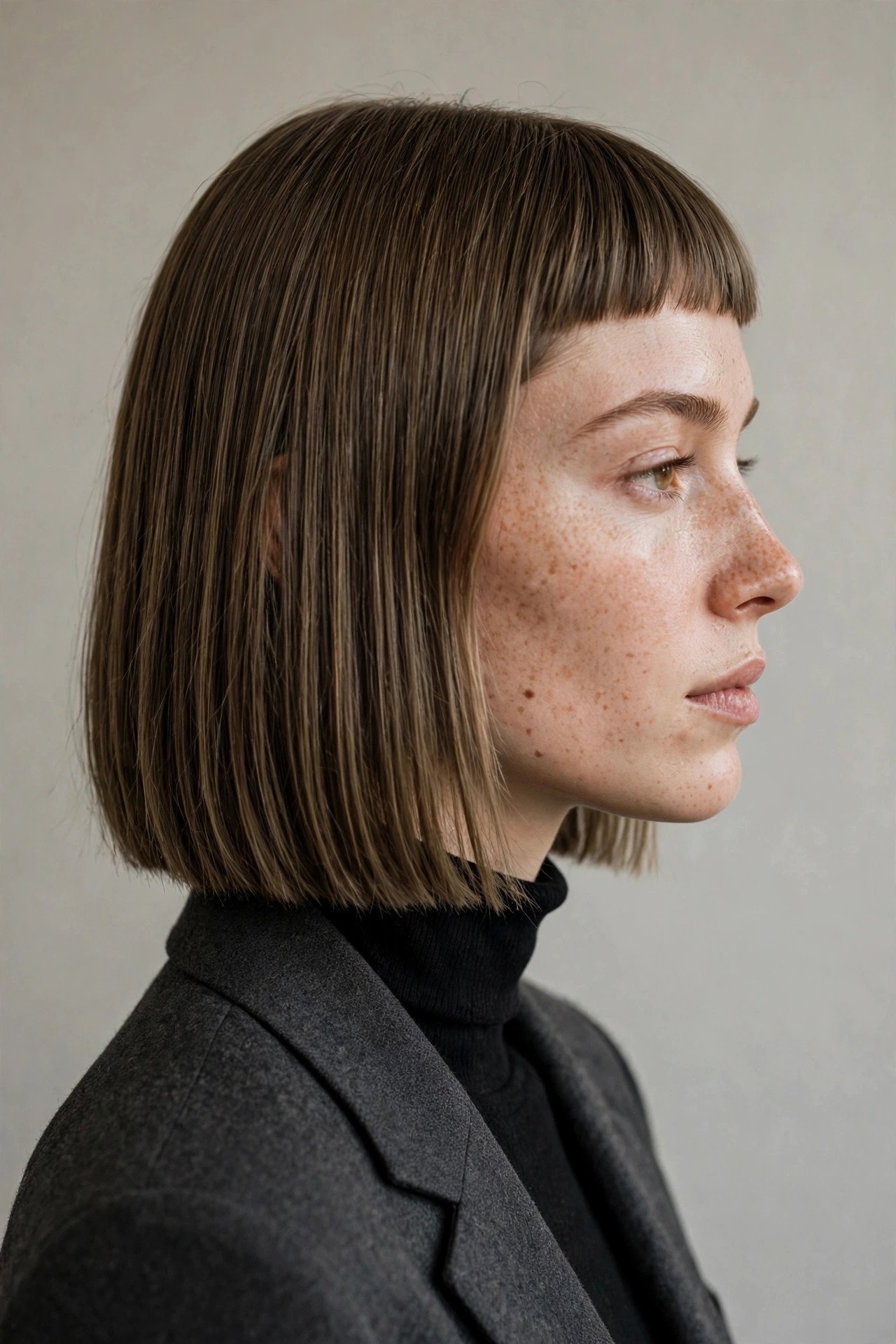
Baby bangs with a bob are the classic pairing — close to the original version of the look. A chin-length blunt bob with straight-across baby bangs creates a timeless, architectural shape: two strong lines, one at the forehead and one at the jaw, that frame the face like a picture.
The balance matters. Because both elements make a statement, keep the bob itself simple: a clean blunt cut, or a softly graduated bob that is shorter at the back. A heavily layered or shaggy bob plus baby bangs can look busy, with too many competing shapes around the face.
This is also the most forgiving version for everyday wear. The bob gives the fringe a finished frame, so the whole style reads as deliberate even on days you do little more than dry the fringe and go. Our guide to the bob haircut covers the bob lengths that pair best with a short fringe.
Baby Bangs for Curly and Wavy Hair

Curly and wavy hair can absolutely wear baby bangs — but the cut must respect the curl. Curls spring up as they dry, so curly baby bangs must be cut dry, curl by curl, and kept longer than you think you need. A wet cut on curly hair almost always ends up too short once it dries.
On wavy hair, a textured, slightly choppy baby bang works beautifully: the natural wave stops the fringe looking too severe, and a little styling wax defines the individual pieces. On curly hair, expect a softer, fuller result than the sleek photos you save online — the fringe will read as texture rather than a sharp line, which is a look in its own right.
One honest note: cowlicks at the hairline are harder to manage at this length. If you have a strong cowlick at the front, tell your stylist — they may need to adjust the width or weight of the section to work with it rather than against it.
How to Style Baby Bangs
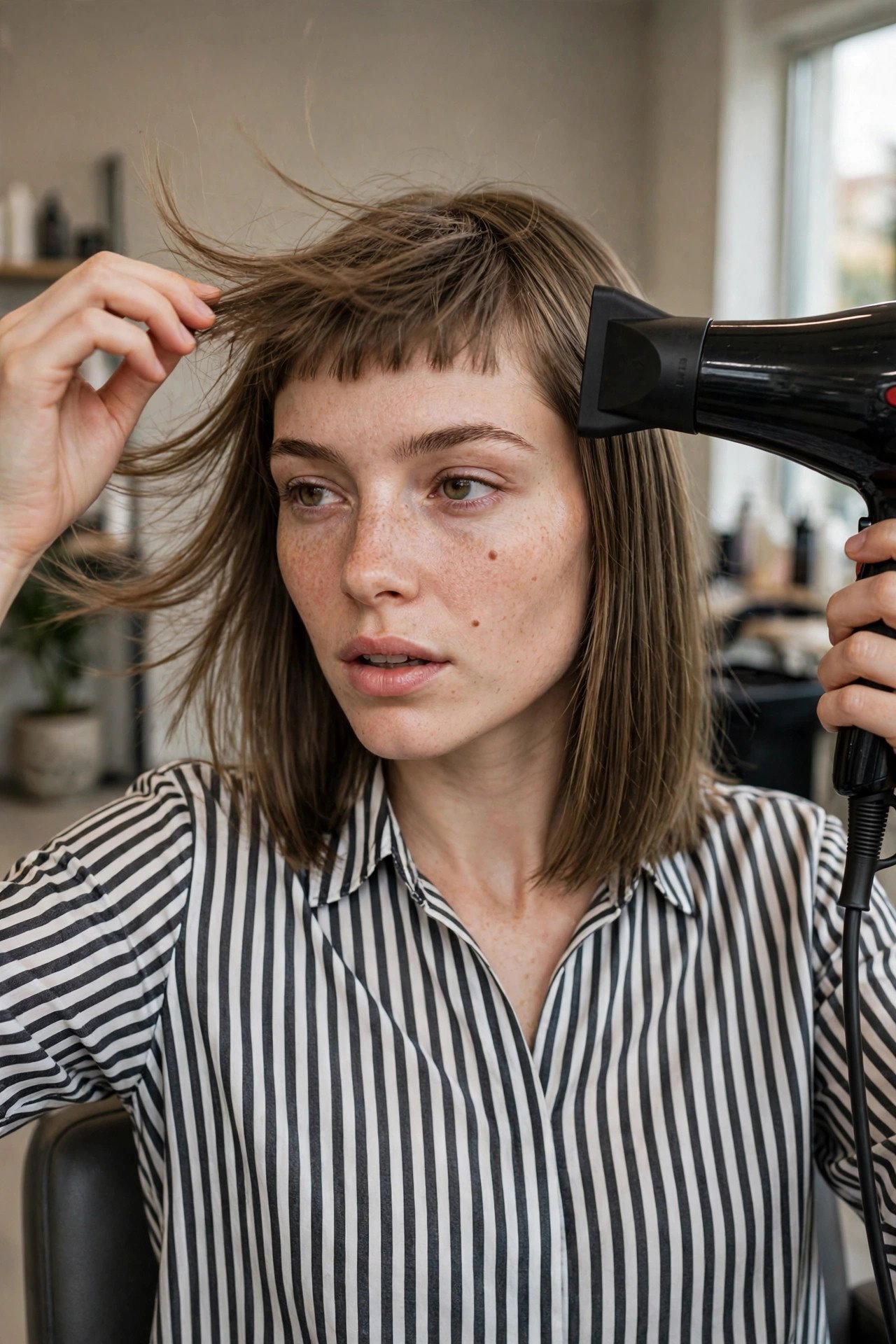
The good news about styling baby bangs is that it takes under a minute. The less good news is that you have to do it every single day — there is no pinning them back or skipping a day.
- Dry them first. Style the fringe while it is still damp, before the rest of your hair, so it does not set in the wrong direction.
- Point the dryer straight down. Use your fingers, not a brush, and move the fringe side to side as it dries so it does not set in one direction.
- Never let them air-dry. They will set with a bend or a cowlick, and at this length you cannot hide it.
- Finish with a tiny amount of product. A pea-sized dab of pomade or light cream, pressed in with your fingertips, keeps the line clean without stiffness.
- Skip heavy hairspray. It makes a short fringe look stiff and separated.
That is the whole routine. No round brush, no rollers, no elaborate sectioning — just a quick daily dry and a fingertip of product.
Baby Bangs Maintenance and Trims
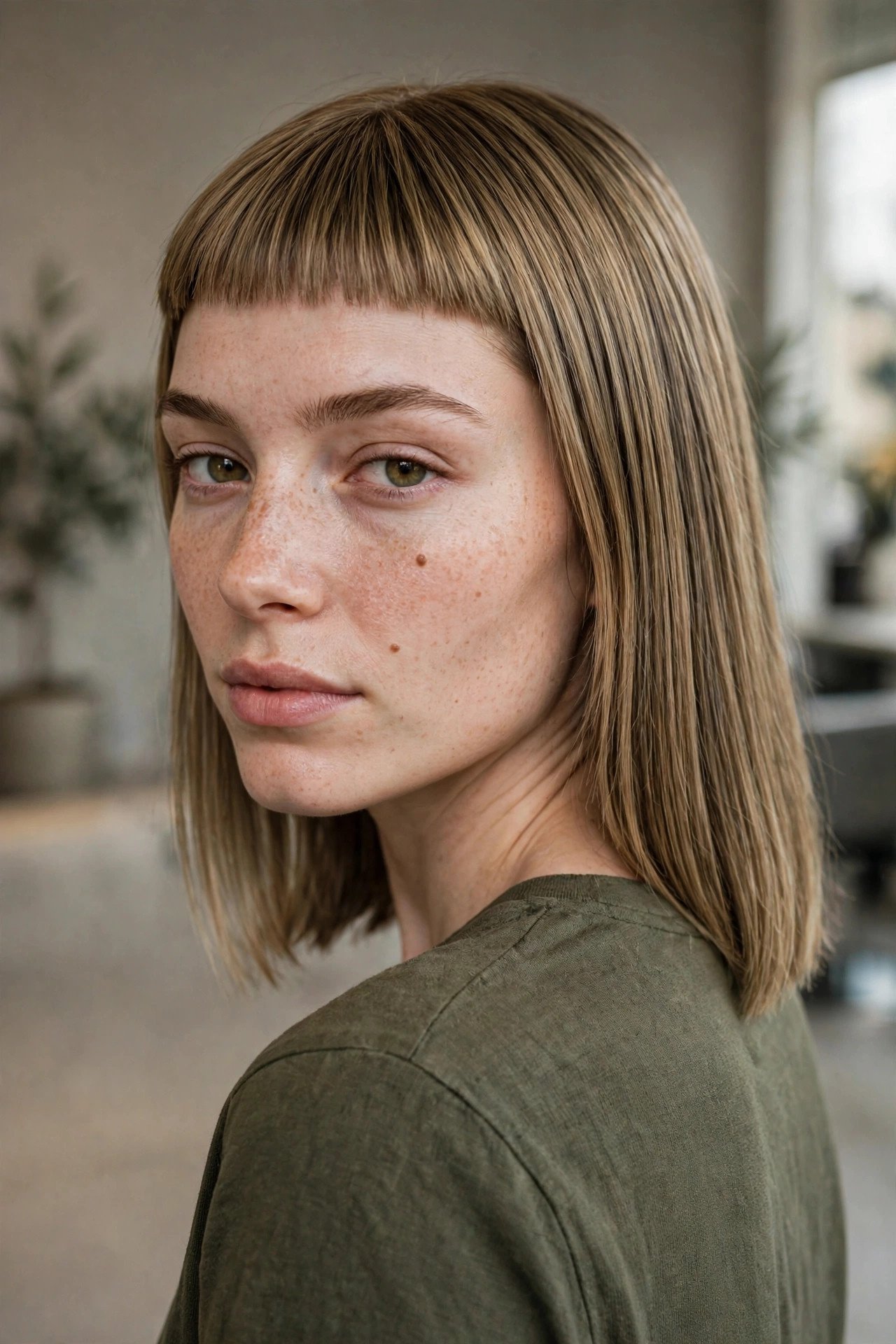
Maintenance is the real cost of baby bangs, and it is worth knowing before you commit. Hair grows about half an inch a month — invisible on shoulder-length hair, but enough to completely change a two-inch fringe. Baby bangs hold their shape for roughly two to three weeks before they need reshaping.
Book a standing trim appointment every two to three weeks, or ask whether your salon offers complimentary fringe trims between full haircuts — many do. Between visits, resist trimming them yourself: with longer bangs, a mistake of half an inch is recoverable, but with baby bangs a quarter inch is the difference between the look you wanted and a fringe sitting on your hairline. The width is just as easy to get wrong — too wide a section gives you a heavy block across the forehead instead of a small panel.
Dry shampoo is your friend between washes. The fringe touches your forehead, so it gets oily faster than the rest of your hair; a quick spray at the roots, left for a minute and brushed through, revives the whole style.
Growing Out Baby Bangs
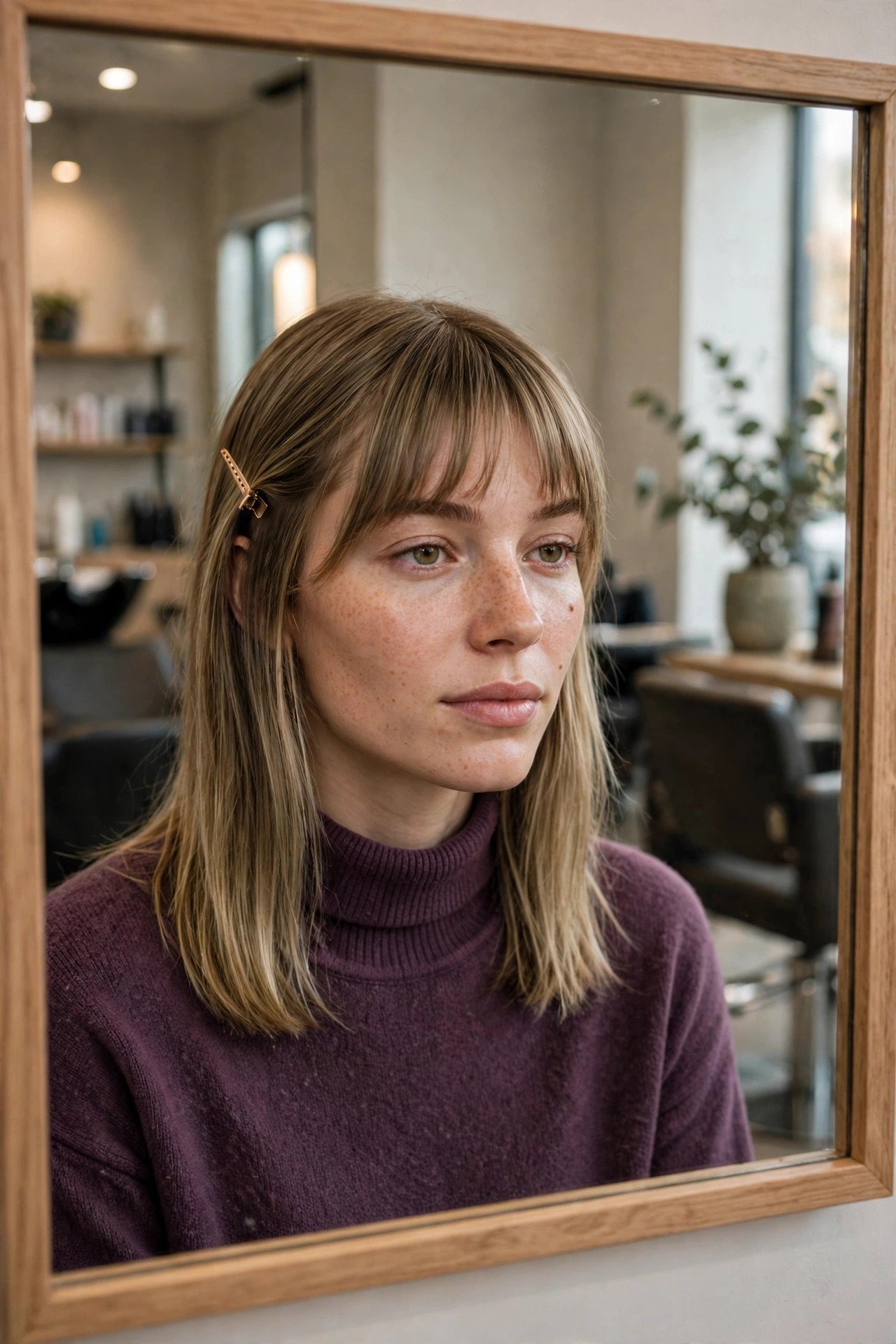
Growing out baby bangs is the honest downside of the cut, and it takes six months to a year. There is no way to speed it up, and there is a real awkward stage: the fringe passes through eyebrow length, where it sits in your eyes, before it is long enough to tuck behind your ears. Expect a few months of clips, headbands and side parts.
A few things help. Ask your stylist to soften the edges and add a slight angle as the fringe grows, so it blends toward curtain bangs instead of hanging as a blunt block. Use small clips or a headband on days the length sits in your eyes, and try a deep side part to sweep the growing fringe across the forehead. The fringe will eventually become face-framing layers — a hairstyle in itself — but the middle months require patience.
If that timeline puts you off, that is useful information. Baby bangs are a commitment, and knowing the grow-out cost upfront is better than discovering it afterwards.
What to Ask Your Stylist
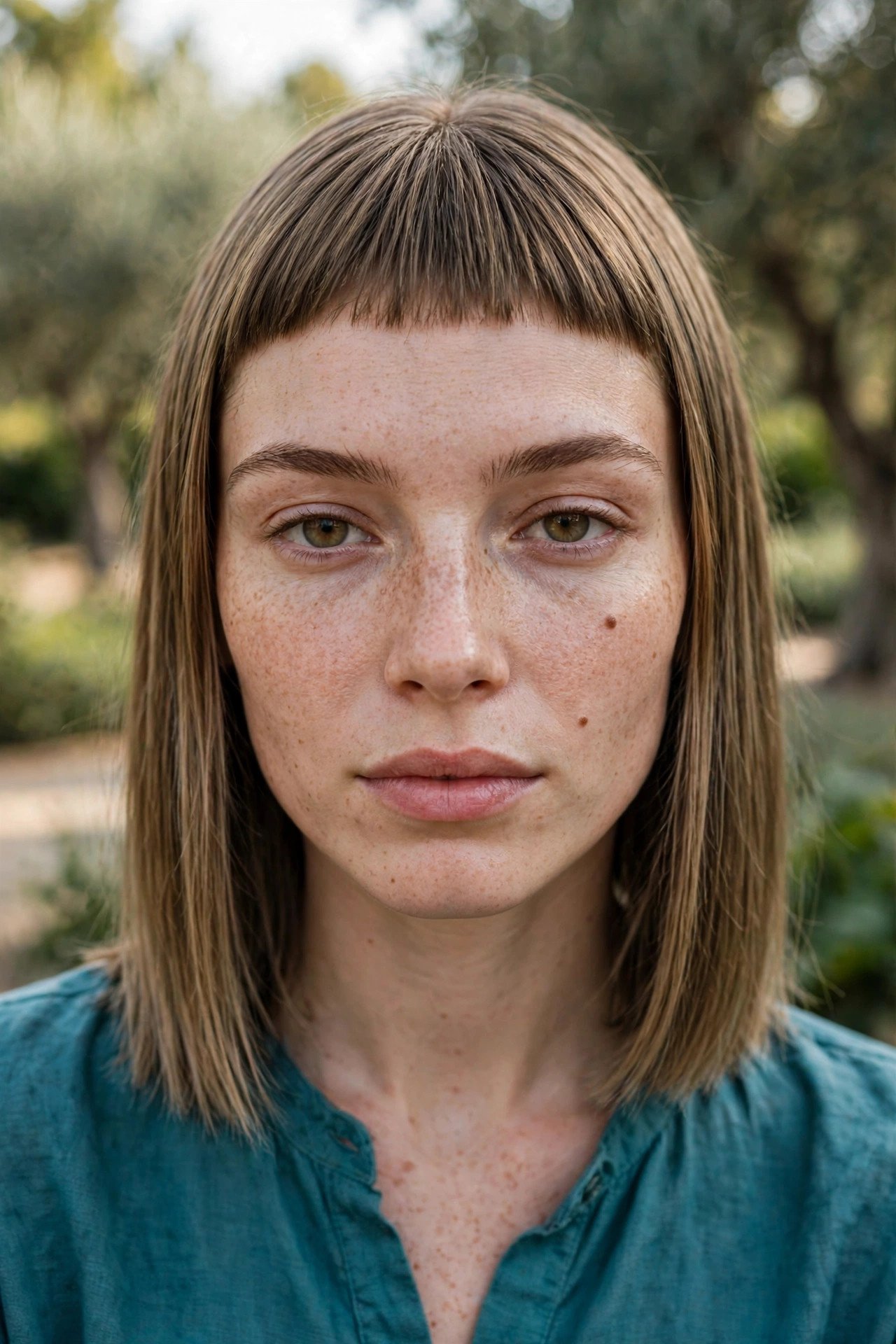
The right request makes all the difference at this length. Say: “Baby bangs, narrow section, cut dry, sitting about an inch above my eyebrows on the first pass, blunt line with softened corners.” Ask your stylist to show you the length in the mirror before any second pass — going shorter is easy, going longer is not.
Show photos of the exact length and texture you want, on a face shape and hair type like yours. Tell your stylist how much time you will actually spend styling each morning, and whether you can commit to a trim every two to three weeks — that decides whether baby bangs are a realistic choice for your routine. If you are nervous, start a touch longer than your inspiration photo: you can always go shorter at a follow-up, and a longer first version gives you a safety margin.
FAQs
Are baby bangs and micro bangs the same thing?
Yes, in most salons they are the same cut. Baby bangs is the older name; micro bangs is the more common modern term, and micro fringe is the British name. Some stylists cut micro bangs slightly shorter than baby bangs, so a photo removes all doubt.
Do baby bangs suit a round face?
They can, but they are harder to place. A blunt line across the forehead can make a round face look wider, so softer, arched or textured versions with a narrower section usually sit better. Bring a photo and talk it through first.
How often do baby bangs need trimming?
Every two to three weeks. Half an inch of growth is invisible on long hair but changes the whole look on a two-inch fringe, so a standing trim appointment is part of the cut.
Can I cut baby bangs myself?
It is not recommended. The margin for error is about a quarter inch, and too wide a section gives you a heavy block that can only be grown out, not trimmed back.
How long do baby bangs take to grow out?
Usually six months to a year to blend fully into layers. The hardest stretch is eyebrow length, when the fringe sits in your eyes but is still too short to tuck back.
Written by the New Light team. Fancy trying one of these shapes? Send us a message and bring your favourite photograph when you visit.