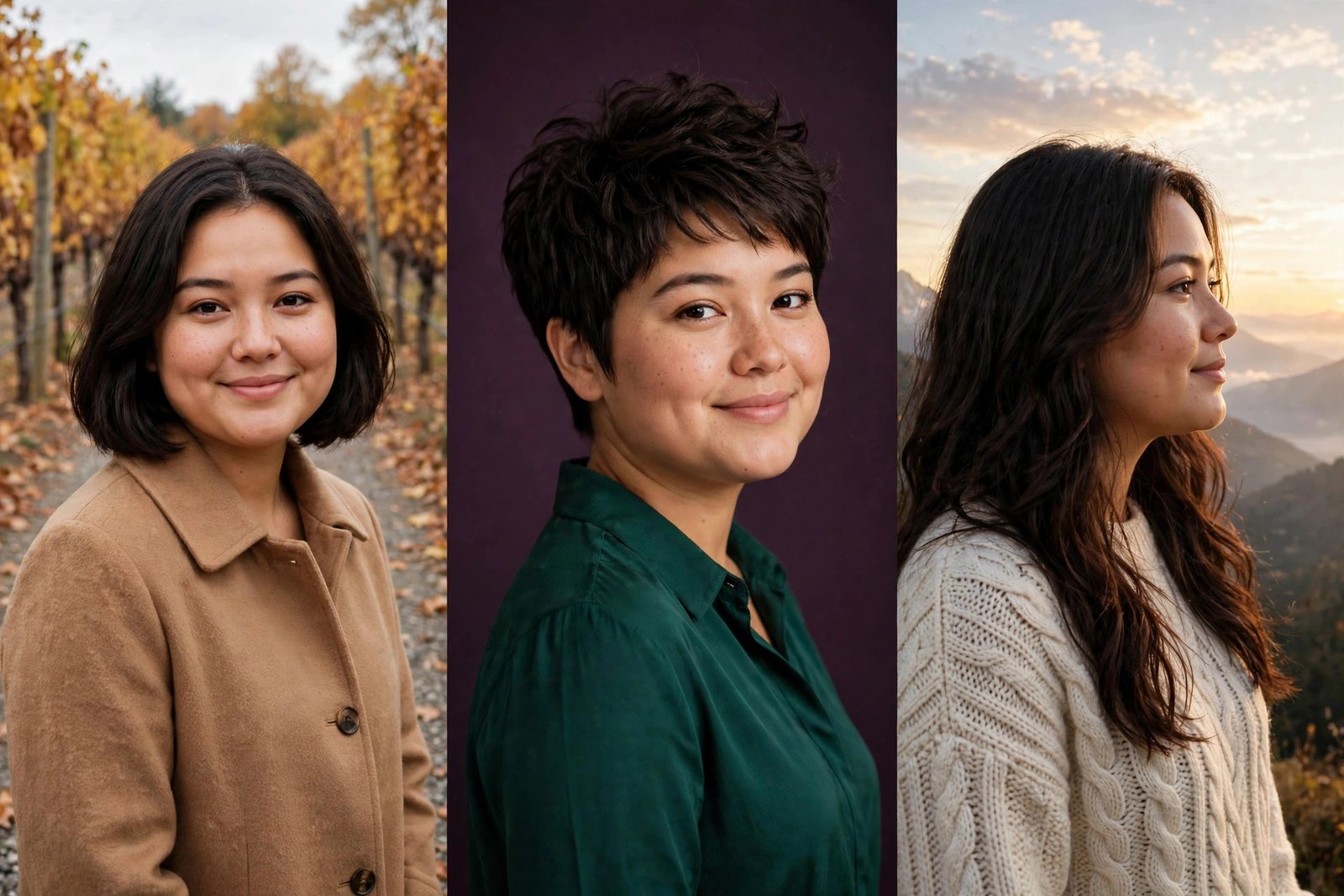
If your hair falls flat no matter what you do, the stacked bob was invented for you. Instead of relying on products for volume, this cut builds lift into its structure: short, graduated layers stacked at the nape push the crown upward, giving a rounded, full shape that holds all day. It is one of the most requested short cuts in salons, works on fine and thick hair alike, and comes in versions from chin-skimming to shoulder-grazing. Here is how it works, how it differs from its close cousins, and how to wear it well.
What Is a Stacked Bob Haircut?

A stacked bob is a short haircut defined by tightly graduated layers at the back of the head. The layers are shortest at the nape and get progressively longer toward the crown, so the hair “stacks” into a rounded shape with real fullness on top. The front sections, by contrast, are only lightly layered or left one length — which creates the shape: volume at the back, clean lines framing the face. The front can end anywhere from the chin to the shoulders, often slightly longer than the back for a gentle A-line effect. Unlike a one-length classic bob, which gets its impact from a sharp perimeter, the stacked bob gets its impact from its architecture.
Stacked Bob vs Inverted Bob vs Graduated Bob

These three names get used almost interchangeably, but they are not identical:
| Feature | Stacked bob | Inverted bob | Graduated bob |
|---|---|---|---|
| Back layers | Short, steep, tightly stacked | Short at back, longer at front | Gradual, softer graduation |
| Front length | Chin to shoulder | Dramatically longer at front | Gentle angle |
| Crown volume | Maximum | High, but angle dominates | Moderate, natural fall |
| Mood | Full, rounded, polished | Edgy, angled, statement | Soft, blended, classic |
Think of it this way: “graduated” is the technique, “stacked” is the result when that graduation is steep and concentrated at the nape, and “inverted” is the version where the back-to-front angle is the star. Ask for a stacked bob when volume matters most; ask for an inverted bob when the dramatic angle leads.
Stacked Bob for Fine Hair

Fine hair is where the stacked bob earns its reputation. Because the layers are cut short at the back, they physically prop each other up — the hair cannot lie flat, because there is not enough length for it to fall. The result is believable, lasting fullness that no mousse alone can fake. Keep the stack tight: shorter graduation at the nape means more lift, while a long, loose stack will not hold on fine hair. Go easy on layering at the front — lightly layered or one-length front sections keep the ends looking full rather than wispy. A chin-length front works best, and lightweight root-lifting mousse is all the support this cut needs.
Stacked Bob for Thick Hair
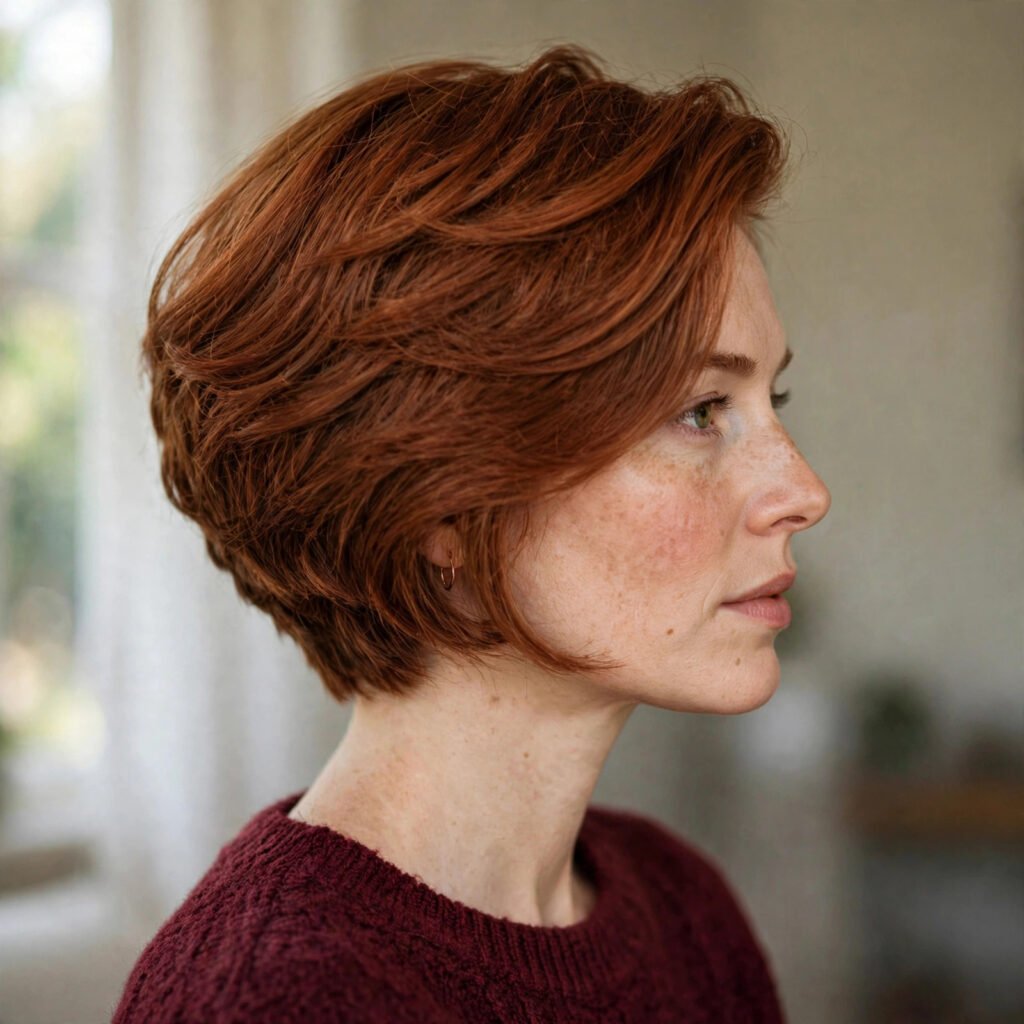
Thick hair can absolutely wear a stacked bob, but the approach flips. Where fine hair needs the stack to create volume, thick hair needs the stack managed so the volume does not turn into a triangle. Your stylist will likely use internal thinning or point-cutting through the back layers, removing weight while keeping the stacked outline. A slightly longer version usually suits thick hair better: when the front reaches the chin or just below, its weight balances the fullness at the back. Razor-cutting can help too — a razor softens thick ends and adds movement, where scissors alone can leave a heavy, helmet-like edge.
Stacked Bob for Round Faces

Round faces and stacked bobs are a better match than people expect, provided the front does the lengthening work. Keep the front pieces longer — at or just below the chin — so the eye travels downward rather than stopping at the widest part of the cheeks. A deep side part helps too: it breaks the symmetry of a round face and adds height at the crown, which the stack already provides. What to avoid: a very short, very round stack with a centre part, which mirrors a round face instead of balancing it. Long, side-swept bangs are the classic companion — they blend into the longest front section and draw a flattering diagonal line across the face.
Stacked Bob with Bangs

Bangs pair naturally with a stacked bob, and the choice comes down to face shape. Long, side-swept bangs are the most popular option: they flow into the front sections, suit round and heart-shaped faces, and never fight the cut’s volume. Blunt, full bangs are the bolder choice and work best on oval faces, where the strong horizontal line balances rather than boxes in. Wispy or curtain bangs sit in the middle — soft, low-commitment, and easy to grow out. One practical note: because the stacked bob already has a lot happening at the crown, keep bangs light rather than heavy, or the top of the head can look overloaded.
Short vs Long Stacked Bob Variations
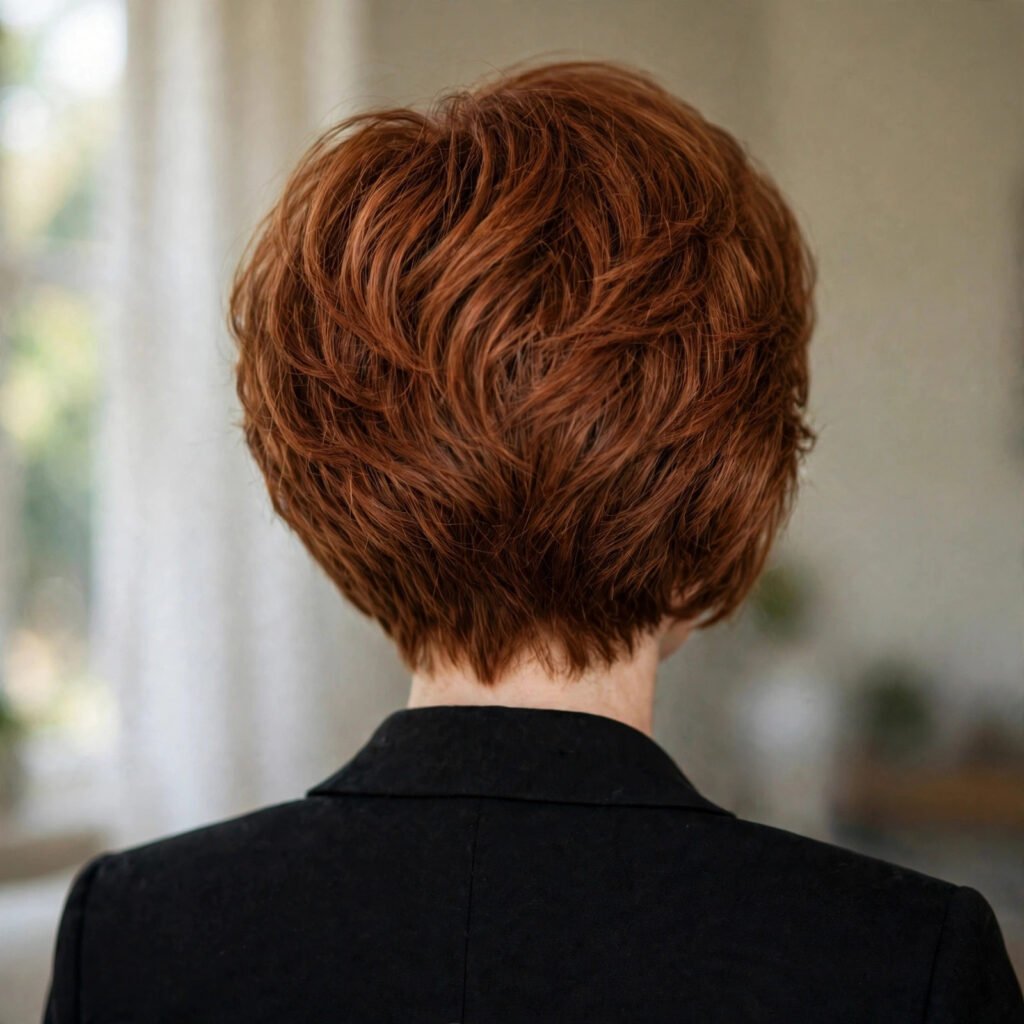
The stacked bob is not one length, and the length changes the whole feel. A short stacked bob is nape-hugging, with the shortest layers right at the hairline — maximum volume, minimum styling time, and the boldest shape. The medium version, with a chin-length front, is the classic and the easiest to grow out. A long stacked bob reaches the shoulders at the front, with stacking concentrated lower at the nape — softer, and it can be worn curly thanks to the lighter front layering.
How to Style a Stacked Bob at Home
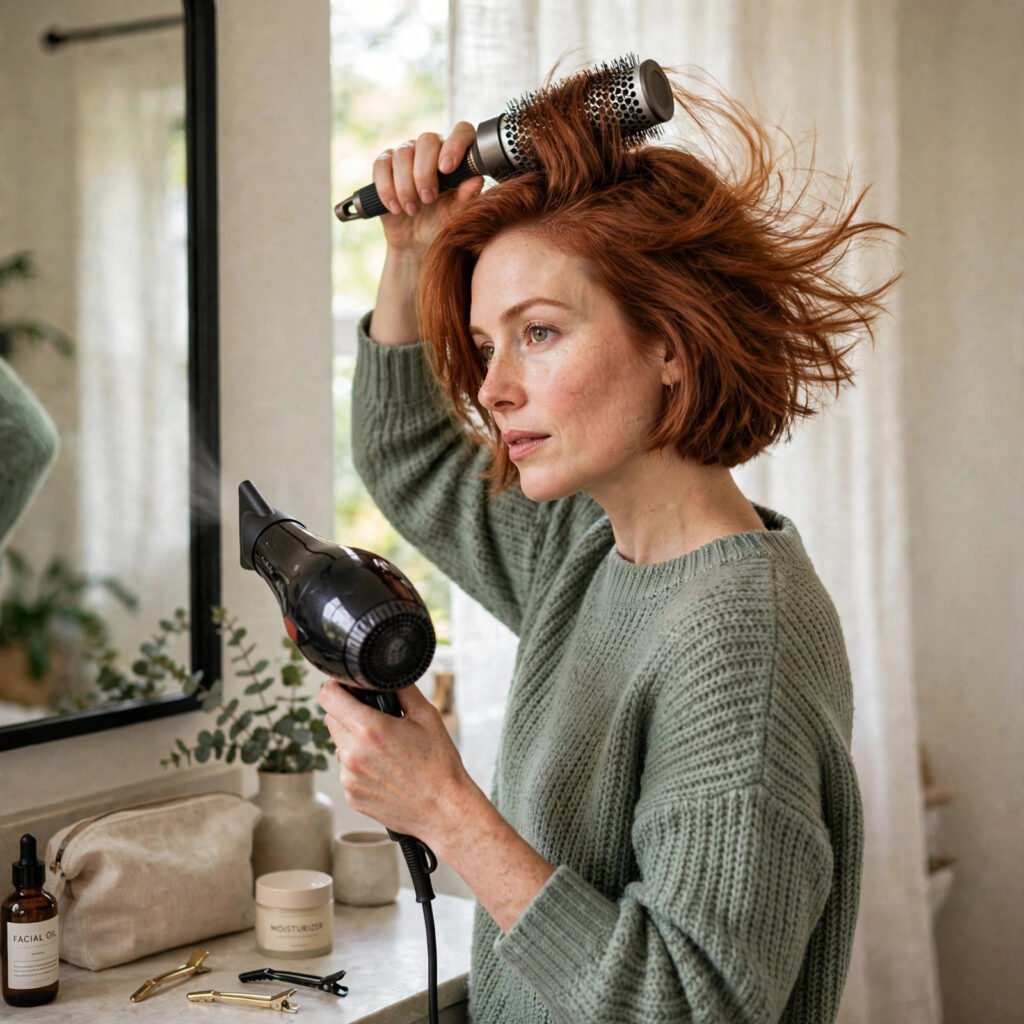
The stacked shape does most of the work, but the right blow-dry keeps it crisp:
- Apply volumising mousse to damp roots, concentrating on the crown and back.
- Blow-dry the back first, lifting each section upward with a round brush so the layers stay separated and full.
- Smooth the front sections forward and slightly under, keeping the line clean around the face.
- Set with a cool shot from the dryer, then a light mist of flexible-hold spray — heavy spray flattens the stack.
Stacked Bob Maintenance and Upkeep

Stacked layers grow out faster than one-length cuts, so plan trims every 6 to 8 weeks. Without them, the nape layers lengthen, the stack relaxes, and the cut gradually turns into an ordinary layered bob — still wearable, but missing its signature lift. Between appointments, protect the nape area: it takes the most friction from collars and scarves. Use a lightweight conditioner only through the mid-lengths and ends — heavy conditioner at the roots weighs the stack down.
What to Ask Your Stylist for a Stacked Bob

Bring photos that show the back of the cut, not just the front — the nape graduation is the whole point, and front-only references lead to misunderstandings. Say: “a stacked bob with short graduated layers at the nape for crown volume, and the front [at my chin / just below my chin], with [side-swept bangs / no bangs].” Then ask how steep the stack will be: a steeper stack means more volume and more frequent trims, while a softer graduation is lower-maintenance. If you have thick hair, ask how they will remove bulk without losing the shape; if your hair is fine, ask them to keep the front sections fuller.
Stacked Bob Haircut FAQs
Is a stacked bob good for thin hair?
It is one of the best cuts for thin hair. The short graduated layers at the back physically lift the crown, creating volume that fine hair cannot achieve with styling products alone.
What is the difference between a stacked bob and an inverted bob?
A stacked bob prioritises rounded crown volume from steep nape layers; an inverted bob prioritises a dramatic angle from a very short back to much longer front pieces.
How often should I trim a stacked bob?
Every 6 to 8 weeks. The graduated nape grows out visibly, and regular trims keep the stack — and therefore the volume — intact.
Can a stacked bob work on curly hair?
Yes, best in a longer version where curls have room to form, with lighter layering at the front. The stack still shapes the back, but the front stays loose enough for natural curl movement.
Will a stacked bob make my head look round?
The cut is rounded by design, but longer front pieces and a side part balance the shape. Keep the front at chin length or below and skip the centre part.
Written by the New Light team. Fancy trying one of these shapes? Send us a message and bring your favourite photograph when you visit.