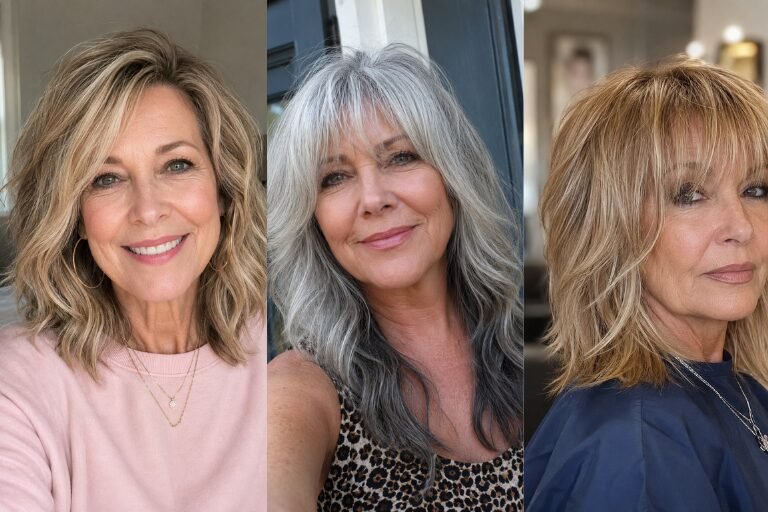
Hair changes with the decades — texture shifts, density redistributes, and colour turns to silver, white or pewter. Soft layers answer nearly all of it. They restore movement to thinning lengths, remove the pyramid effect from thick hair, and frame the face with a gentleness that blunt lines rarely manage.
The 19 hairstyles below span crops, bobs, lobs and long lengths. Each includes styling guidance and an honest maintenance note, because a haircut should fit your mornings as well as your face. For shorter moods, our French bob guide is a natural companion read.
1. Shoulder-Length Soft Layers
The reliable all-rounder: layers beginning below the chin, blended through shoulder-length hair with a soft, face-framing sweep. It suits nearly every face shape and works with both fine and thick textures.
Blow-dry with a medium round brush, turning ends under or out depending on mood. This cut keeps its shape for 8–10 weeks and grows out gracefully — a sensible choice if salon visits need to stay infrequent.
2. The Soft Layered Lob
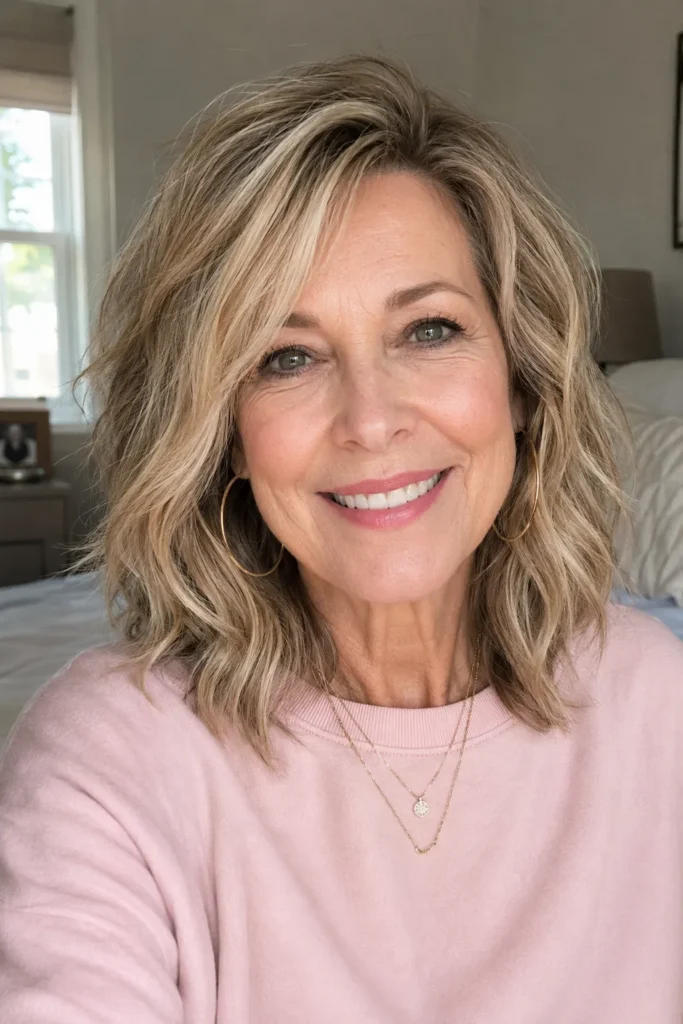
A long bob — resting between collarbone and shoulder — with gentle internal layers that create lift without obvious steps. On hair that has lost some density, a lob restores the impression of fullness at the perimeter.
It styles quickly with a blow-dry brush and looks equally good air-dried with a wave cream. Ask for the front pieces to start at the jaw to soften the frame. Trims every 8 weeks keep the line clean.
3. Long-Layered Pixie
A pixie with longer, softer layers on top — no harsh clipper lines, just feathering that can be swept forward, back or to the side. The softness keeps it feminine and forgiving on all face shapes.
Styling takes three minutes with a dab of light cream or paste. The trade-off is frequency: pixie shapes ask for a trim every 4–6 weeks. Many women find the trade worthwhile — wash, towel, shape, done.
4. Chin-Length Layered Bob
A bob at the chin with soft layering through the back — enough to create a rounded, lifted shape without the rigidity of a stack. Fine hair gains body; thick hair loses bulk.
The chin-length bob frames the jaw beautifully and pairs well with glasses (see number 17). Blow-dry the back upward for volume. Between trims, the layers grow into an easy, casual shape rather than a weighed-down bell.
5. Long Layers with Face Framing
Length is not off the table after 60 — it simply needs architecture. Long layers through the lengths prevent dragging, while face-framing pieces from the collarbone up keep the eyes and cheekbones in focus.
Keep ends healthy with regular dustings and a weekly mask; long hair at any age reads by its condition. Style with a large round brush or loose iron waves. If managing length becomes tiresome, this cut transitions down to a lob in one appointment.
6. Silver Shag with Feathered Layers
The shag’s feathered layers were made for silver hair — the texture shows off every ivory and pewter tone, and the airy shape adds the volume that finer textures appreciate. Worn with a centre part and cheekbone-length framing, no fringe required.
Styling is deliberately undone: texture spray, scrunch, go. A violet-toning shampoo once a week keeps silver bright rather than yellowed. For more shag variations, our guide to shag hairstyles without bangs goes deeper.
7. Layered Cut for Natural Curls

Grey curls are often drier and wiriier than their pigmented predecessors — layering helps curls clump and stack into a rounded shape instead of expanding into a triangle. The cut must be done dry, curl by curl.
Hydration is the whole regime: leave-in conditioner, curl cream, diffuse on low. Sleep on silk to preserve the shape. Trims every 10–12 weeks with a stylist who cuts curls — our curl service follows exactly this approach.
8. Wispy Layers with a Side-Swept Fringe
For anyone who likes softness at the forehead, a light side-swept fringe blends seamlessly into wispy layers through mid-length hair. It disguises forehead lines gently without the commitment of a straight-across bang.
The fringe trims every 3–4 weeks; the rest of the cut every 8–10. Blow-dry the fringe with a small brush across the forehead in alternating directions so it falls naturally rather than stuck to one side.
9. Graduated Bob with Gentle Stacking
Graduation stacks the nape in soft, rounded layers and lets the front fall longer toward the chin. The result is built-in volume at the back — helpful where hair has thinned at the crown — with face-framing length retained.
A round brush and ten minutes is the styling cost. The nape stack is the high-maintenance element, wanting a reshape every 5–6 weeks to stay tidy. It rewards the effort with a consistently polished silhouette.
10. Round-Brushed Layers with Volume
This is a styling direction as much as a cut: medium layers at shoulder length, blow-dried with a large round brush for soft, airy volume through the mid-lengths and a gentle bend at the ends.
Set the body with a light mousse on damp hair and a blast of cool air at the roots. Hot rollers give a similar effect with less arm work. The cut underneath should be blended, not choppy — volume comes from the brush, not from steps.
11. Soft Layers for Coarse or Changing Texture
When pigment fades, hair often turns coarser and more wiry at the temples and parting. Long, soft layers redistribute that new texture so it sits calmly, while weight removal at the ends stops the cut from bushiness.
A weekly hydrating mask noticeably changes manageability at this texture. Blow-dry with tension and a nozzle, directing airflow down the hair shaft, and finish with a drop of serum on the outer layer only.
12. Collarbone Cut with Blended Layers
Resting exactly at the collarbone, this length moves freely without catching on scarves and coat collars the way mid-back hair does. Layers are fully blended — visible only as movement, never as steps.
It is a true wash-and-wear length on wavy hair, and a ten-minute blow-dry on straight. Because nothing sits at the shoulders to rub, ends stay healthier between trims. An excellent middle ground for anyone shortening long hair in stages.
13. Layered Waves with Dimension Highlights

On layered hair, carefully placed highlights trace each layer so the cut shows dimension even on days you do nothing to it. Around the face, a few brighter pieces soften and light the complexion.
Grey blending — rather than total coverage — keeps the grow-out soft and the appointment cycle relaxed, often three months between colour visits. Our colour services are planned exactly this way: dimension that grows out gracefully.
14. Short Textured Crop with Layers
Somewhere between a pixie and a short shag: an inch or two of feathered length all over, cut for texture rather than sleekness. It suits active lives and women who wear statement glasses or earrings.
Work a fingertip of matte paste through dry hair and ruffle. That is the entire routine. Reshaping every 5–6 weeks keeps the edges soft instead of shaggy in the wrong way. In summer, it is wonderfully cool in every sense.
15. Layers with a Soft Curtain Fringe
A centre-parted curtain fringe sweeps to each side and melts into cheekbone layers — the gentlest possible way to wear a fringe over 60, since nothing sits in a hard line across the forehead.
It works from chin-length bobs to long hair. Style the fringe with a small round brush, rolling away from the face on both sides. It grows out into ordinary face-framing layers, which makes it essentially commitment-free.
16. Rounded Layers for Fine, Flat Hair
When hair lies flat at the roots, rounded layers cut through the crown create permanent architecture — the shape holds lift even before product. The perimeter stays one length so fine ends still look full.
Root-lifting spray on damp hair, blow-dry the crown opposite to its natural fall, then flip back. Velcro rollers at the crown while you do the rest of your morning routine add free volume. Avoid heavy serums at the roots entirely.
17. The Glasses-Friendly Layered Cut
Glasses change how hair frames the face: length that collides with frames bushs out, so layers should be cut to sit either clearly above or clearly below the hinge point. Side-swept or curtain fronts keep the area around the lenses open.
Bring your everyday glasses to the appointment — a thoughtful stylist cuts with them on. Any length works; the placement of the face-framing layers is what matters. This single adjustment makes more difference than most products ever will.
18. Wash-and-Wear Layers
The lowest-maintenance configuration: long layers designed around your natural texture — cut dry, cut to air-dry. On wavy hair it forms a soft, undone shape; on straight hair, a feathery, moving length.
The requirement is honesty at the consultation: describe your real routine, not your aspirational one. A cut designed for air-drying needs scrunch cream and nothing else — and trims can stretch to ten weeks without consequences.
19. Elegant Swept-Up Layers
Shoulder-length layers have a second life pinned up. A soft twist or low chignon at the nape, with the shorter face-framing layers left loose, gives an elegant occasion look that shorter, one-length cuts cannot achieve.
The loosened front pieces are the secret — they soften the whole effect and disguise any pin work. A mist of flexible spray, not lacquer, keeps it touchable. This is the answer for weddings and celebrations when you do not wish to grow your hair long.
Keeping Soft Layers Looking Their Best
- Book the consultation first. Texture and density change over the years; a cut that worked at 45 may need re-architecting. A good stylist will assess your hair as it is today.
- Protect silver tones. A violet shampoo used once weekly prevents yellowing from water minerals and heat. Alternate with a hydrating formula.
- Trim on rhythm, not on crisis. Layers hold their shape when maintained lightly and regularly — every 6 to 10 weeks depending on length.
- Match products to weight. Fine hair: mousses and sprays. Coarse or curly: creams and light oils. Using the wrong family flattens or frizzes the layers you paid for.
The Final Word
Soft layers are not a compromise — they are the mechanism by which hair keeps its movement and lightness through changing texture, colour and density. Pick the length that suits your mornings, keep the layers blended rather than choppy, and let silver do its quietly striking work. When you would like a cut planned around your hair as it is now, see our services or send us a message.
Written by the New Light team. Fancy trying one of these shapes? Send us a message and bring your favourite photograph when you visit.